Duolingo Case Study: Turning Learning Into a Daily Habit
This Duolingo case study examines how a language-learning app turned one of the hardest behaviors to sustain, studying every day, into a habit millions keep. The answer is gamification and behavioral design: streaks, points, leagues, and relentless, carefully tested nudges that make people come back. That engineered engagement drives the user retention everything else depends on, and a free, viral product plus a famously unhinged brand drive product-led growth, with a subscription and AI features converting the most committed. The Duolingo case study shows that gamification, done rigorously rather than as a gimmick, can make a product habit-forming, and that engagement and retention are the foundation of a durable business.
Duolingo turned language learning, a famously hard habit to keep, into a daily game, using streaks, leagues, and relentless behavioral design to make people come back every day.
Almost everyone has tried to learn a language and quit. The intention is there; the daily discipline is not. That is the real problem in language learning, not teaching the material but getting people to keep showing up, and it is the problem most learning products fail to solve. Duolingo built its entire company around solving it, and it did so not primarily through better teaching, but through better psychology: by turning study into a game people do not want to stop playing.
This case study looks at how Duolingo used gamification and behavioral design to make learning a daily habit, how that engagement became the foundation of its business, and how it grew and monetized on top of it. For enterprise leaders, the lesson reaches well beyond education. It is about engineering engagement and retention deliberately, so that a product people would otherwise abandon becomes one they return to every day.
Key Points
- Duolingo made learning a daily habit through gamification. Streaks, points, leagues, and daily goals turn a hard-to-sustain behavior, studying a language, into something people come back to every day.
- Behavioral design is the real engine, not the lessons. Duolingo engineers the habit with loss aversion (don't break the streak), social competition, variable rewards, and famously persistent reminders, all relentlessly tested and refined.
- Engagement and retention drive the whole business. Because the product is built to bring users back, Duolingo sustains tens of millions of daily users, the foundation everything else, growth and revenue, rests on.
- It grows product-first and monetizes with freemium. The free, viral app and an unhinged, much-loved brand drive product-led growth, while a subscription and AI features (Duolingo Max) convert the most engaged users.
- The results are scale and profit. Duolingo passed roughly 100 million monthly users and more than $700 million in revenue, growing fast, proof that engineered engagement is a durable business, not a gimmick.
Why This Matters
For CEOs, chief product officers, and anyone whose product depends on people coming back, Duolingo is one of the clearest demonstrations that engagement can be engineered. Most products lose users not because the product is bad but because people drift away, and most companies treat that churn as inevitable. Duolingo treated retention as a design problem to be solved with behavioral science, and solved it well enough to build a large, profitable company on a behavior, daily self-directed learning, that almost everyone abandons. That is a transferable capability, not a quirk of language apps.
The timing matters. Attention is scarce and habits are hard to form, so the products that win are increasingly those engineered to be genuinely habit-forming, and gamification and behavioral design have moved from novelty to core product discipline. At the same time, product-led growth, letting a great, sticky product drive its own adoption, has become one of the most efficient ways to grow. Duolingo combines both. For any leader trying to improve retention or grow without heavy marketing spend, Duolingo shows what deliberate engagement design looks like in practice.






Let’s kickstart the conversation and design stuff people will love.

The Retail & Consumer Index


Strategic Context
Learning a language is the kind of goal people want the outcome of but rarely sustain the effort for. Traditional approaches, classes, textbooks, even most apps, teach competently but do little to solve the real failure point: motivation over time. Most users start enthusiastically and quit within weeks, which means the hardest and most valuable problem in the category is not instruction but retention. A product that teaches brilliantly but cannot keep people coming back will not change many lives or build much of a business.
Duolingo's founding insight was that the binding constraint was behavioral, not educational, and that the tools of game design and behavioral psychology, the same ones that make games and social apps compulsive, could be turned toward learning. If studying could be made to feel like a game people wanted to play daily, the retention problem that defeats most learning would be solved, and everything else would follow. The strategic choice at the heart of this case is that Duolingo optimized first for engagement and habit, treating teaching effectiveness and monetization as things that could only matter if people kept showing up, and built the entire product as an exercise in behavioral science.
Company Response
Gamify the core experience.
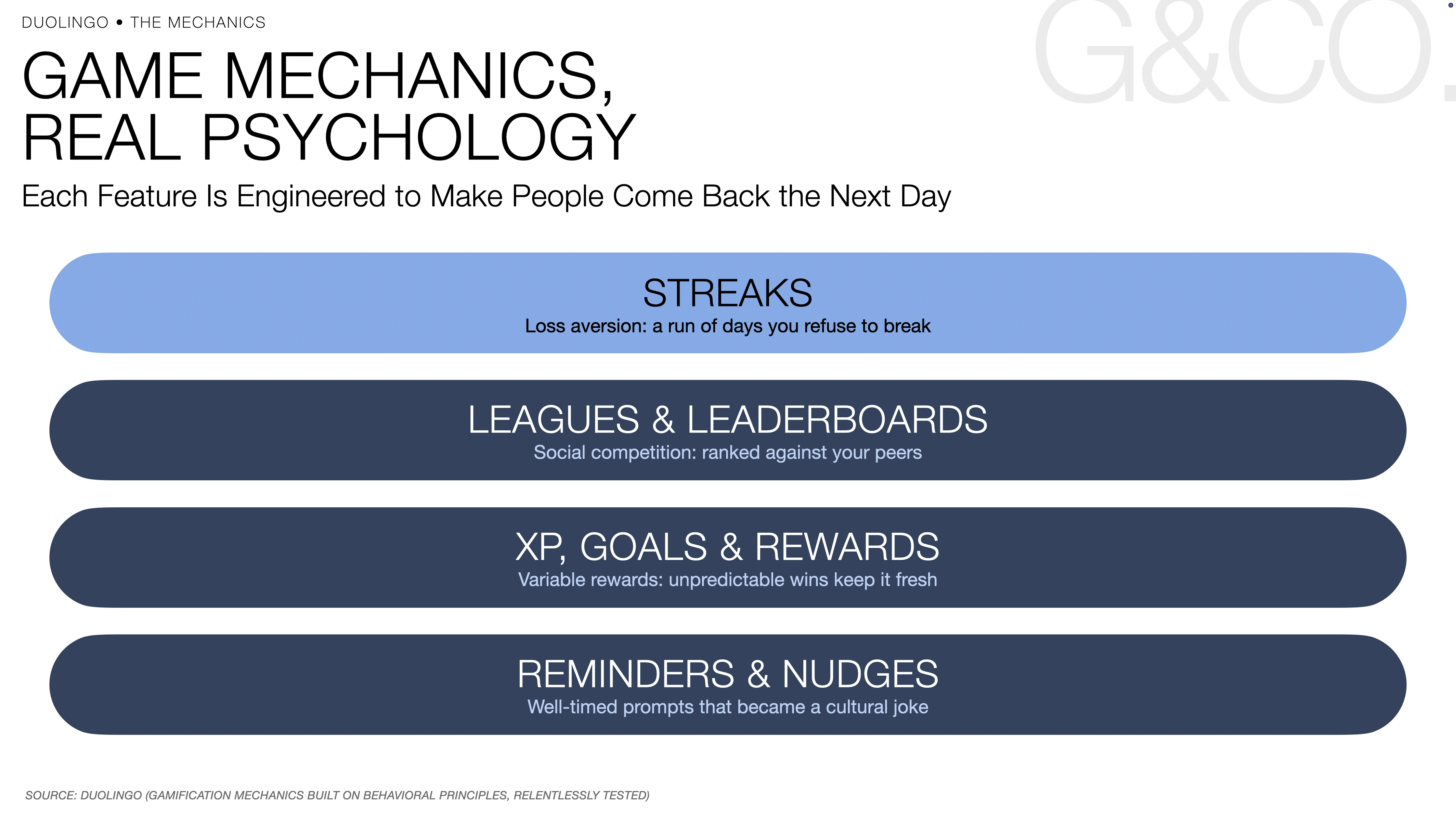
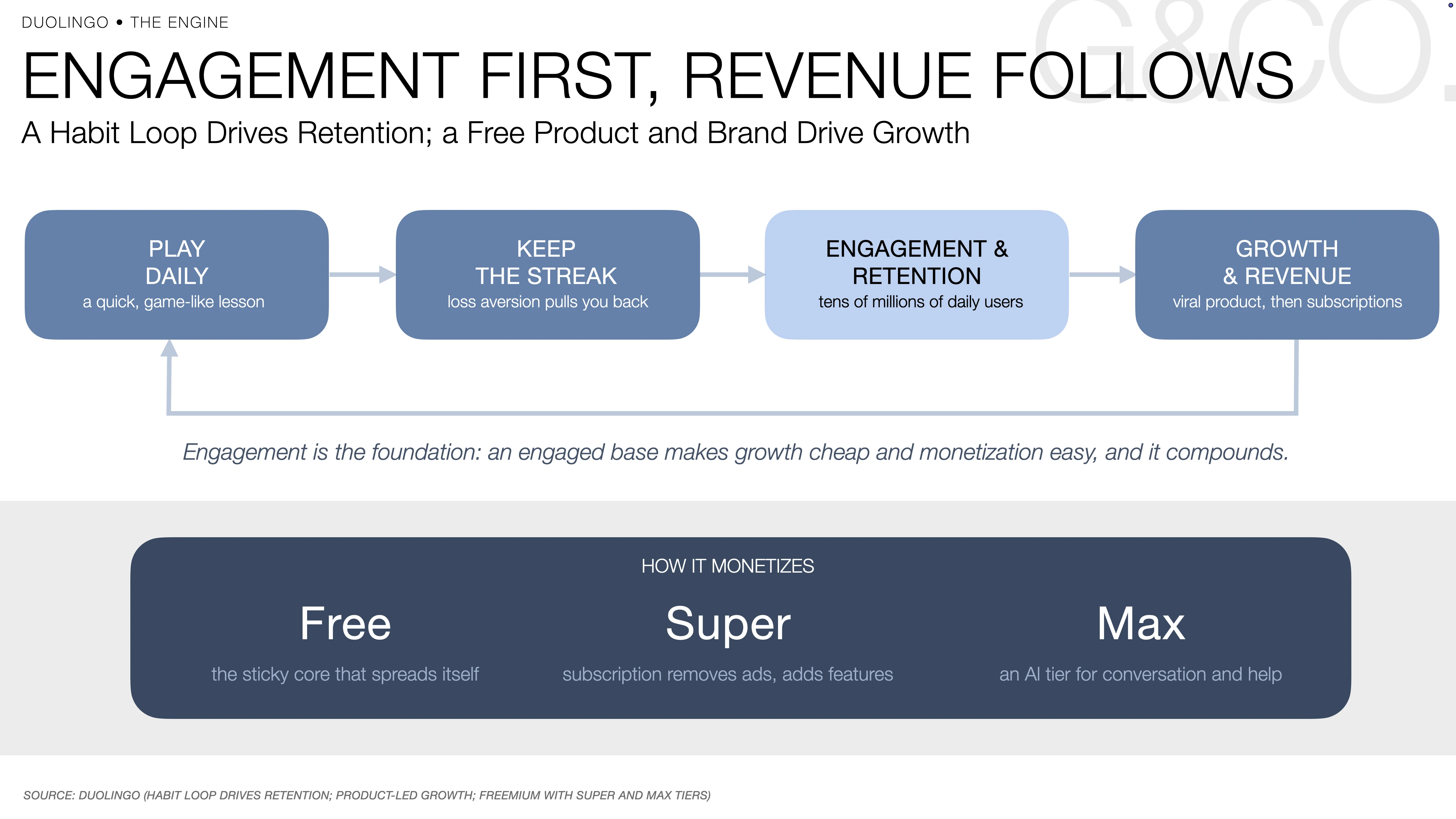
Duolingo built the act of learning as a game, complete with the mechanics that make games compelling: points (XP) for completing lessons, daily goals, a "streak" counting consecutive days of practice, competitive leagues and leaderboards, and a system of rewards and limited "lives." These are not decoration on a learning app; they are the product's center of gravity. The streak in particular is a masterstroke of gamification, it gives users a growing achievement they do not want to lose, and protecting it becomes its own reason to return each day, independent of the learning itself.
Engineer the habit with behavioral science.
Beneath the game mechanics is rigorous behavioral science. Duolingo deliberately uses loss aversion (people work harder to avoid losing a streak than to gain new points), social comparison (leagues pit users against peers), variable rewards (unpredictable bonuses that keep the experience fresh), and well-timed, often humorous reminders that have become a cultural joke in their own right. Crucially, none of this is guesswork: Duolingo tests relentlessly, running constant experiments on what drives people to return, and keeps what works. The company treats user engagement and user retention as measurable outcomes to be optimized, not hoped for, which is what separates real behavioral science from superficial "points and badges."
Grow product-first, and monetize the committed.
Because the product itself is sticky and enjoyable, Duolingo grows largely through product-led growth, a free app that spreads by word of mouth, amplified by a famously irreverent brand and social presence that turned its owl mascot into a meme. On top of that engaged base, it monetizes with a freemium model: a subscription that removes ads and adds features, and a higher tier (Duolingo Max) that uses AI to offer things like conversational practice and explanations. The free tier keeps the top of the funnel enormous and the habit widespread; the subscription converts the most committed. Engagement comes first; monetization follows from it.
The approach carries real tension. Optimizing hard for engagement raises a genuine responsibility to keep the product in the user's real interest, habit-forming design can tip into manipulative if the incentives are not aligned with the user actually learning. Sustaining novelty requires constant new mechanics and content. And Duolingo's move to lean heavily on AI for content and features has drawn scrutiny over quality and the human cost. But the engineered-engagement model is exactly what competitors with comparable lessons cannot easily match, because the advantage is in the behavioral science, not the curriculum.
Always-On Customer Intelligence
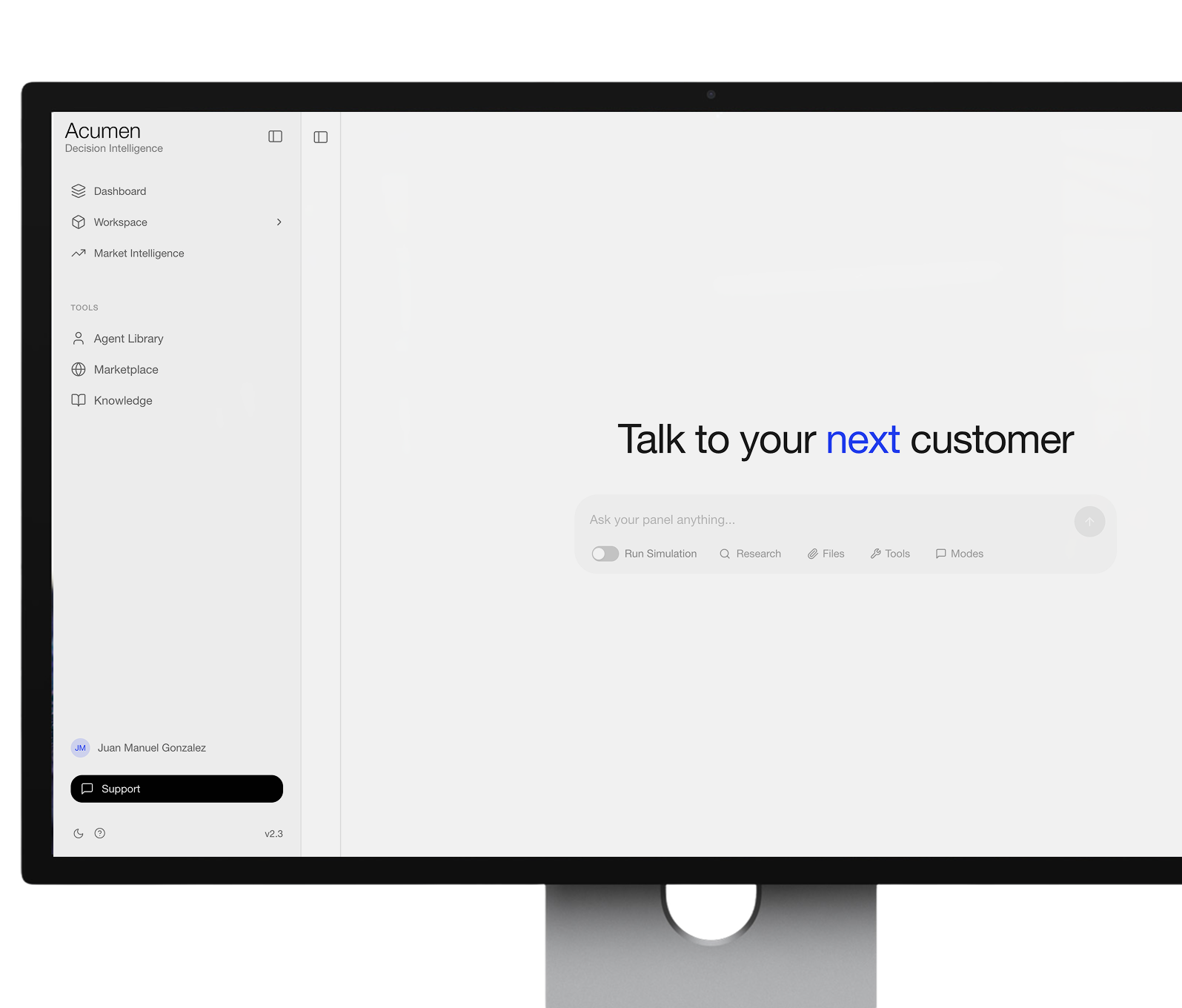
Turn your own customer data into foresight — validate, simulate, and sense every major decision before you commit.


Results and Evidence
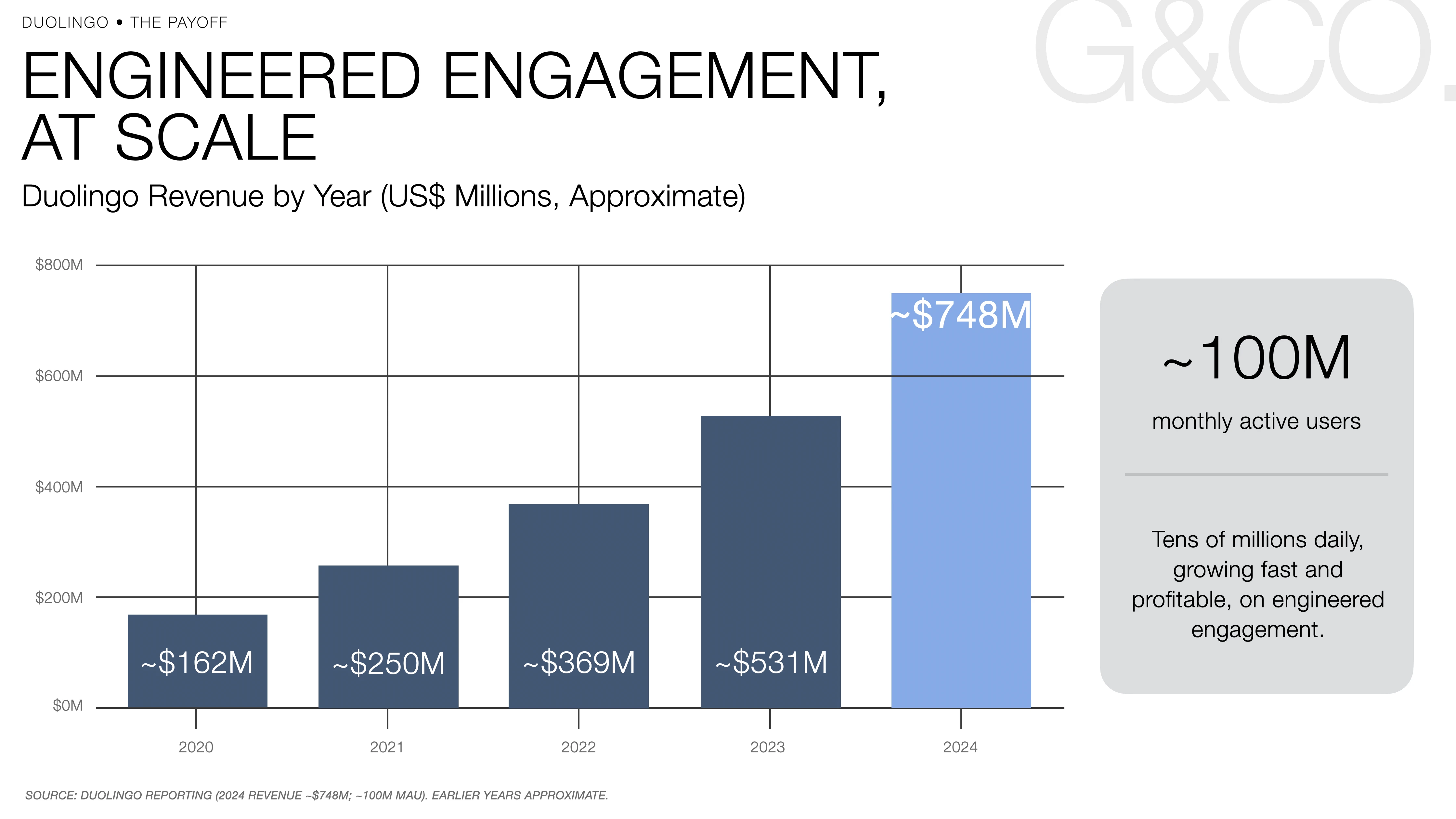
The evidence is in the engagement, the scale, and the profitability built on them. Duolingo has grown to roughly 100 million monthly active users and tens of millions of daily active users, an extraordinary level of sustained engagement for self-directed learning, which is the direct result of the game mechanics and behavioral science at the product's core. That engaged base converts: Duolingo surpassed $700 million in annual revenue, growing at a rapid clip, with millions of paying subscribers, and it has done so profitably, evidence that engineered engagement is a real and durable business model rather than a vanity metric. Its growth has leaned on the product and brand far more than on paid marketing, the signature of genuine product-led growth, and it has extended the same engagement engine into new subjects beyond languages. These figures come from Duolingo's public reporting and are worth confirming against the latest results before publishing, since this names a real company and the numbers update each quarter.
Strategic Implications
Read at scale, Duolingo is a case about engineering engagement and retention through behavioral science, and it connects to the broader shifts in game mechanics, product-led adoption, and habit-based product strategy. The pattern is repeatable well beyond education: in almost any product that depends on repeat use, the binding constraint is not the core function but whether people keep coming back, and that retention can be deliberately designed using the tools of game mechanics and behavioral psychology rather than left to chance. Duolingo did not win by teaching better than everyone else; it won by being the product people actually kept using, and it engineered that outcome on purpose.
The deeper implication is that engagement is the foundation everything else is built on. When a product is genuinely habit-forming, growth gets cheaper (users bring others, and the product sells itself), monetization gets easier (an engaged base converts), and the whole business compounds. For enterprise leaders, the takeaway is to treat retention as a design discipline, to ask what the "streak" is in their own product, the mechanic that gives users a reason to return, and to measure and optimize engagement as rigorously as Duolingo does, while keeping the incentives honestly aligned with the user's real benefit. The products that win the long run are not always the ones that do the most; they are the ones people keep coming back to.
What Enterprise Leaders Can Learn
- Treat retention as a design problem.
Most products lose users to drift, not defects. Engagement and user retention can be engineered with behavioral science rather than treated as inevitable churn. - Find your product's "streak."
Identify the mechanic that gives users a reason to return independent of the core task, the way the streak makes people open Duolingo even when they do not feel like studying. - Optimize engagement with real experimentation.
Duolingo's edge is relentless testing, not slogans. Treat user engagement as a measurable outcome to improve continuously, not a hope. - Let a sticky product drive its own growth.
Genuine product-led adoption, a habit-forming product plus a distinctive brand, lowers acquisition cost and compounds. Build the stickiness first. - Keep the incentives honest.
Habit-forming design carries responsibility; align the engagement mechanics with the user's genuine benefit, or the model becomes manipulative and, eventually, self-defeating.
Conclusion
Duolingo's story is not really about languages. It is about solving the problem almost every product quietly faces: getting people to come back. Rather than compete on teaching alone, Duolingo treated daily engagement as the central challenge and engineered it with game mechanics and behavioral science, streaks that users refuse to break, leagues that spur competition, rewards and reminders tuned by constant experimentation, until studying became a habit millions keep. That engineered engagement is the foundation beneath everything else: the product-led adoption, the subscriptions, the profit, and the expansion into new subjects. For enterprise leaders, the transferable lesson is to stop treating retention as luck and start treating it as a design discipline, to find the mechanic that earns a return visit and optimize it with the same rigor Duolingo does. In a world short on attention, the product people keep coming back to is the one that wins, and coming back can be designed.
Through the Acumen platform, G&CO. gives enterprise brands the intelligence to engineer engagement and retention: where users drift away, what mechanic would earn a return visit, and how behavioral science and game mechanics could make a product genuinely habit-forming, with incentives aligned to the user's real benefit. G&CO. is a certified minority business enterprise through the National Minority Supplier Development Council (NMSDC). For enterprise organizations with diversity inclusion requirements in their procurement process, G&CO. meets the criteria for MBE-qualified partner status.
G&CO. works with enterprise brands on the product, engagement, and retention strategy that turns a product people try into one they keep coming back to. If this Duolingo case study raises questions about your own game mechanics, behavioral science, or user retention, submit an inquiry to G&CO. on our contact page or click the blue "Click to Contact Us" button in the bottom right corner of your screen. We look forward to hearing from you.
Frequently Asked Questions
How does Duolingo use game mechanics?
Duolingo built the act of learning as a game, with points (XP) for completing lessons, daily goals, competitive leagues and leaderboards, rewards and limited "lives," and, most powerfully, a "streak" that counts consecutive days of practice. These mechanics are not decoration on a learning app; they are the core of the product. The streak especially gives users a growing achievement they do not want to lose, so protecting it becomes its own reason to return each day. This game mechanics is what turns a behavior most people abandon, daily study, into a habit millions keep.
What is behavioral science, and how does Duolingo apply it?
Behavioral science is building a product around how people actually behave, using principles from psychology to shape habits. Duolingo applies it deliberately: loss aversion (people work harder to avoid breaking a streak than to earn new points), social comparison (leagues pit users against peers), variable rewards (unpredictable bonuses that keep it fresh), and well-timed, often funny reminders. Crucially, it is not guesswork, Duolingo runs constant experiments to see what actually drives people to come back and keeps what works. That rigorous, tested behavioral science is what separates Duolingo's approach from superficial "points and badges."
Why is user retention so central to Duolingo's success?
Because the hardest problem in learning is not teaching, it is getting people to keep showing up, and most learners quit within weeks. Duolingo recognized that retention, not instruction, was the binding constraint, and built its whole product to solve it. High user retention and engagement are the foundation everything else rests on: an engaged base of tens of millions of daily users is what makes the growth cheap (the product spreads itself) and the monetization work (engaged users convert to subscriptions). Without the retention, none of the business would exist, which is why Duolingo optimizes for it first.
How does Duolingo grow and make money?
It grows primarily through product-led adoption: a free, genuinely sticky app that spreads by word of mouth, amplified by a famously irreverent brand and social presence that made its owl mascot a meme, so it relies far less on paid marketing than most companies its size. It makes money with a freemium model: the app is free, and a subscription removes ads and adds features, while a higher tier (Duolingo Max) uses AI for things like conversational practice. The enormous free base keeps the habit widespread; the subscription converts the most committed users. Engagement comes first, and monetization follows from it.
What can enterprise leaders learn from the Duolingo case study?
The central lesson is that engagement and retention can be engineered, not just hoped for. Duolingo's repeatable playbook: treat retention as a design problem solved with behavioral science; find your product's "streak," the mechanic that gives users a reason to return independent of the core task; optimize engagement through relentless experimentation rather than slogans; let a genuinely sticky product drive its own product-led adoption; and keep the incentives honestly aligned with the user's benefit so habit-forming does not become manipulative. Leaders in almost any repeat-use business can ask what would make people come back, and design for it deliberately.