Healthcare Digital Marketing Trends & Growth 2026
Introduction
The five healthcare digital marketing trends driving growth in 2026 are AI-powered personalization in patient outreach, omnichannel engagement, content-led trust building, privacy-driven marketing innovation, and performance-backed measurement. The channel shift is no longer speculative: healthcare and pharma digital ad spend is forecast to reach $26.2 billion in 2026 against $6.9 billion for traditional channels, and social media spending now surpasses linear TV. This article breaks down each trend and how leaders can outperform competitors.
Top 5 Trends to Watch in Healthcare Digital Marketing
• AI-Powered Personalization in Patient Outreach
• Omnichannel Strategies for Healthcare Engagement
• Rise of Content-Led Trust Building
• Privacy-Driven Marketing Innovation
• Performance-Backed Digital Healthcare Marketing Services

Trend Breakdown: Context & Competitive Insight
AI-Powered Personalization in Patient Outreach
AI in healthcare marketing is now operational infrastructure, not an experiment. The leading edge is agentic AI that adjusts programmatic bids in real time and builds clinically grounded audiences from patterns demographic targeting would miss. The ambition is near-universal but execution is not: Deloitte’s 2026 Life Sciences Outlook, surveying 280 C-suite biopharma and medtech executives, found nearly 80% say future competitiveness depends on using AI effectively, while far fewer have scaled it or shown clear ROI. That gap is the opportunity. Given healthcare’s regulatory and clinical complexity, the strongest programs keep human review in the loop, using AI to sharpen decisions rather than replace them.
Omnichannel Strategies for Healthcare Engagement
Patients move across symptom research, app booking, and email follow-up, and expect consistency at every step. The real differentiator in 2026 is infrastructure: multichannel means running campaigns across many platforms, while true omnichannel runs them from a shared data foundation with consistent identity resolution and coordinated message logic. Without that connective layer, journeys break between touchpoints and impressions are wasted. The same applies to audiences: running HCP and DTC campaigns as parallel but separate efforts carries a measurable performance cost, which is why coordinated activation has become a 2026 priority. Companies that integrate across channels drive stronger loyalty and reduce churn.
Rise of Content-Led Trust Building
Trust is the core currency of healthcare marketing, and 2026 changed where it is earned. Patients increasingly begin their journey inside AI search rather than Google: Gartner expects traditional search volume to fall roughly 25%, with organic traffic potentially dropping 50% or more, and Deloitte finds 37% of US consumers already use generative AI for health research. That makes Answer Engine Optimization essential, structuring physician-reviewed, condition-specific content so it is accurately surfaced and cited in AI answers rather than absent or misrepresented. Credibility signals matter more than ever, since distrust in AI-generated health information rose to 30% from 23% year over year, while 74% of consumers still name doctors their most trusted source. Format is shifting too, as short-form, clinician-led video outperforms polished brand production because authenticity converts when the topic is personal health.
Privacy-Driven Marketing Innovation
Privacy has become a performance advantage, not just a legal checkbox. HIPAA enforcement on web tracking has intensified, more than twenty state privacy laws now apply, and standard pixel-based tracking faces real limits, so enterprise healthcare organizations must innovate responsibly. Brands are adopting server-side tracking, zero-party and first-party data collection, and consent-based, anonymized analytics. The upside is concrete: privacy-safe tracking filters out bot and spam noise, improving lead-quality signals by as much as 30%. Compliance and performance now move together, and vendors who cannot articulate how they handle emerging state frameworks are quietly transferring risk to their clients.
Performance-Backed Digital Healthcare Marketing Services
Soft metrics and vague attribution are finished. In 2026, outcomes-based measurement is the standard, tied to results leadership and finance recognize: cost per booked appointment, verified patient reach, NPI-level HCP engagement, and script lift rather than clicks and impressions. This shift is driven by tighter budgets, pressure to justify spend, and more sophisticated martech and clinical-data tools supporting daily-refreshed measurement. The competitive edge comes from partnering with agencies that build performance intelligence into the strategy itself, ensuring every dollar drives measurable growth.


%20(1).png)

Let’s kickstart the conversation and design stuff people will love.

The Retail & Consumer Index



What Leading Brands Are Doing
Leading companies are already adapting to these trends by transforming how they engage, build, and innovate. One healthcare brand invested in a personalized, AI-powered content hub structured for AI search visibility, resulting in a 3x increase in qualified leads within six months. Another optimized its omnichannel communication stack, integrating email, SMS, and in-app messaging on a shared data foundation to create a seamless patient experience that boosted retention rates.
At G&CO.Health, G&CO.’s healthcare division, we work alongside clients to implement similar shifts, whether through digital marketing strategy for healthcare transformation, rearchitecting patient journeys, or deploying martech platforms that meet performance and compliance demands. Our expertise enables brands to translate healthcare digital marketing trends into tangible competitive advantage.
Risks, Blind Spots & What to Avoid
Risk 1: Underestimating Regulatory Complexity
Why it matters: Missteps in data handling or content compliance can result in significant legal and reputational damage.
Blind spot: Teams fail to involve compliance stakeholders early, or underestimate healthcare-specific privacy rules, including HIPAA tracking guidance and the growing web of state regulations.
Risk 2: Overinvesting in Single-Channel Strategies
Why it matters: Relying on one channel limits reach and exposes brands to algorithm volatility.
Blind spot: Teams mistake being present on many channels for true omnichannel, delaying the connected data foundation and identity resolution that integrated engagement requires.
Risk 3: Measuring the Wrong Metrics
Why it matters: Vanity metrics look impressive but do not drive business outcomes.
Blind spot: Without linking KPIs to pipeline, patient acquisition, or revenue, brands risk stagnation, and risk letting AI-driven speed produce more output without more value.
Frequently Asked Questions
What are the top healthcare digital marketing trends in 2026?
The top trends are AI-powered personalization in patient outreach, omnichannel engagement, content-led trust building through Answer Engine Optimization, privacy-driven marketing innovation, and performance-backed measurement.
What is Answer Engine Optimization in healthcare?
Answer Engine Optimization is structuring accurate, physician-reviewed content so AI search engines surface and cite it. It matters because Gartner expects traditional search volume to fall around 25%, and Deloitte found 37% of US consumers already use generative AI for health research.
How much is healthcare digital ad spend in 2026?
Healthcare and pharma digital ad spend is forecast at $26.2 billion in 2026, compared with $6.9 billion for traditional channels, with social media spending now exceeding linear TV.
Does privacy compliance hurt healthcare marketing performance?
No. Privacy-first infrastructure improves it. Server-side tracking and consent-based analytics filter out bot and spam traffic, improving lead-quality signals by as much as 30% while meeting HIPAA and state privacy requirements.
What metrics should healthcare marketers track in 2026?
Outcomes rather than vanity metrics: cost per booked appointment, verified patient reach, NPI-level HCP engagement, and script lift, ideally with daily-refreshed measurement tied to revenue.
Conclusion & Strategic Outlook
These five trends are not passing fads. They reflect a deeper shift in how digital marketing for healthcare companies is evolving and what patients now expect. Understanding the forces behind them is key to staying competitive in a crowded market. Brands that embrace AI, trust-building, omnichannel, privacy-first marketing, and performance-driven strategies will outperform, and those waiting for the landscape to settle are betting against the evidence.
At G&CO.Health, we bring the strategic clarity and executional power needed to turn these trends into growth opportunities. Whether you’re rethinking your digital marketing strategy for healthcare or scaling trusted experiences, we’re here to help. Let’s define what’s next, together.
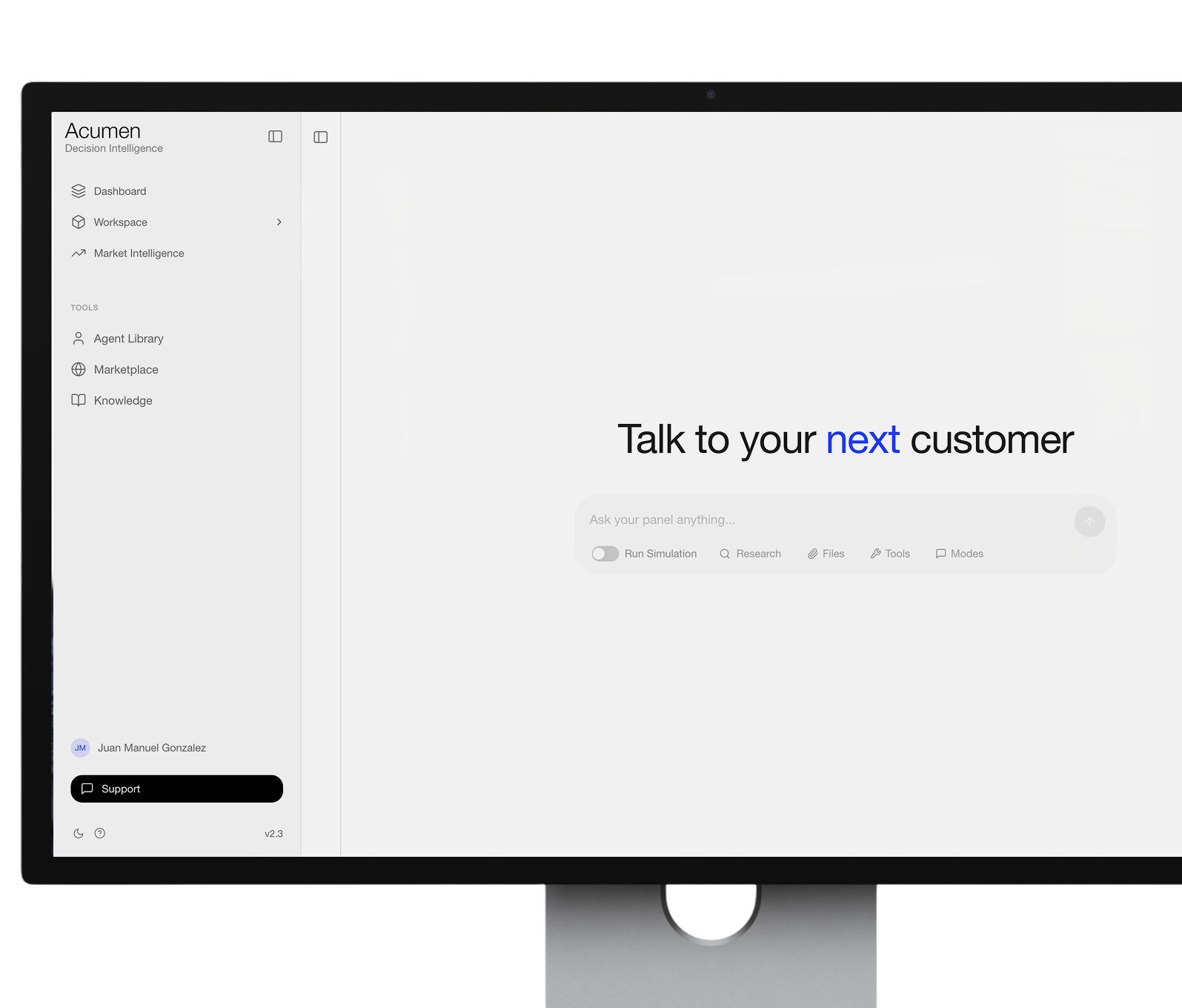
Always-On Customer Intelligence
Turn your own customer data into foresight — validate, simulate, and sense every major decision before you commit.