John Deere Case Study: Turning Tractors Into a Precision Agriculture Platform
This John Deere case study examines how a 185-year-old equipment maker reinvented itself as a precision agriculture technology and data company. Its machines are now connected, sensor-laden, and increasingly autonomous, and a cloud platform (the John Deere Operations Center) ties the equipment, fields, and data together. By helping farmers grow more with less seed, fertilizer, and chemical, and by building software and subscription revenue on top of the hardware, John Deere turned itself into one of the clearest examples of a legacy industrial leader becoming a technology platform. The John Deere strategy shows what it means to compete on data and outcomes in the agtech industry, not just on horsepower.
John Deere turned its tractors into connected, autonomous machines that collect and act on field data, and built a software platform to turn precision agriculture into a recurring-revenue business.
For most of its history, John Deere sold iron: tractors, combines, and the machinery that works the world's farms. It is a great business, but a cyclical, capital-heavy one, and a tractor, once sold, generated little further revenue. Deere looked at the same machines and saw something else: a fleet of connected computers moving across millions of acres, generating data and capable of running software. So it set about turning the equipment into a platform.
This case study looks at how John Deere became a precision agriculture company, with connected, increasingly autonomous machines and a cloud platform that helps farmers do more with less, and how it is building software and subscription revenue on top of the hardware. For enterprise leaders, the lesson reaches well beyond farming. It is about how a legacy industrial manufacturer turns the physical product it already sells into a connected, data-generating platform, and competes on outcomes rather than hardware.
Key Points
- John Deere turned a 185-year-old equipment maker into a precision agriculture technology company. Its machines are now connected, sensor-laden, and increasingly autonomous data platforms, not just tractors.
- The product is outcomes, not just horsepower. Precision farming (GPS guidance, computer-vision spraying, variable-rate application) helps farmers grow more while using less seed, fertilizer, and chemical.
- Autonomy and AI are the frontier. John Deere has introduced autonomous machinery that can run with limited human oversight, directly addressing a chronic farm-labor shortage.
- Connected data became a software platform and a recurring-revenue business. The John Deere Operations Center ties machines, fields, and data together, and Deere is building subscription software and predictive maintenance on top, the heart of the John Deere strategy.
- Deere connects hundreds of thousands of machines across millions of engaged acres, on roughly $50 billion in annual revenue, even through the farm economy's cycles.
Why This Matters
For CEOs, CIOs, and leaders of any established manufacturing or equipment business, John Deere is one of the clearest examples of turning a physical product into a connected platform. Many industrial companies sense that the value is shifting to data and software but struggle to move, trapped by cyclical hardware sales and heavy assets. Deere is showing how an incumbent makes that shift while still being one of the largest equipment makers in the world, which makes it a real-world model rather than a startup story.
The timing matters. Farming faces mounting pressure, labor shortages, input costs, climate volatility, and the output has to keep rising to feed a growing world. Technology that helps farmers produce more with less is no longer optional, and the agtech industry is becoming one of the most important applications of AI, robotics, and data anywhere. John Deere sits at the center of it. For any leader whose business bridges heavy physical products and digital capability, Deere shows what the reinvention looks like at industrial scale.



.png)
%20(1).png)

Let’s kickstart the conversation and design stuff people will love.

The Retail & Consumer Index


Strategic Context
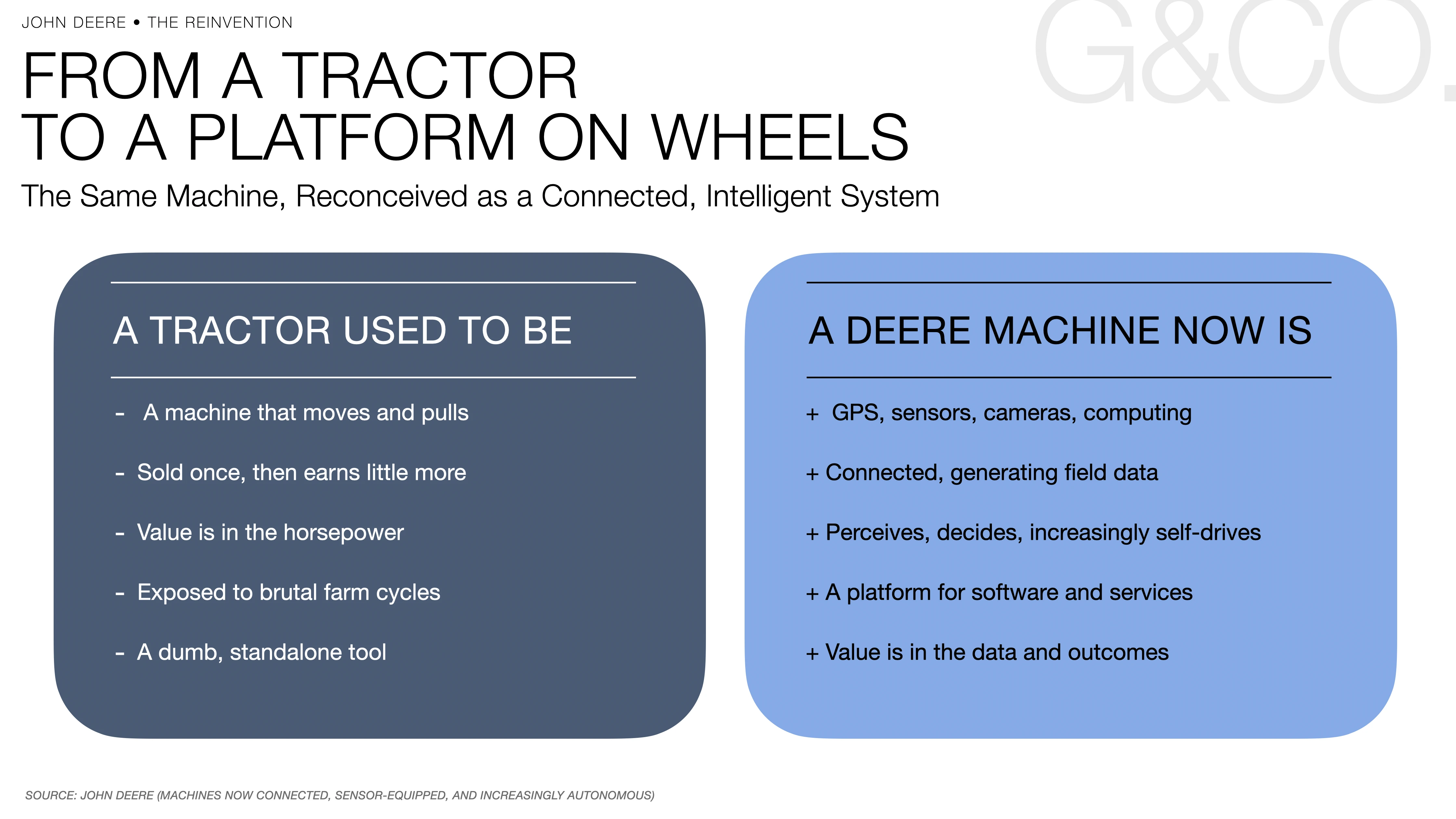
Selling farm equipment is a hard business to grow. Demand rises and falls with crop prices and the farm economy, the machines are expensive and long-lived, and once a tractor is sold it generates little further revenue for the manufacturer. A company that only sells the iron is exposed to brutal cycles and leaves most of the ongoing value, the data each machine could generate, the software that could make it smarter, to others or to no one.
John Deere's insight was that its machines were becoming computers on wheels, GPS-located, sensor-equipped, and capable of running software, and that the real future value was in what those machines could sense, decide, and do, not just in the horsepower they delivered. Farmers do not ultimately want a tractor; they want a bigger harvest at a lower cost, and a connected, intelligent machine could deliver that far better than a dumb one. The strategic choice at the heart of this case is that Deere decided to compete on outcomes and data, precision farming, rather than on hardware alone, and to build the technology, through heavy R&D and targeted acquisitions, to lead that shift rather than be disrupted by it.
Company Response
Make the machines intelligent.
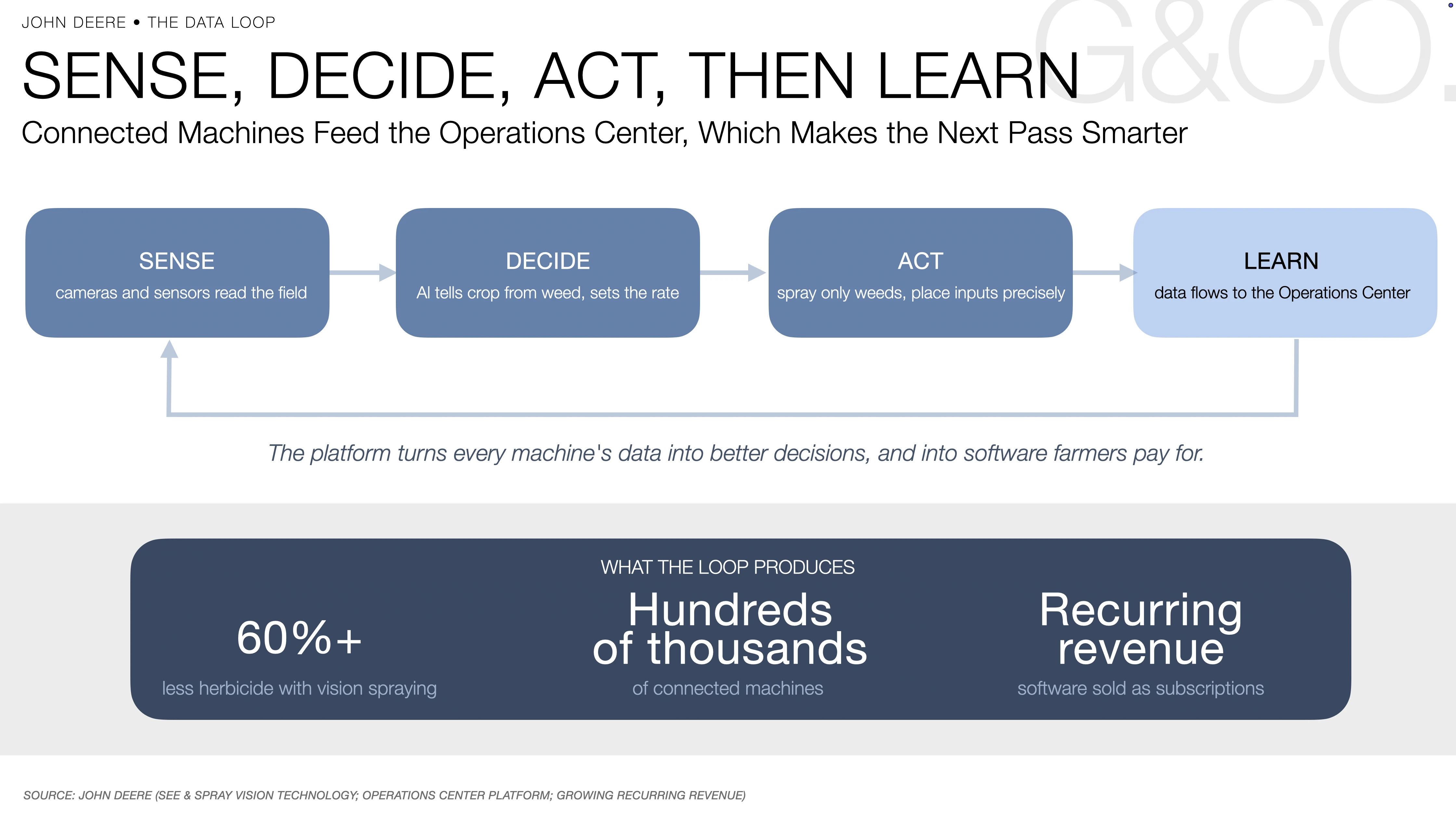
Deere packed its equipment with GPS, sensors, cameras, and computing so that a tractor or sprayer does not just move, it perceives and decides. The clearest example is its computer-vision spraying technology, which uses cameras and machine learning to tell crops from weeds and spray only the weeds, cutting herbicide use dramatically. Combined with GPS-guided steering and variable-rate application (placing exactly the right amount of seed or fertilizer in each spot), this is precision farming in practice: the machine helps the farmer grow more while using far less input. Deere built much of this capability by acquiring specialist technology companies and investing heavily in AI, turning the equipment into an instrument of precision rather than brute force.
Push into autonomy.
With the machines already intelligent, Deere moved toward autonomous machinery, equipment that can perform work like tilling or planting with limited human supervision, monitored from a phone. This is not a gimmick; it responds to a real and worsening shortage of skilled farm labor, and it lets a single operator oversee far more work. Autonomy is the frontier of the John Deere strategy, and it deepens the shift from selling a machine a person drives to selling a system that does the work.
Turn the data into a platform and recurring revenue.
Every connected machine generates data about the field, the crop, and its own operation, and Deere built the John Deere Operations Center, a cloud platform, to bring it all together so farmers can plan, monitor, and optimize across their whole operation. That same connectivity enables predictive maintenance, flagging a failing part before it causes costly downtime in a narrow planting window. Crucially, this platform is the foundation for a recurring-revenue business: Deere is increasingly selling precision-agriculture features and software as subscriptions, moving beyond one-time equipment sales toward ongoing software revenue, and has set explicit targets to grow that recurring share. The hardware becomes the entry point; the data and software become the durable business.
The approach carries real tension. Making machines dependent on proprietary software has fueled a "right to repair" backlash from farmers who want to fix their own equipment, a genuine reputational and regulatory risk. The heavy technology investment must be sustained through the farm economy's down cycles. And autonomy must prove itself safe and reliable in the unforgiving conditions of real fields. But the connected platform and the data it generates are exactly what a pure-equipment competitor cannot easily replicate.
Always-On Customer Intelligence
Turn your own customer data into foresight — validate, simulate, and sense every major decision before you commit.


Results and Evidence
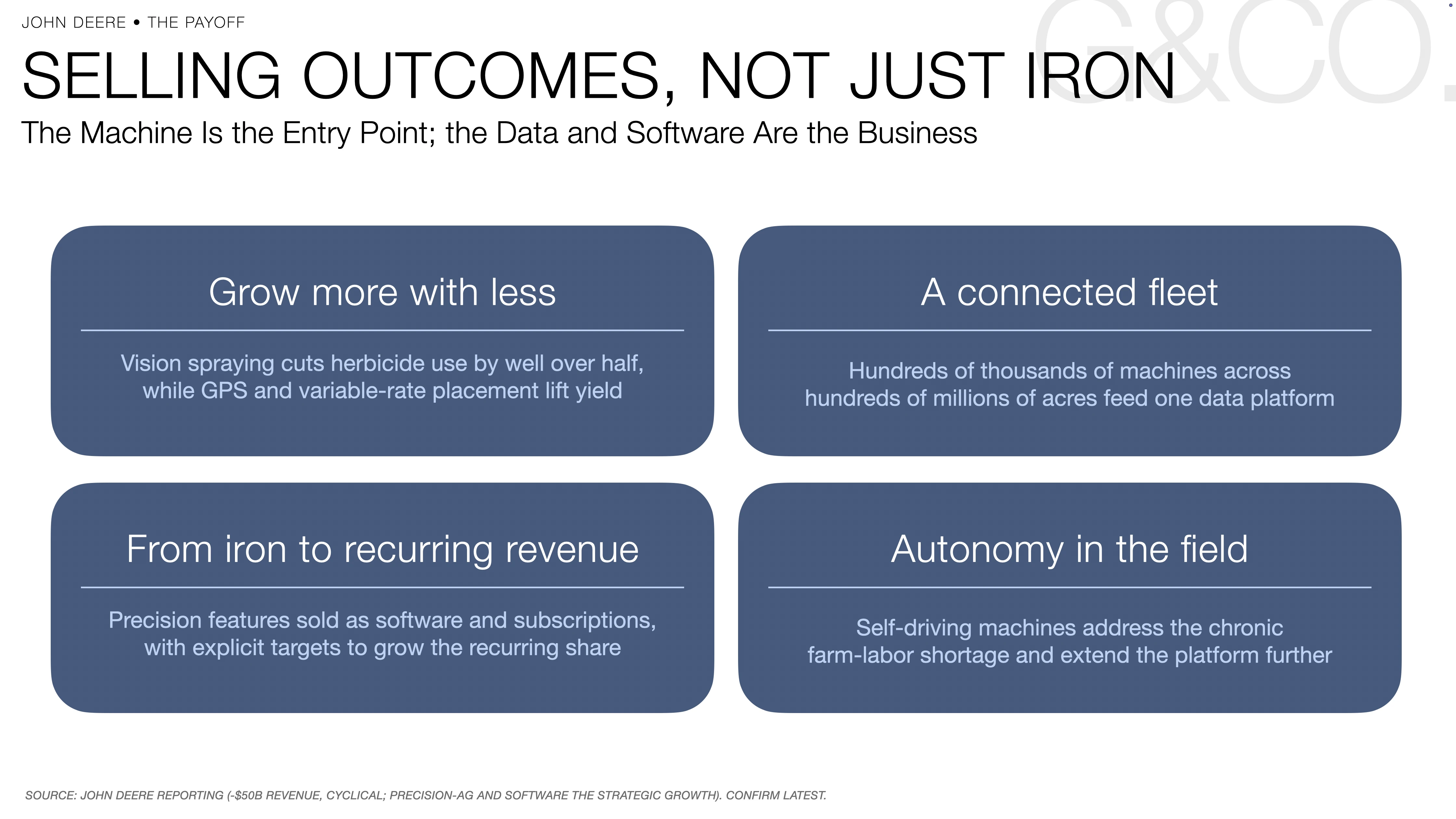
The evidence is in the technology in the field and the shift of the business toward data and software. John Deere now connects hundreds of thousands of machines across hundreds of millions of engaged acres, an enormous, growing base of connected equipment feeding its platform, and its computer-vision spraying can cut herbicide use by well over half, a concrete, large saving for farmers that pure horsepower could never deliver. It has moved autonomous machinery from concept to the field, and it has set explicit goals to grow recurring, software-driven revenue as a share of the total, the clearest signal that the strategy is a genuine business-model shift, not a marketing layer. All of this sits on roughly $50 billion in annual revenue, and while that figure swings with the farm economy's cycles, the precision-agriculture and data business is the part Deere is deliberately building for the long term. These figures come from John Deere's public reporting and are worth confirming against the latest results before publishing, since this names a real company and the numbers update each year and move with the ag cycle.
Strategic Implications
Read at scale, John Deere is a case about turning a physical product into a connected, data-generating platform, and it connects to the broader shifts in industrial digitalization, AI, robotics, and recurring-revenue business models. The pattern is repeatable well beyond agriculture: a company that sells expensive, long-lived hardware can embed sensing, intelligence, and connectivity into it, then build a software platform and a recurring-revenue business on the data those products generate, moving from one-time sales to an ongoing relationship. Deere did not stop selling tractors; it made the tractor the entry point to a platform, which is where the growth, the margin, and the defensibility increasingly live.
The deeper implication is the shift from selling hardware to selling outcomes. Farmers do not want machines; they want yield at lower cost, and a connected, intelligent platform delivers that in a way a standalone machine cannot, which is why the data and software, not the iron, are becoming the real product. For enterprise leaders, the takeaway is to ask what data the physical products you already sell could generate, whether you could build the platform and recurring revenue on top of it, and whether you are positioned to sell the outcome your customer actually wants rather than the hardware that delivers it. The industrial companies that win the next era are the ones that turn the things they sell into intelligent platforms, while managing the trust and openness their customers expect.
What Enterprise Leaders Can Learn
- Turn the product into a platform.
A connected, sensor-equipped machine generates data a dumb one cannot. Embed intelligence in the hardware you already sell, and build the platform on the data. - Sell outcomes, not hardware.
Farmers want yield, not tractors. Reframing the offering around the result the customer wants (precision, efficiency) is what justifies the technology and the premium. - Build recurring revenue on top of one-time sales.
Software and subscriptions on a connected product turn a cyclical, one-time hardware business into an ongoing relationship with durable revenue. - Use AI and autonomy to solve the customer's real constraint.
Deere's autonomy targets the farm-labor shortage directly; technology lands when it solves a pressing problem, not when it is novel. - Manage the openness and trust trade-off.
Locking a product to proprietary software can create a backlash (right to repair). The platform advantage has to be balanced against the trust and control customers expect.
Conclusion
John Deere's story is not really about tractors. It is about how a legacy industrial manufacturer turns the physical product it already sells into an intelligent, connected platform, and competes on data and outcomes rather than hardware. Rather than accept the cycles and one-time sales of the equipment business, Deere made its machines perceive, decide, and increasingly drive themselves, built a cloud platform on the data they generate, and began converting a one-time hardware sale into ongoing software revenue, all while helping farmers grow more with less. For enterprise leaders, the transferable lesson is that the physical products a company already sells can become the entry point to a data platform and a recurring-revenue business, if the company is willing to invest in the intelligence, build the platform, and reframe what it sells around the outcome the customer actually wants. The industrial incumbents that thrive are the ones that turn their machines into platforms.
Through the Acumen platform, G&CO. gives enterprise brands the intelligence to turn physical products into connected platforms: what data the things you already sell could generate, where a software and recurring-revenue layer could be built on top, and how to reframe the offering around the outcome your customer actually wants. G&CO. is a certified minority business enterprise through the National Minority Supplier Development Council (NMSDC). For enterprise organizations with diversity inclusion requirements in their procurement process, G&CO. meets the criteria for MBE-qualified partner status.
G&CO. works with enterprise brands on the platform, data, and AI strategy that turns a one-time hardware business into an intelligent, recurring-revenue platform. If this John Deere case study raises questions about your own precision farming, agtech industry, or connected-product strategy, submit an inquiry to G&CO. on our contact page or click the blue "Click to Contact Us" button in the bottom right corner of your screen. We look forward to hearing from you.
Frequently Asked Questions
What is John Deere's precision farming strategy?
John Deere's precision farming strategy is to turn its equipment into connected, intelligent machines that help farmers grow more while using less. Its tractors and sprayers now carry GPS, sensors, cameras, and computing, so they can steer themselves accurately, apply exactly the right amount of seed or fertilizer in each spot, and, with computer vision, spray only weeds rather than entire fields. The result is higher yield at lower cost and input use. This reframes Deere's offering from selling horsepower to selling outcomes, and it is the foundation for its data platform and software business.
How is John Deere using autonomous machinery?
John Deere has moved autonomous machinery from concept to the field, equipment that can perform tasks such as tilling or planting with limited human supervision, monitored remotely from a phone. The driving reason is practical: farming faces a chronic shortage of skilled labor, and autonomy lets a single operator oversee far more work. It also deepens Deere's shift from selling a machine a person drives to selling a system that does the work, which is central to the John Deere strategy and to the broader direction of the agtech industry.
What is the John Deere Operations Center, and why does it matter?
The John Deere Operations Center is Deere's cloud software platform, where the data from its connected machines, about fields, crops, and the equipment itself, is brought together so farmers can plan, monitor, and optimize their whole operation. It matters because it turns Deere from a maker of standalone machines into a platform company: the same connectivity enables predictive maintenance (flagging a failing part before costly downtime) and, crucially, supports selling precision-agriculture features as software and subscriptions. The platform is how Deere builds an ongoing, recurring-revenue relationship on top of one-time equipment sales.
How does John Deere make recurring revenue from equipment?
By selling software and precision-agriculture features as subscriptions on top of its connected machines. Historically, Deere earned revenue when it sold a tractor and little after; now, because the machines are connected and run software, Deere can offer ongoing precision-ag capabilities, data services, and predictive maintenance as paid subscriptions, and it has set explicit targets to grow this recurring, software-driven share of revenue. This moves the business from cyclical, one-time hardware sales toward a more durable, higher-margin ongoing relationship, the core of the business-model shift this John Deere case study examines.
What can enterprise leaders learn from the John Deere case study?
The central lesson is that a legacy hardware company can turn the physical products it already sells into a connected, data-generating platform, and compete on outcomes rather than hardware. Deere's repeatable playbook: embed sensing and intelligence in the product, use AI and autonomy to solve the customer's real constraint (here, labor and input costs), build a software platform on the data the products generate, and layer recurring software revenue on top of one-time sales, while carefully managing the trust and openness customers expect. Leaders should ask what data their products could generate and whether they could build a platform and an ongoing relationship on it.