Enterprise Digital Marketing Trends 2026 | Strategy & Solutions
Introduction
The five enterprise digital marketing trends defining 2026 are AI-driven personalization, first-party data and privacy-first strategies, omnichannel engagement, marketing automation, and content-led growth. The structural change underneath them is agentic AI, and Gartner is blunt about the implication: by 2028, 60% of brands will use agentic AI to deliver streamlined one-to-one interactions, a shift its analysts call the end of channel-based marketing as we know it. This article highlights each trend and why strategy matters for long-term success.
Market Context: Disruption & Opportunity
Enterprise companies face a fast-shifting marketing environment. Audiences demand personalization, seamless journeys, and measurable outcomes, and traditional campaigns no longer deliver the same impact. With global digital ad spend approaching $1 trillion in 2026, the pressure to spend efficiently has never been higher.
Two forces stand out this year. AI has moved from experiment to operational, increasingly agentic infrastructure, with Gartner reporting that 80% of enterprise applications shipped or updated in Q1 2026 embed at least one AI agent, up from 33% in 2024. And AI-driven search is changing how audiences discover brands, often answering questions before anyone visits a website.
But ambition is outrunning readiness. Forrester’s State of Agentic AI 2026 found roughly three-quarters of enterprise leaders say they are adopting agentic AI while only a small minority have it running in meaningful production, a gap Forrester describes as the distance between the chase and the catch. For marketing leaders, the opportunity is in closing it faster than competitors.
Top 5 Trends to Watch in Enterprise Digital Marketing
• AI-Driven Personalization
• First-Party Data and Privacy-First Strategies
• Omnichannel Engagement for Enterprises
• Marketing Automation and Enterprise Digital Marketing Tools
• Content-Led Growth and Thought Leadership

Trend Breakdown: Context & Competitive Insight
AI-Driven Personalization
AI-driven personalization delivers content, offers, and recommendations based on customer behavior, and in 2026 it increasingly runs on agentic systems that act on signals as they happen, adjusting messaging automatically within defined guardrails. Gartner projects that by 2028, 60% of brands will use agentic AI to facilitate streamlined one-to-one interactions, with AI agents acting as persistent digital concierges spanning marketing, sales, and support. The prerequisite is unglamorous: strong data governance, weekly tracking of customer journey changes, and agentic systems integrated into the martech stack. Enterprises that invest here, with human oversight of claims and brand voice, increase efficiency and loyalty.
First-Party Data and Privacy-First Strategies
Tightening privacy regulation and reduced reliance on third-party tracking make first-party data essential. Enterprises must collect and activate data responsibly to protect trust, since a large majority of consumers say they will not buy from a company they do not trust with their data. Companies deploying consented, first-party and zero-party data strategies predict customer needs better and remain compliant as state and international rules expand. The competitive edge is compounding: trust and compliance support sustainable growth while producing the clean signals every AI system built on top of them depends on. Agents working with incomplete, incorrect, or siloed data are limited by exactly those limitations.
Omnichannel Engagement for Enterprises
Customers expect consistent experiences from email to social to physical touchpoints, connected into a seamless journey. In 2026, being present is not enough; brands must also be agent-ready, structuring product data and content with machine-readable feeds and schema so AI assistants can understand and recommend their offers accurately. Gartner expects AI-powered agents to handle 20% of interactions at digital storefronts designed for humans by 2028. Enterprises that unify channels and data build stronger recognition and loyalty, winning by being everywhere their customers are, including inside AI-driven discovery, with a single consistent voice.
Marketing Automation and Enterprise Digital Marketing Tools
Automation reduces manual effort and increases campaign speed, and in 2026 tools are shifting from rule-based automation to agentic optimization that continuously tests creative, adjusts bids, and reallocates budget against real-time signals within approved thresholds. Both Gartner and Forrester see 2026 as the breakthrough year for multi-agent systems, where specialized agents collaborate under central coordination, one qualifying leads, another drafting outreach, a third validating compliance, maintaining shared context and handing off work without human intervention. Documented deployments show 2-3x improvements in pipeline velocity, and marketing operators recover roughly 5.4 hours per week. Measurement is advancing too, with conversational analytics and anomaly detection surfacing root causes faster than traditional reporting. The condition for all of it is clean data and clear governance.
Content-Led Growth and Thought Leadership
Content remains central, but the biggest 2026 change is where it gets discovered. As audiences research inside AI assistants and overviews, Generative Engine Optimization has become essential: structuring authoritative, well-sourced content so AI systems can interpret and cite it. Brands that position themselves as thought leaders, often through original research and demonstrable subject-matter expertise, earn trust and authority with both humans and machines. The alternative is invisibility, since being absent from AI answers increasingly means being absent from consideration. Enterprises aligning services with content-driven strategies build credibility and long-term influence.


%20(1).png)

Let’s kickstart the conversation and design stuff people will love.

The Retail & Consumer Index



What Leading Brands Are Doing
Leading companies are investing in personalization, data, and content-driven marketing, using strategy frameworks to align engagement with measurable outcomes. One brand uses agentic AI to run and optimize personalized campaigns in real time, achieving higher conversions. Another embraced first-party data strategies and structured its content for AI-driven search, improving compliance, discoverability, and customer trust. The pattern among leaders is consistent: they invest in orchestration and governance before adding agents, rather than after.
At G&CO., we work with leading enterprises to integrate these shifts. From enterprise digital marketing services to digital experience modernization, our expertise helps companies turn market shifts into competitive advantage.
Risks, Blind Spots & What to Avoid
Risk 1: Overreliance on Legacy Platforms
Why it matters: Outdated platforms cannot support modern personalization or automation.
Blind spot: Businesses underestimate how quickly legacy systems limit performance, and how easily they fall out of view in AI-driven search and agent-led discovery.
Risk 2: Misuse of Data
Why it matters: Poor data practices create compliance risk and weaken trust.
Blind spot: Enterprises assume more data equals better outcomes, but without strategy and governance, data is ineffective and, when AI acts on it, risky. Forrester found more than half of enterprises report agentic sprawl even after adopting formal AI risk frameworks, because a policy document cannot control an autonomous, tool-invoking system.
Risk 3: Slow Execution
Why it matters: Delays cause lost opportunities.
Blind spot: Leaders overlook the speed competitors gain through agentic automation. But speed without foundations fails too: Gartner expects more than 40% of agentic AI projects to be canceled by the end of 2027, usually over governance and unclear ROI rather than model capability.
The Role of Enterprise Digital Marketing Firms
Enterprise digital marketing firms help large organizations adapt to new platforms, strategies, and customer expectations, connecting vision with execution and ensuring alignment across global teams. By deploying tools and solutions including agentic AI, first-party data activation, and Generative Engine Optimization, they help enterprises reduce inefficiencies and increase measurable returns.
The value lies in solving fragmented data, outdated systems, and slow campaign cycles. Choosing the right partner ensures a clear strategy that drives performance, compliance, and the governance responsible AI requires. At G&CO., we support brands with digital strategy, transformation, and execution to build lasting impact.
Frequently Asked Questions
What are the top enterprise digital marketing trends in 2026?
The top trends are agentic AI-driven personalization, first-party data and privacy-first strategies, agent-ready omnichannel engagement, multi-agent marketing automation, and content-led growth through Generative Engine Optimization.
How is agentic AI changing marketing?
It is dissolving the channel model. Gartner predicts 60% of brands will use agentic AI for streamlined one-to-one interactions by 2028, with agents acting as persistent digital concierges across marketing, sales, and support. Gartner’s researchers describe this as the end of channel-based marketing as we know it.
What is Generative Engine Optimization?
Generative Engine Optimization is structuring authoritative, well-sourced content so AI systems can interpret and cite it in generated answers. It matters because audiences increasingly research inside AI assistants, and content that AI cannot parse or verify is effectively invisible.
Are enterprises actually succeeding with AI agents?
Adoption far exceeds results so far. Forrester’s State of Agentic AI 2026 found around three-quarters of enterprise leaders adopting agentic AI but only a small minority running it in meaningful production. Gartner expects more than 40% of agentic AI projects to be canceled by the end of 2027, typically due to governance gaps and unclear ROI.
What should enterprises prioritize before deploying marketing agents?
Orchestration and governance before agent count. That means strong data governance, a unified first-party data foundation, clear ownership, evaluation frameworks, and instrumentation that runs while the agent does, rather than policies reviewed quarterly.
Conclusion & Strategic Outlook
These five trends signal a fundamental shift in enterprise digital marketing. Agentic personalization, privacy-first strategies, omnichannel engagement, automation, and content-led growth define the path forward. Understanding these forces is essential for enterprises that want to stay competitive and customer-focused.
Enterprise digital marketing solutions and services are no longer optional. They are central to growth and resilience, and the companies pulling ahead are not those with the most agents but those laying the track before the train arrives. At G&CO., we bring strategic clarity and executional expertise to help enterprises translate awareness into measurable results. The future of digital marketing for enterprises is here, and the time to act is now.
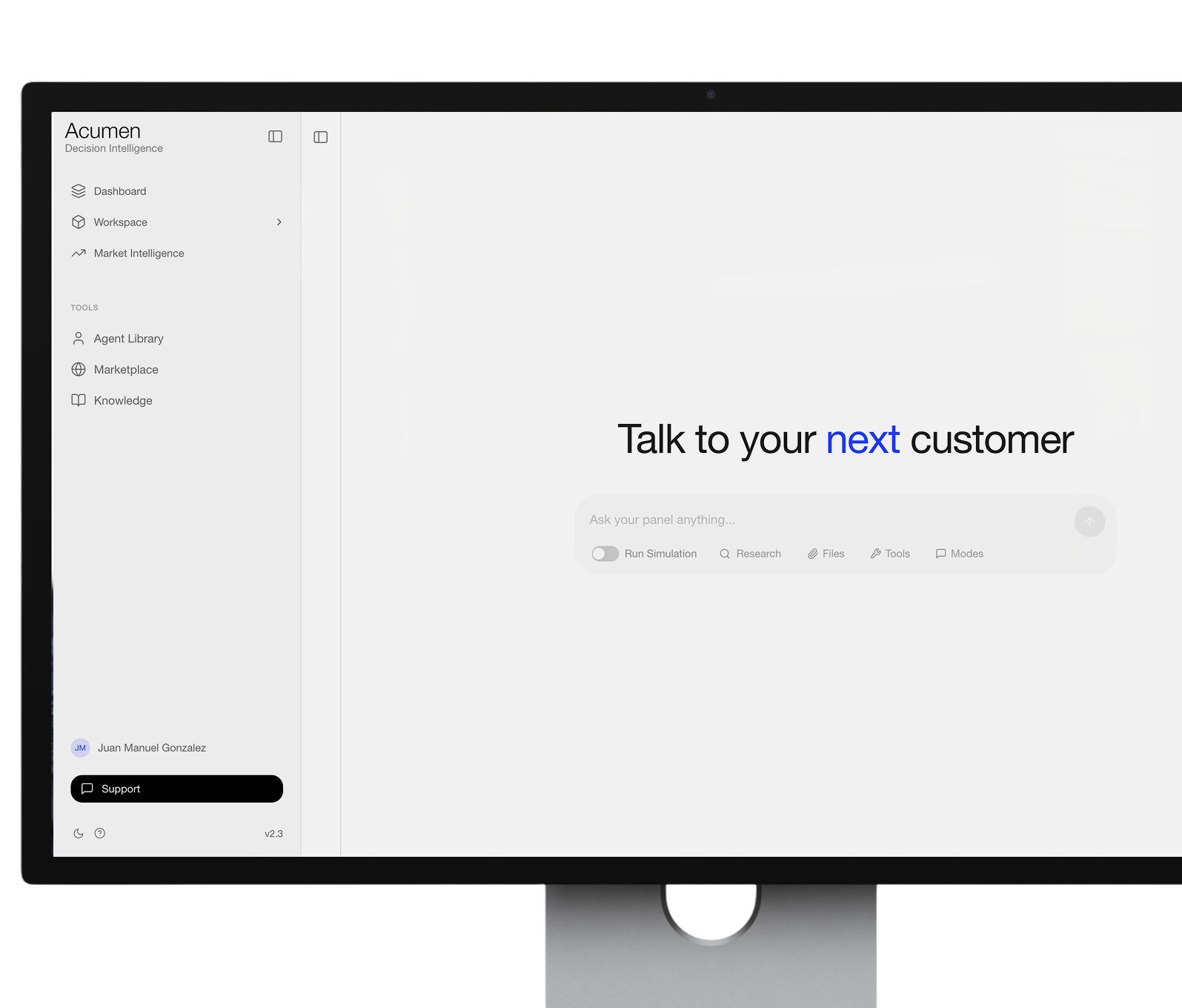
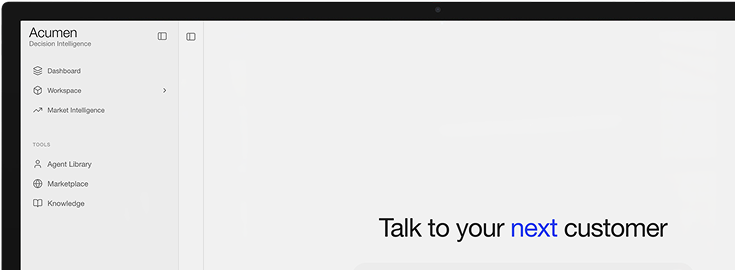
Always-On Customer Intelligence
Turn your own customer data into foresight — validate, simulate, and sense every major decision before you commit.