AI in Life Sciences: Key Trends Transforming 2026
Introduction
AI in life sciences is reshaping discovery, trials, and patient outcomes with measurable gains in speed and precision. Senior leaders are operationalizing AI for life sciences to cut cycle times, improve decision-making, and scale innovation responsibly. This article outlines five trends that will define 2026, highlighting how generative AI in life sciences, data integration, and governance translate into an edge for enterprise brands. Together, these trends reveal where AI use cases in life sciences will deliver the most value next.
Market Context: Disruption & Opportunity
The shift from pilot projects to platform-scale deployments is accelerating, making AI in life sciences a core capability rather than a niche experiment. Rising R&D costs, complex data landscapes, and pressure for faster approvals are driving investment in AI for life sciences to streamline end-to-end workflows. Generative AI in life sciences now supports target identification, molecular design, and in-silico testing, compressing early-stage timelines. Real-world data and multimodal analytics are improving evidence quality and powering earlier signal detection, while cloud ecosystems enable cross-functional collaboration. For regulators and payers, explainability and traceability are becoming non-negotiable, pushing companies to harden model governance. Benefits include reduced time-to-insight, higher trial efficiency, and more precise patient stratification—proof that AI use cases in life sciences can compound value when aligned to data standards and operating models. The net effect for stakeholders is a race to operational excellence: those who integrate technology, talent, and trustworthy data will lead.
Top 5 Trends to Watch in Life Sciences AI
- Generative AI Accelerating Drug Discovery
- Predictive Analytics Transforming Clinical Trials
- AI-Powered Diagnostics and Personalized Medicine
- Cloud Data Integration and Interoperability at Scale
- Ethical AI and Regulatory-by-Design Frameworks


%20(1).png)

Let’s kickstart the conversation and design stuff people will love.

The Retail & Consumer Index


Trend Breakdown: Context & Competitive Insight

Generative AI Accelerating Drug Discovery
Generative AI in life sciences uses foundation models to design novel compounds, predict ADMET properties, and prioritize candidates before wet-lab testing. The drivers include cheaper compute, richer training corpora, and better structure-activity labeling. This affects discovery teams, partner CROs, and IP strategists by shifting value earlier in the pipeline. Competitive advantage comes from coupling proprietary data with model fine-tuning, yielding higher-quality hits and fewer dead ends. Leaders operationalize feedback loops between in-silico and in-vitro to continuously improve models. As adoption scales, governance for data lineage and claim substantiation will differentiate who advances programs fastest and safest.
Predictive Analytics Transforming Clinical Trials
AI for life sciences trial operations applies machine learning to feasibility, site selection, and patient retention forecasting. The shift is driven by decentralized designs, richer RWD sources, and stricter diversity requirements. Functions impacted include clinical operations, biostats, and pharmacovigilance, which gain earlier risk signals and scenario planning. Competitive edge stems from integrated data pipelines and real-time dashboards that reduce protocol deviations and screen-fail rates. Organizations using AI use cases in life sciences for adaptive trial management report fewer delays and more confident submissions. Embedding explainable models supports regulator interactions and strengthens evidence packages.
AI-Powered Diagnostics and Personalized Medicine
AI in life sciences now enables multimodal diagnostics, combining imaging, genomics, and EHR data to detect disease earlier and tailor therapies. Drivers include cheaper sequencing, standard APIs, and maturing clinical AI pathways. Stakeholders—from care delivery teams to companion-diagnostic partners—benefit through improved specificity and time-to-treatment. Competitive advantage arises from curated, consented datasets and human-in-the-loop workflows that sustain accuracy in production. As models generalize across populations, attention to bias testing, calibration, and drift monitoring becomes a brand trust differentiator. This is where AI for life sciences translates most visibly into patient impact.
Cloud Data Integration and Interoperability at Scale
Innovation depends on unifying siloed lab, manufacturing, and clinical data into governed cloud platforms. The trend is propelled by FAIR data practices, modern ELT, and vector databases that make unstructured content AI-ready. It affects R&D IT, quality, and safety teams that need shared ontologies and auditability. Competitive advantage comes from interoperable architectures that allow rapid deployment of AI use cases in life sciences across programs and geographies. Leaders standardize metadata, apply access controls, and productize data to reduce time-to-model and time-to-insight. This scaffolding also accelerates generative AI in life sciences by guaranteeing trusted inputs.
Ethical AI and Regulatory-by-Design Frameworks
Global regulators increasingly expect transparency, performance monitoring, and post-market surveillance for clinical AI. This trend is driven by emerging guidance on validation, bias, and explainability. Quality, legal, and clinical teams must collaborate to codify lifecycle controls and evidence thresholds. Competitive advantage accrues to firms embedding governance into model development, including dataset documentation, versioning, and continuous verification. Ethical readiness reduces approval friction and strengthens payer confidence. As scrutiny rises, truly defensible AI in life sciences will be those programs designed for compliance from day one.
What Leading Brands Are Doing
Leading biopharma and medtech players are pairing proprietary datasets with domain-tuned models to cut discovery cycles and sharpen trial operations, while building cloud-native data products that speed deployment. Others are scaling companion diagnostics and remote monitoring pipelines that enable precise, earlier interventions and new revenue streams. At G&Co., we help enterprise teams formalize AI roadmaps, modernize data foundations, and stand up governance that satisfies regulators and accelerates delivery—turning strategy into measurable pipeline and portfolio impact.
Risks, Blind Spots & What to Avoid
Risk 1: Algorithm-first, Context-second
Why it matters: Prioritizing model outputs over domain review can propagate subtle errors into critical decisions.
Blind spot: Underestimating the need for expert adjudication, drift checks, and continuous calibration.
Risk 2: Compliance as a Late-stage Gate
Why it matters: Treating governance as an afterthought triggers rework, delays, and audit exposure.
Blind spot: Missing documentation for data lineage, validation plans, and performance monitoring.
Risk 3: Siloed Pilots with No Scale Path
Why it matters: Fragmented efforts duplicate costs and never compound into enterprise capabilities.
Blind spot: Lack of shared standards, product ownership, and a platform to reuse components.
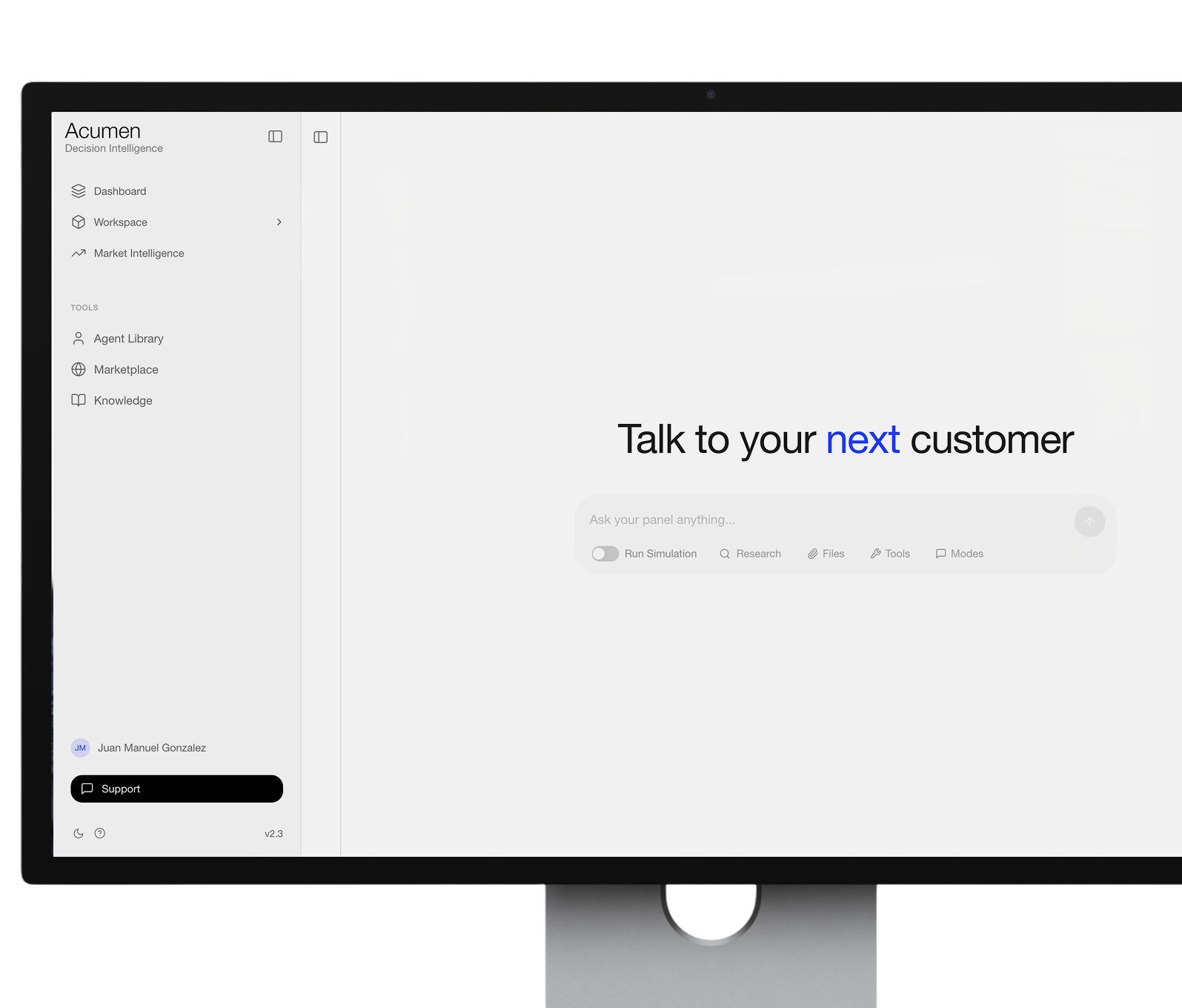
Always-On Customer Intelligence
Turn your own customer data into foresight — validate, simulate, and sense every major decision before you commit.


The Role of AI Consulting Firms

AI consulting firms help life sciences organizations navigate technology transitions by aligning business goals, data readiness, and delivery models into a coherent roadmap. They identify high-ROI AI use cases in life sciences, architect interoperable data platforms, and operationalize governance so solutions survive real-world complexity. Specialists accelerate generative AI in life sciences by fine-tuning models on proprietary assets, establishing human-in-the-loop review, and implementing monitoring to manage drift and bias. The right partner turns AI for life sciences from isolated experiments into scalable programs, reducing time-to-value while meeting regulatory expectations. Ongoing support includes capability building, change management, and performance analytics that keep AI in life sciences resilient as guidance evolves. G&CO.Health partners with enterprise brands to transform ideas into impact—combining strategy, data, and product execution to create durable competitive advantage.
Conclusion & Strategic Outlook
These five trends show that AI in life sciences is moving from promise to production, with generative design, predictive trials, and interoperable data platforms redefining operating models. Success depends on pairing AI for life sciences with trustworthy data, embedded governance, and domain expertise. Enterprises that invest in scalable platforms and responsible practices will lead on speed, quality, and patient outcomes. The strongest differentiators will come from proprietary datasets, explainable models, and repeatable delivery patterns. At G&CO.Health, we bring the strategic clarity and execution muscle to turn AI use cases in life sciences into measurable results: let’s define what’s next together.