Digital Experience Platform Trends: AI & Generative CX
Introduction
The five digital experience platform trends defining 2026 are AI-driven personalization, agentic customer experiences, generative content integration, cross-platform orchestration, and predictive analytics. The category itself is changing shape: Forrester describes the emergence of agentic DXPs, platforms that embed AI agents operating across content, data, and workflows to continuously optimize experiences, marking a shift from feature accumulation to orchestration. This article explores what enterprise brands must consider to stay competitive.
Market Context: Disruption & Opportunity
The DXP landscape is shifting as customer expectations grow and competition intensifies, while traditional platforms struggle to deliver personalized, real-time experiences across channels. The market has reached broad capability parity: nearly every serious vendor now offers content management, customer data, personalization, automation, and commerce integration, which pushes differentiation toward orchestration and measurable outcomes rather than feature checklists.
Architecture is consolidating in parallel. Composable DXP adoption has climbed from roughly 50% to 70% in three years, and Forrester frames composable as the dominant pattern for enterprises above $1 billion in revenue. The forcing function is agentic commerce and AI-driven discovery, since standards like ChatGPT Instant Checkout and the Universal Commerce Protocol all assume the organization exposes structured data through APIs, an assumption that fundamentally privileges composable over monolithic.
The dxp future outlook favors early adopters, but analysts increasingly note that adoption, governance, and operational readiness, not technology, are the primary constraints.
Top 5 Trends to Watch in Digital Experience Platforms
• AI-Driven Personalization
• Agentic Customer Experiences
• Generative Content Integration
• Cross-Platform Orchestration
• Predictive Analytics for Engagement

Trend Breakdown: Context & Competitive Insight
AI-Driven Personalization
AI in digital experience platforms delivers individualized content at scale, and in 2026 AI is a core capability rather than an add-on. Machine learning models analyze behavior to predict preferences and optimize interactions in real time, increasingly powered by first-party data as reliance on third-party tracking declines. Customers now expect real-time, relevant experiences across channels, and brands implementing AI-driven personalization increase engagement, conversion, and loyalty. Competitive advantage comes from faster adaptation and data-informed decision-making rather than from the model itself.
Agentic Customer Experiences
The meaning of agentic shifted decisively in 2026. Beyond giving customers more self-service and control, leading DXPs now embed autonomous AI agents that operate across content, data, and workflows to continuously orchestrate, experiment on, and optimize experiences under human direction. Forrester frames these as goal-seeking environments that learn, adapt, and assist teams in real time rather than passive toolkits, moving away from static composability toward platforms that actively coordinate how components work together. The risk rises with the capability: Gartner’s Irina Guseva warns that autonomy plus composability can outpace governance and operational readiness. If agents are going to orchestrate workflows, teams need clear roles, controls, and telemetry, not just new features.
Generative Content Integration
Generative tools let DXPs automatically create personalized assets such as copy, visuals, and recommendations, reducing manual workload and accelerating time-to-market. Brands can scale creativity while maintaining consistency, provided they guard against a flood of low-value, undifferentiated output by enforcing brand guidelines and human review. Vendors are moving quickly here, with Sitecore investing heavily in AI orchestration, prompt-based component generation, and agentic content workflows, and Contentful strengthening personalization through acquisition. Competitive advantage comes from faster execution grounded in disciplined content and data, since as AEO and GEO reshape discovery, content quality becomes the prerequisite for trustworthy AI-driven experiences rather than an afterthought.
Cross-Platform Orchestration
Orchestration allows seamless delivery across web, mobile, IoT, and other touchpoints, and the future emphasizes composable, headless architectures with unified data and coordinated actions. Experiences are increasingly treated as structured, machine-readable data that agents and AI-driven search can interpret, which is why composable has moved from preference to requirement for agent-readiness. Brands that integrate orchestration provide consistent messaging and interactions, while fragmentation reduces satisfaction. One budgeting caution worth internalizing: Gartner puts integration at roughly 85% of total program cost, the line item most internal budgets underestimate by 30% to 50%.
Predictive Analytics for Engagement
Predictive analytics forecasts customer behavior and guides proactive engagement, giving more accurate insight into preferences, churn risk, and conversion potential, and increasingly feeding the agentic systems that act on those insights automatically. Brands leveraging it allocate resources more effectively and improve ROI, anticipating needs and acting before issues occur. This helps enterprises optimize campaigns, reduce friction, and drive long-term loyalty, and it is what turns agentic capability into measurable outcomes rather than activity.



.png)
%20(1).png)

Let’s kickstart the conversation and design stuff people will love.

The Retail & Consumer Index


What Leading Brands Are Doing
Leading companies are transforming how they engage and innovate. Brand A implemented AI-driven personalization and agentic orchestration across its DXP, resulting in higher conversion rates and improved retention. Brand B uses generative content tools on a composable architecture to scale campaigns quickly while maintaining brand consistency and governance. Across the vendor landscape, the emphasis has shifted toward composable and headless architectures, out-of-the-box connectors, cloud-native SaaS, and low-code environments, positioning the DXP as the central hub for customer experience, data, and content.
At G&CO., we have helped clients integrate agentic experiences, cross-platform orchestration, and predictive analytics. Our guidance enables brands to convert digital experience platform trends into measurable impact.
Risks, Blind Spots & What to Avoid
Risk 1: Over-Reliance on Automation
Why it matters: Excessive automation reduces human oversight and creativity, and unchecked generative output floods channels with low-value content.
Blind spot: Teams underestimate the need for quality control, human direction, and context-specific adjustment.
Risk 2: Fragmented Implementation
Why it matters: Siloed DXPs and tools hinder cohesive experiences.
Blind spot: Companies assume adding features ensures better engagement without proper integration, underestimating both the governance complexity composable architectures introduce and the integration costs that dominate program budgets.
Risk 3: Ignoring Data Privacy and Compliance
Why it matters: AI and generative tools rely on user data, creating compliance risk.
Blind spot: Teams overlook regulations, and the controls and telemetry responsible AI governance requires, when deploying quickly.

The Role of Digital Experience Platform Firms
Digital experience platform firms help enterprises adopt and optimize DXPs, guiding strategy, implementation, and ongoing platform management. They support integration of AI, generative content, and agentic experiences, along with the composable architecture and governance frameworks these capabilities require, reducing deployment risk.
Selecting the right partner ensures proper data use, platform scalability, and measurable ROI, while continuous support allows companies to adapt to evolving expectations. At G&CO., we assist clients in leveraging digital experience platform trends and AI-driven innovations to drive impact, enhance personalization, and scale engagement.
Frequently Asked Questions
What are the top digital experience platform trends in 2026?
The top trends are AI-driven personalization, agentic customer experiences, generative content integration, composable cross-platform orchestration, and predictive analytics.
What is an agentic DXP?
Forrester uses the term for platforms that embed AI agents operating across content, data, and workflows to continuously optimize digital experiences. Rather than passive toolkits, they function as goal-seeking environments that learn, adapt, and assist teams in real time under human direction.
Is composable architecture necessary in 2026?
Increasingly, yes. Composable DXP adoption has risen from roughly 50% to 70% in three years, and Forrester frames it as the dominant pattern for enterprises above $1 billion in revenue. Agentic commerce standards assume structured data exposed through APIs, which privileges composable over monolithic architectures.
What is the biggest hidden cost in a DXP program?
Integration. Gartner attributes roughly 85% of total program cost to integration, and internal budgets typically underestimate it by 30% to 50%. Organizations also underinvest in operating model evolution, which takes most enterprises around three years to mature.
What is the main risk of agentic DXPs?
Governance lagging capability. Gartner’s Irina Guseva warns that autonomy combined with composability can outpace governance and operational readiness. Agents orchestrating workflows require clear roles, controls, and telemetry rather than additional features.
Conclusion & Strategic Outlook
These five trends reveal the future of digital experience platforms and customer experience technology. AI-driven personalization, agentic experiences, generative content, cross-platform orchestration, and predictive analytics are shaping the 2026 DXP landscape. Brands that embrace them, with the governance to match, will deliver more relevant, responsive, and engaging experiences.
At G&CO., we combine strategic insight and execution capabilities to help enterprises translate trend awareness into actionable impact. The dxp future outlook shows that companies prepared for these shifts will lead in customer experience innovation.
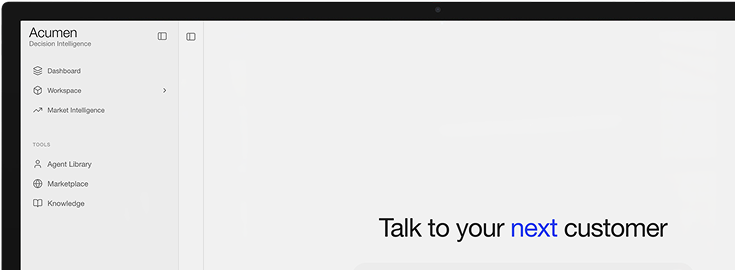
Always-On Customer Intelligence
Turn your own customer data into foresight — validate, simulate, and sense every major decision before you commit.