Banking App Design Trends 2026: UX, UI & Mobile Insights
Introduction
The five banking app design trends defining 2026 are personalized interfaces, conversational and agentic banking features, biometric security and frictionless authentication, cross-platform consistency, and data-driven UX. The biggest design shift is who the app serves: as customers deploy their own AI assistants, Forrester expects machine-initiated traffic to bank systems to surge by 40%, meaning banks must design for agents acting on a customer’s behalf as well as for the customer. This article explores each trend and what enterprise banks must prioritize.
Market Context: Disruption & Opportunity
Banking app design is a primary factor in customer satisfaction and retention, yet many banks still run outdated systems that limit speed and usability. As fintech competitors deliver sleek interfaces, banks face pressure to improve UI and UX.
Mobile design is now central to trust, and the strategy is shifting from mobile-first to mobile-only as users abandon desktop channels. Poor layouts, cluttered navigation, or weak security erode confidence and drive users to alternatives. Enterprise banks must act quickly because loyalty increasingly depends on the best mobile experiences, and because AI is reshaping what those experiences can do.
The gap between leaders and laggards widens each year. As the app becomes the primary interface with a customer’s finances, the experience is shifting from transactions toward continuous, intelligent engagement. Modern bank app design reduces service costs, builds loyalty, and positions banks as leaders in digital trust. Firms that delay risk losing relevance to faster-moving rivals.
Top 5 Trends to Watch in Banking App Design
• Personalized Banking Interfaces
• Voice and Conversational Banking Features
• Biometric Security and Frictionless Authentication
• Cross-Platform Consistency and Omnichannel Integration
• Data-Driven UX for Continuous Optimization

Trend Breakdown: Context & Competitive Insight
Personalized Banking Interfaces
Personalization helps customers see only what matters to them, driven by AI that tailors dashboards, offers, and alerts. In 2026 it is becoming predictive rather than reactive, anticipating needs and surfacing relevant actions before a customer asks. Competitively, this makes the app more relevant and sticky, but only when it rests on a well-integrated data layer rather than bolted-on features. Personalization built on fragmented data produces confident-looking recommendations that miss.
Voice and Conversational Banking Features
Conversational banking has moved far beyond “check my balance.” LLM-powered assistants now let customers express intent in natural language and receive context-aware, multi-turn financial guidance that explains products, compares options, and guides decisions in real time. The interface is shifting from something users navigate to something they converse with, and agentic systems can execute multi-step tasks rather than just answer. Adoption is real: JPMorgan reports roughly 150,000 employees using large language models weekly, evidence of how quickly these interfaces have normalized. Banks that adopt assistant-led experiences early turn the app from a passive tool into an interactive financial partner.
Biometric Security and Frictionless Authentication
Fingerprint, facial recognition, behavioral biometrics, and passkeys are replacing passwords, with most banking app users now preferring biometrics and adaptive authentication that verifies identity continuously without disrupting the flow. Failed scans and timeouts must feel safe rather than alarming, always paired with a clear fallback. The fast-emerging frontier is authorizing AI agents that act on a customer’s behalf, sometimes called Know Your Agent, where explicit consent flows, permission dashboards, and audit trails govern what an assistant can do. Industry moves like Visa’s Intelligent Commerce and Mastercard’s Agent Pay show how agentic payments will need to be verified. Fraud pressure makes this urgent, with multimodal detection combining behavioral biometrics, document verification, and deepfake detection becoming the emerging standard.
Cross-Platform Consistency and Omnichannel Integration
Customers expect consistency across devices, and increasingly expect apps to be usable by everyone. Inclusive, accessible design meeting WCAG 2.2 standards, with voice control, high-contrast modes, larger tap targets, and screen reader support, is now part of the baseline rather than a later fix. Consistency between web, app, and in-branch touchpoints strengthens trust, and the real requirement is that context persists as customers move between channels. A customer who starts in the app should not restart in the branch.
Data-Driven UX for Continuous Optimization
Usage data reveals pain points and enables scenario-based design built around real customer goals rather than feature lists, allowing continuous updates instead of one-time overhauls. As apps become more proactive and automated, trust architecture becomes essential: users should understand what the system will do before it acts and what happened after, supported by clear, transparent feedback. This matters because customers increasingly trust AI assistants but want control, and the design job is to give them both.


%20(1).png)

Let’s kickstart the conversation and design stuff people will love.

The Retail & Consumer Index



What Leading Brands Are Doing
Leading banks are adapting quickly. Some global institutions are redesigning UI around personalization, predictive insights, and conversational assistants that guide customers in natural language. Others invest heavily in biometric and adaptive authentication, reducing fraud while streamlining access, and are beginning to design for the authorization of AI agents acting on customers’ behalf. Across the industry, banks are building the consent flows and permission controls that agentic banking will require.
At G&CO., we work with enterprise banks to modernize digital platforms, reimagine mobile UI design, and optimize customer journeys. Our approach helps clients translate banking app design trends into measurable growth and market advantage.
Risks, Blind Spots & What to Avoid
Risk 1: Overcomplicating Design
Why it matters: Extra features without clarity overwhelm users, and many abandon an app after a single confusing experience.
Blind spot: Banks underestimate how much simple, clear layouts drive satisfaction.
Risk 2: Ignoring Security in UI/UX
Why it matters: Weak authentication damages trust and brand value.
Blind spot: Teams prioritize speed over security, and overlook the transparency users now expect when AI and automated agents act on their behalf, including clear permissions and audit trails.
Risk 3: Delayed Innovation
Why it matters: Slow adoption of design trends loses customers.
Blind spot: Leaders assume loyalty lasts longer than it does in digital banking, and underestimate how fast agent-mediated banking is arriving.
The Role of Banking App Design Firms
Banking app design firms help enterprise banks modernize systems and meet rising expectations, bringing deep knowledge of system design, UI, and UX. They guide banks in building mobile strategies that align with customer needs and regulatory requirements.
A skilled partner ensures banks adopt design that improves usability while strengthening security, reducing risks by avoiding fragmented UI or underdeveloped authentication. Selecting the right partner helps banks scale faster, improve satisfaction, and achieve better outcomes.
Ongoing support is critical because these trends change rapidly. G&CO. provides strategy, execution, and continuous optimization to keep enterprise banks ahead.
Frequently Asked Questions
What are the top banking app design trends in 2026?
The top trends are predictive personalized interfaces, LLM-powered conversational and agentic banking, biometric and adaptive authentication including agent authorization, accessible cross-platform consistency, and data-driven UX with trust architecture.
What is “Know Your Agent” in banking?
Know Your Agent refers to the emerging design and security challenge of authorizing AI assistants that act on a customer’s behalf. It requires explicit consent flows, permission dashboards, and audit trails defining what an agent can do, reflected in industry moves like Visa Intelligent Commerce and Mastercard Agent Pay.
How is AI changing banking app interfaces?
AI is shifting the interface from something users navigate to something they converse with. LLM-powered assistants handle natural-language intent and multi-turn guidance, while agentic systems execute multi-step tasks. Forrester expects machine-initiated traffic to bank systems to rise 40% as customers’ own agents interact with banks.
Are passwords being replaced in banking apps?
Largely, yes. Fingerprint, facial recognition, behavioral biometrics, and passkeys are replacing passwords, supported by adaptive authentication that verifies identity continuously in the background without interrupting the customer.
What accessibility standard should banking apps meet?
WCAG 2.2 is the working benchmark, covering contrast, keyboard and screen reader support, tap target sizing, and voice control. Beyond compliance, accessible design reduces cognitive load for every user.
Conclusion & Strategic Outlook
The five trends reflect how digital banking is reshaping customer expectations. Personalized interfaces, conversational features, biometric security, cross-platform design, and data-driven UX mark the next stage of competition, with agent-mediated banking arriving faster than most roadmaps assume. Banks that move quickly will strengthen loyalty and trust.
Enterprise leaders must recognize that strong bank app design is no longer optional. It defines market leadership. At G&CO., we combine strategic insight with execution to help banks deliver modern, secure, and engaging digital experiences. The future of mobile banking app design will reward those who act with clarity and speed. Let’s shape that future together.
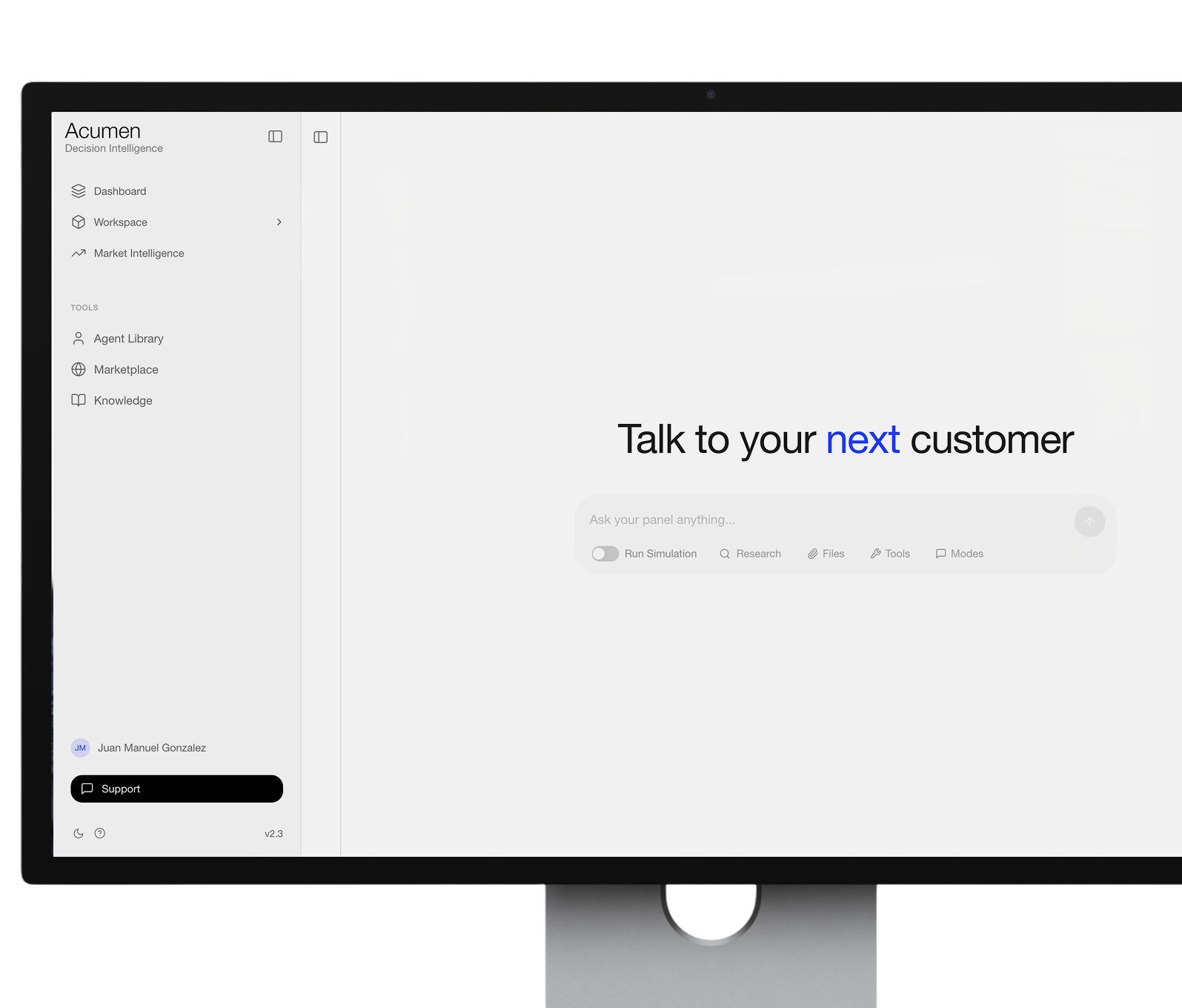
Always-On Customer Intelligence
Turn your own customer data into foresight — validate, simulate, and sense every major decision before you commit.