Omnichannel Retail Trends: Strategy & Solutions
Introduction
The five omnichannel retail trends defining 2026 are personalization across channels, integration of online and offline data, AI-powered customer insights, contactless and mobile payments, and sustainability. The organizing shift is unified commerce: a single real-time source of truth for inventory, orders, and customer data, now a requirement rather than a roadmap item, because AI agents that cannot verify accurate availability simply route the sale elsewhere. This article explores each trend and the solutions that drive growth.
Market Context: Disruption & Opportunity
Customers demand seamless experiences across digital and physical channels, yet many retailers struggle to unify online and in-store operations, limiting efficiency and satisfaction. In 2026 the standard has moved beyond omnichannel toward unified commerce, connecting inventory, orders, and customer data across every touchpoint in real time.
The urgency comes from a new participant in the funnel. Agentic commerce is scaling fast: Salesforce found AI and agents drove 20% of all retail sales during the 2025 holiday season, accounting for $262 billion in spend, while Adobe measured AI-referred traffic converting 42% better than traditional traffic by March 2026, reversing a 38% deficit a year earlier. Retailers with AI agent integration saw roughly 7x better sales growth during Cyber Week than those without.
For stakeholders, this means investing in systems that integrate sales, marketing, and inventory. Companies that adopt unified solutions increase sales, improve retention, and gain competitive advantage, while the benefits extend beyond revenue to loyalty and operational efficiency.
Top 5 Trends to Watch in Omnichannel Retail
• Personalization Across Channels
• Integration of Online and Offline Data
• AI-Powered Customer Insights
• Contactless and Mobile Payments
• Sustainability in Omnichannel Retail

Trend Breakdown: Context & Competitive Insight
Personalization Across Channels
Retailers are creating personalized experiences across every touchpoint, driven by demand for relevance and convenience. In 2026, personalization has moved from reactive guesswork to predictive precision, using real-time signals like browse intent, price sensitivity, replenishment cycles, and local events to determine the next best action. The strongest results come when personalization only surfaces items that can actually be fulfilled, which is why it depends on unified inventory data. Transparency and clear consent sustain the trust that makes personalization welcome rather than intrusive, and companies that invest here gain loyalty and higher conversion.
Integration of Online and Offline Data
This has crystallized into unified commerce: a centralized, real-time source of truth for inventory, order management, and customer data rather than loosely coordinated channels. Integrated data enables accurate availability, consistent pricing, reliable delivery promises, and fulfillment options like buy-online-pickup-in-store and same-day delivery, while turning physical stores into strategic fulfillment nodes. The gap is real, with 45% of retailers saying they sometimes face data quality issues affecting business decisions and 36% saying it happens often. Retailers that close it deliver measurable efficiency, fewer stockouts, and better decisions.
AI-Powered Customer Insights
AI helps retailers predict demand, optimize inventory, and personalize marketing, and in 2026 it is increasingly agentic, with systems that discover, evaluate, and complete purchases on a customer’s behalf. This makes machine-readable product and inventory data essential: Adobe scored the average US product page at just 66% machine-readable, meaning roughly a third of the content where people decide to buy cannot be parsed by an agent, and agents are less forgiving than humans, skipping products with incomplete attributes or outdated inventory entirely. If an agent cannot confirm availability, it routes the sale to a competitor. Retailers using AI well gain faster decisions, higher accuracy, and better satisfaction across all channels.
Contactless and Mobile Payments
Customers expect fast, secure payment options online and in-store, and contactless and mobile payments reduce friction. In 2026 this extends into conversational and agentic checkout, where a purchase completes within a single AI-assisted interaction, supported by emerging standards like the Agentic Commerce Protocol and the Universal Commerce Protocol, which counts more than twenty endorsers including Mastercard, Visa, Best Buy, Macy’s, and The Home Depot. Security is advancing in parallel, with 78% of financial institutions expecting fraud to spike from AI shopping agents, driving new agent authentication frameworks. Retailers that lag risk losing customers to more agile competitors.
Sustainability in Omnichannel Retail
Sustainability is now core to retail operations and strategy, with customers expecting ethical sourcing, eco-friendly packaging, and reduced waste, and increasingly rewarding specific, verifiable commitments over vague messaging. Retailers incorporating credible sustainable practices differentiate themselves and appeal to conscious consumers, affecting supply chains, logistics, and marketing. Omnichannel retail that integrates sustainability builds long-term loyalty and brand value.



.png)
%20(1).png)

Let’s kickstart the conversation and design stuff people will love.

The Retail & Consumer Index


What Leading Brands Are Doing
Leading companies are integrating digital and physical experiences. Amazon’s Rufus assistant serves 300 million users, with AI-assisted sessions converting 60% higher than non-AI sessions. Walmart integrated its Sparky assistant into ChatGPT after finding in-chat purchases converted worse than redirecting shoppers to its own site, while ChatGPT traffic delivered roughly twice as many new customers as traditional search. Shopify reported AI-driven traffic to its stores growing 8x year over year in Q1 2026, with orders from AI-powered searches up nearly 13x and carrying 14% higher average order values. Retailers with branded agents saw sales grow 32% faster over the holiday season.
At G&CO., we help clients implement omnichannel retail solutions that align with business strategy, enhance customer experience, and drive measurable results. Our expertise translates trend awareness into market advantage.
Risks, Blind Spots & What to Avoid
Risk 1: Inconsistent Customer Experience
Why it matters: Fragmented interactions frustrate customers and reduce loyalty.
Blind spot: Retailers overlook differences between in-store and digital engagement, even as customers expect one continuous journey.
Risk 2: Data Silos
Why it matters: Isolated data prevents accurate insights and slows decision-making.
Blind spot: Teams assume basic reporting suffices without the unified, real-time, machine-readable data that both customers and AI shopping agents now depend on. In agent-mediated commerce, the behavioral data stream often starts only at add-to-cart, since discovery and consideration happen inside the AI, which collapses attribution and darkens retail media.
Risk 3: Ignoring Emerging Technologies
Why it matters: Falling behind on AI, unified commerce, payments, or sustainability reduces competitiveness.
Blind spot: Companies underestimate how fast agentic commerce is reshaping discovery, and how central data trust has become to loyalty.
The Role of Omnichannel Retail Firms
Omnichannel retail firms help retailers design, implement, and optimize seamless experiences across channels, ensuring systems integrate data, operations, and marketing for consistent engagement, increasingly on unified commerce foundations that support agentic experiences. They solve fragmented processes, inefficient inventory management, and slow responses to market trends. Choosing the right partner ensures smooth implementation, faster ROI, and long-term scalability, with ongoing support for emerging tools.
At G&CO., we guide brands through digital strategy, customer journey redesign, and platform modernization, enabling measurable impact and sustained growth.
Frequently Asked Questions
What are the top omnichannel retail trends in 2026?
The top trends are predictive personalization across channels, unified commerce integrating online and offline data, agentic AI customer insights, contactless and conversational payments, and credible sustainability.
What is unified commerce and how is it different from omnichannel?
Omnichannel coordinates multiple channels; unified commerce runs them from a single real-time source of truth for inventory, orders, and customer data. That distinction now matters commercially, because AI agents that cannot verify accurate availability route the sale to a competitor.
How much retail traffic comes from AI agents?
It is growing rapidly. Salesforce found AI and agents drove 20% of all retail sales during the 2025 holiday season, worth $262 billion, while Shopify reported AI-driven traffic growing 8x year over year in Q1 2026, with AI-search orders up nearly 13x.
Does AI-referred traffic convert better in retail?
Yes, and it reversed quickly. Adobe Analytics measured AI-referred traffic converting 38% worse than non-AI traffic in March 2025 but 42% better by March 2026, with those shoppers spending 48% longer on site and generating 37% more revenue per visit.
Why does machine-readable data matter for retailers?
Because agents skip what they cannot parse. Adobe scored the average US product page at 66% machine-readable, meaning around a third of buying-decision content is invisible to an agent. Products with incomplete attributes or outdated inventory are simply never recommended.
Conclusion & Strategic Outlook
These five trends highlight a shift toward integrated, data-driven, and sustainable retail operations, anchored by unified commerce and increasingly shaped by agentic AI. Brands that act will increase loyalty, efficiency, and competitive advantage, while those that wait risk becoming invisible to the agents deciding what shoppers see.
At G&CO., we provide the strategy and execution needed to translate trend awareness into tangible results. The future of omnichannel retail favors those who combine insight with action, and G&CO. partners with brands to achieve this transformation.
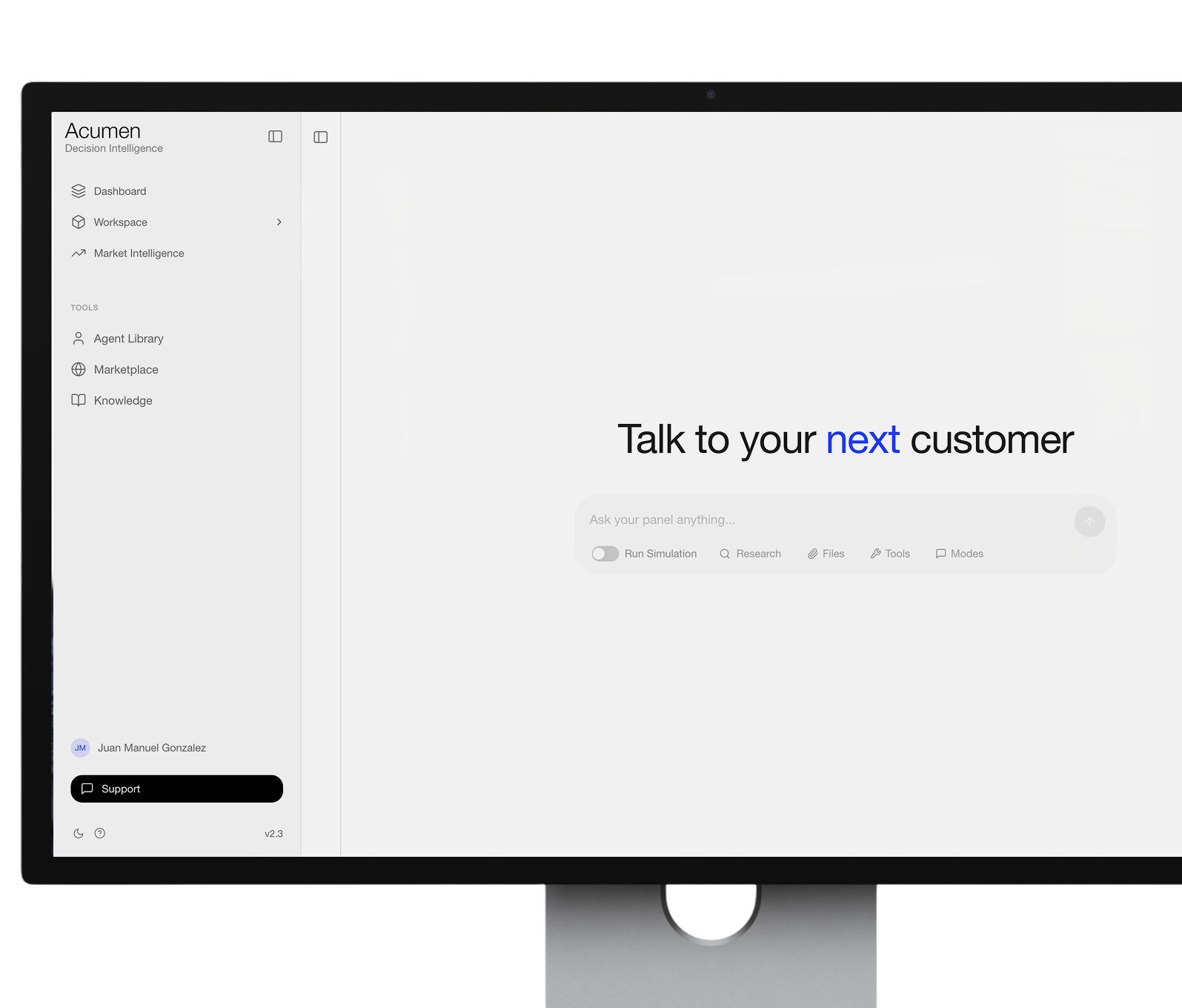
Always-On Customer Intelligence
Turn your own customer data into foresight — validate, simulate, and sense every major decision before you commit.