
Telecommunications Supply Chain FAQs | Strategy & Solutions Explained
Introduction
The telecommunications supply chain faces growing pressure as global connectivity expands. Network providers encounter challenges such as rising telecommunication supply chain risk, shifting demand, and rapid technology cycles. Many companies struggle to maintain efficiency while managing cost and complexity.
This article explains how the supply chain in the telecommunication industry operates, what drives risk, and how leaders can strengthen their telecommunication supply chain strategy. It is written for directors, VPs, and heads of enterprise telecom companies. Readers will gain clear answers, strategic insight, and actionable steps to improve supply chain operations.
Market Context: Disruption & Opportunity
The telecommunications supply chain has become a defining factor in the success of modern telecom enterprises. As 5G and fiber deployments grow, telecom brands face intense demand for speed, reliability, and scale. Global shortages in raw materials and semiconductors have delayed production, impacting everything from core infrastructure to customer devices.
Geopolitical risks and environmental factors add new layers of pressure. To reduce exposure, telecom leaders prioritize transparency and digital control. The ability to implement a resilient telecommunication supply chain strategy now defines competitive advantage. Investment in analytics, automation, and AI tools enables smarter forecasting and risk prevention.
FAQs Snapshot

What is the telecommunications supply chain?
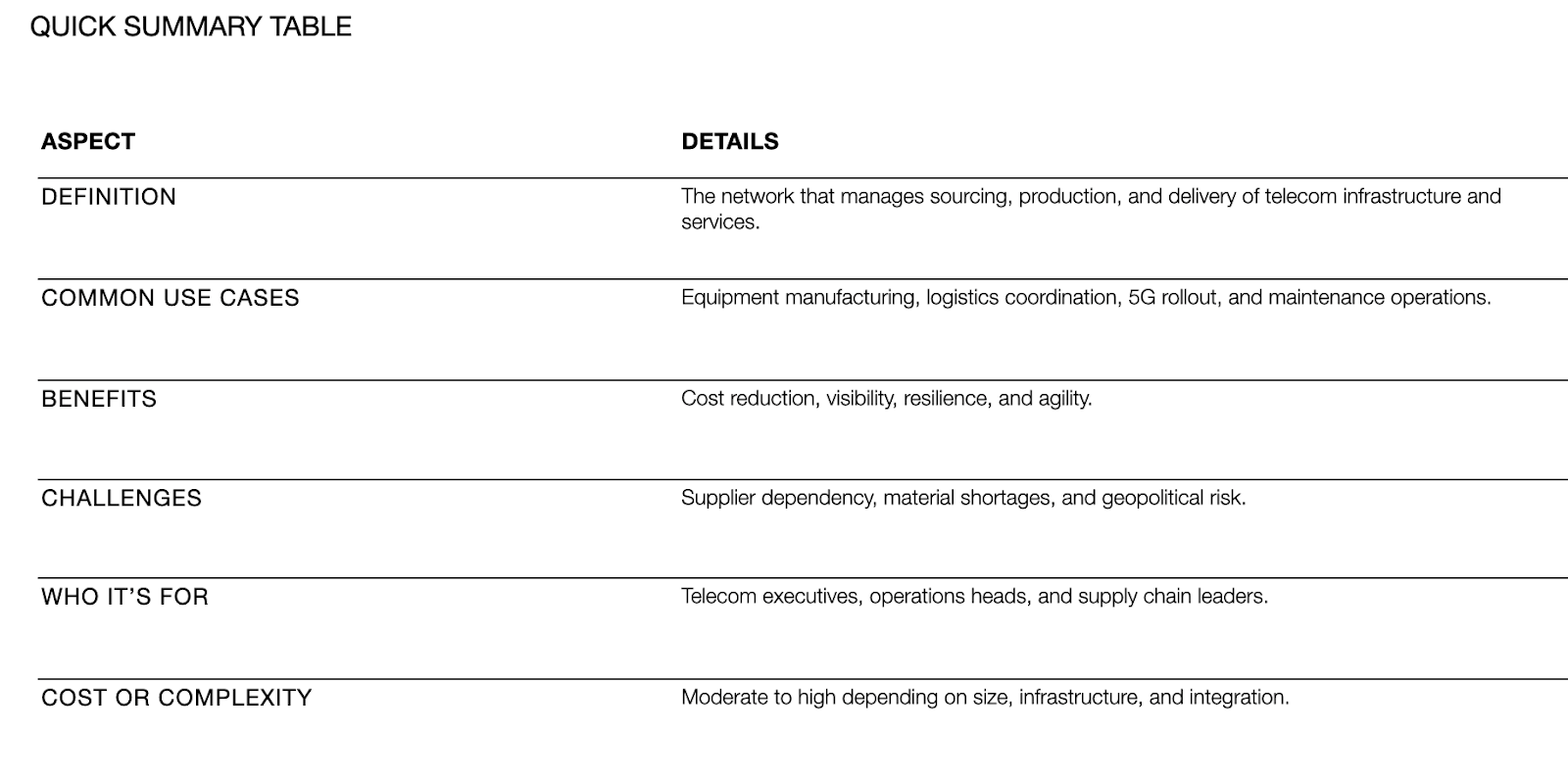
The telecommunications supply chain refers to the global network of suppliers, manufacturers, and logistics partners that support telecom operations. It includes sourcing hardware, assembling infrastructure, and managing distribution. A reliable telecommunications supply chain ensures consistent service delivery and operational efficiency.
Why is supply chain management important in the telecommunication industry?
The supply chain in the telecommunication industry connects international production with local service operations. Effective management reduces costs, shortens lead times, and improves network reliability. It also enhances transparency, helping companies adapt quickly to market or environmental disruptions.
What are the major telecommunication supply chain risks?
Telecommunication supply chain risk includes supplier dependency, raw material shortages, cybersecurity threats, and regional instability. Companies that depend on single-source suppliers face greater exposure. Diversified networks, real-time tracking, and contingency planning reduce these vulnerabilities.
How does digital transformation improve telecommunication supply chain strategy?
Digital transformation strengthens every stage of the telecommunications supply chain. By adopting AI, IoT, and data analytics, companies can monitor logistics in real time and predict disruptions before they occur. This improves demand forecasting, enhances decision-making, and ensures more reliable delivery across markets.
What tools support supply chain optimization in telecommunications?
Key tools include ERP systems, AI forecasting platforms, and cloud-based logistics management. These solutions support supplier collaboration, visibility, and proactive issue detection. Integrating these technologies creates a foundation for a sustainable telecommunication supply chain strategy.
How can telecom leaders prepare for future supply chain challenges?
Telecom leaders should build flexibility into procurement, partner with multiple suppliers, and invest in automation. Developing early warning systems for telecommunication supply chain risk improves responsiveness. Strategic planning and consistent performance evaluation help maintain long-term resilience.
Benefits of a Strong Telecommunications Supply Chain
A strong telecommunications supply chain allows enterprises to deliver quality service while reducing risk and cost. It improves supplier collaboration, shortens production cycles, and enhances visibility across operations.
Companies with defined telecommunication supply chain strategy gain higher efficiency, better demand forecasting, and sustainable sourcing. They can scale operations faster and adapt to technology shifts such as 5G and edge computing. A well-managed supply chain in the telecommunication industry becomes a driver of growth and innovation.


%20(1).png)

Let’s kickstart the conversation and design stuff people will love.

The Retail & Consumer Index


Deep-Dive Sections

What It Is & Why It Matters
The telecommunications supply chain manages every stage from sourcing components to maintaining network reliability. It matters because delays or shortages directly impact service quality and customer experience. Strong coordination and visibility ensure business continuity and faster response times.
How It Works
Telecom supply chains depend on integrated global operations between manufacturers, logistics providers, and service partners. Data systems track orders, monitor inventory, and manage shipments. Digital tools automate communication and align production with demand forecasts.
When to Use It (and When Not To)
A defined telecommunications supply chain is essential for large enterprises scaling global operations or expanding service coverage. Smaller firms may operate with leaner systems until growth demands higher visibility and coordination. All telecom providers benefit from early digital adoption to limit future telecommunication supply chain risk.
Tools or Platforms Involved
Enterprise tools like SAP, Oracle SCM, and Microsoft Dynamics unify procurement and logistics data. AI-enabled software such as IBM Sterling adds predictive analytics and visibility. These systems form the foundation for an adaptive telecommunication supply chain strategy.
Integration or Setup Requirements
Implementation involves connecting supplier databases, aligning data formats, and establishing cloud-based workflows. IT collaboration is key to ensuring data accuracy. For many telecom enterprises, cloud migration simplifies integration across global operations.
Scalability & Flexibility
A scalable telecommunications supply chain supports expansion into new markets and technologies. Flexible workflows allow faster adjustments to demand and regulatory change. This adaptability ensures competitiveness and minimizes disruption.
How G&Co. Can Help
G&Co. helps telecom enterprises modernize their supply chain operations. Our consulting teams identify inefficiencies, assess telecommunication supply chain risk, and implement digital systems that improve performance.
With experience in strategy, integration, and optimization, G&Co. partners with brands to design resilient and data-driven supply chain models. Talk to us to clarify your strategy and move forward with confidence.
Conclusion & Next Steps
The telecommunications supply chain defines how effectively a company operates in a competitive market. Strong strategy, digital transformation, and proactive risk management build resilience and efficiency.
At G&Co., we’ve guided enterprise clients through similar transitions in digital strategy, system integration, and operations. Our expertise helps telecom leaders translate insight into measurable improvement. Still have questions? Reach out and let’s solve them together.