
Automotive Cloud Computing FAQs | Cloud Computing in Automotive
The automotive industry is under pressure to move faster, connect systems at scale, and unlock data across vehicles, customers, and operations, yet many leaders still view automotive cloud computing as an IT upgrade rather than a strategic lever. As software-defined vehicles, connected ecosystems, and digital-first customer journeys become the norm, cloud computing in the automotive industry now sits at the center of competitiveness and innovation. This article explains what cloud computing in automotive actually means, how cloud computing for automotive creates measurable value, and where enterprise leaders should focus first. Directors, VPs, SVPs, and Heads across strategy, digital, technology, and operations will leave with a clearer view of how cloud computing in the automotive industry supports growth, resilience, and long-term advantage, plus the decisions required to move forward with confidence.
Market Context: Disruption & Opportunity
The automotive landscape is shifting from hardware-centric models to software-led, data-driven ecosystems powered by cloud computing automotive industry platforms. Legacy infrastructure struggles to support connected vehicles, real-time analytics, and personalized digital experiences, which limits the impact of cloud computing in automotive programs. At the same time, competitive pressure from digital-native entrants has raised expectations around speed, scalability, and continuous innovation enabled by automotive cloud computing. Cloud computing in the automotive industry matters because it allows enterprises to centralize data, modernize platforms, and adapt faster to market change without rebuilding core systems. As electric vehicles, autonomous features, and omnichannel ownership journeys expand, cloud computing for automotive industry leaders becomes a foundation for operational efficiency, product innovation, and customer experience differentiation.
FAQs Snapshot

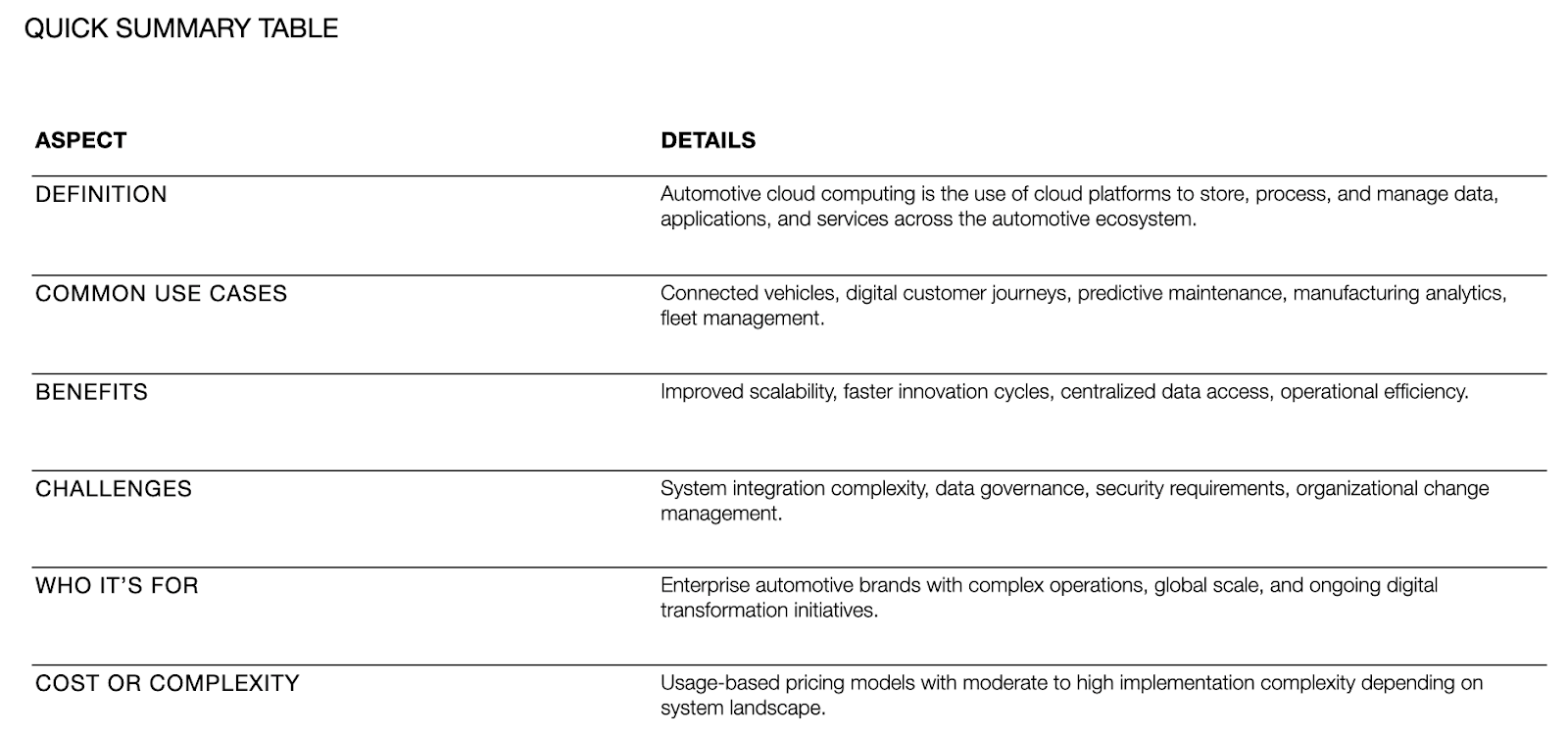
What is automotive cloud computing? Automotive cloud computing refers to the use of cloud-based platforms to store, process, and analyze data across vehicles, manufacturing, supply chains, and customer touchpoints. Cloud computing in automotive enables centralized access to data that was previously siloed across systems. In the cloud computing automotive industry model, infrastructure scales dynamically based on demand. This approach supports real-time insights and continuous software updates. Automotive cloud computing also underpins connected vehicle services and digital ecosystems.
Why is cloud computing in the automotive industry important? Cloud computing in the automotive industry enables faster innovation, better data utilization, and more agile operations. Without cloud computing for automotive, enterprises struggle to support connected services and advanced analytics. Automotive cloud computing allows teams to test, deploy, and optimize features continuously. It also reduces dependency on legacy infrastructure. This makes cloud computing in automotive a strategic enabler rather than a backend tool.
How does cloud computing in automotive work? Cloud computing in automotive works by integrating vehicle data, enterprise systems, and digital platforms into a centralized cloud environment. Automotive cloud computing platforms ingest data from vehicles, sensors, and applications in real time. Cloud computing automotive industry architectures then process this data using analytics and AI services. Insights are delivered across operations, engineering, and customer experience teams. This model supports scalability and rapid innovation.
Is cloud computing for automotive worth the investment? Cloud computing for automotive delivers value when aligned with clear business goals rather than isolated technology upgrades. Automotive cloud computing reduces infrastructure costs while increasing flexibility and speed. Cloud computing in the automotive industry supports long-term scalability and data-driven decision-making. The return increases as more systems and use cases connect. For enterprise brands, cloud computing automotive industry investments often unlock cross-functional efficiency.
Can cloud computing in automotive scale across global operations? Yes, cloud computing in automotive is designed to scale across regions, brands, and platforms. Automotive cloud computing supports global deployments with localized compliance and performance. Cloud computing for automotive industry environments can handle fluctuating demand without manual intervention. This makes it easier to support global manufacturing, distribution, and customer engagement. Scalability is one of the core advantages of cloud computing in the automotive industry.
When should an automotive brand adopt cloud computing? Automotive brands should adopt cloud computing when legacy systems limit growth, speed, or innovation. Cloud computing in automotive is especially critical during platform modernization, digital transformation, or connected vehicle expansion. Automotive cloud computing also supports mergers, new market entry, and ecosystem partnerships. Delaying adoption increases technical debt. Timing matters, but direction matters more.
Benefits of Automotive Cloud Computing
Automotive cloud computing provides enterprise brands with a flexible foundation to modernize operations and digital experiences. Cloud computing in the automotive industry enables faster innovation cycles, improved data visibility, and reduced infrastructure constraints. With cloud computing for automotive, organizations gain real-time insights across vehicles, manufacturing, and customer journeys. Automotive cloud computing also improves collaboration across teams by centralizing platforms and data. Cloud computing automotive industry models support continuous optimization and scalability. These benefits compound as more systems and use cases connect within the cloud computing in automotive environment.


%20(1).png)

Let’s kickstart the conversation and design stuff people will love.

The Retail & Consumer Index


Deep-Dive: What It Is & Why It Matters

Automotive cloud computing represents a shift from static infrastructure to dynamic, scalable platforms that support constant change. Cloud computing in automotive industry environments allow brands to respond quickly to market signals and customer needs. Automotive cloud computing matters because it connects data across the value chain. Cloud computing for automotive also enables innovation without disrupting core operations. In the cloud computing automotive industry, data becomes a strategic asset. This foundation supports long-term competitiveness.
Deep-Dive: How It Works
Cloud computing in automotive works through layered architectures that integrate data ingestion, processing, and application services. Automotive cloud computing platforms collect data from vehicles, plants, and digital touchpoints. Cloud computing in the automotive industry processes this data using analytics and AI tools. Results are shared across teams through dashboards and applications. Cloud computing for automotive industry models support continuous improvement. This creates a closed feedback loop between insight and action.
Deep-Dive: When to Use It and When Not To
Cloud computing in automotive is most effective during transformation initiatives that require flexibility and scale. Automotive cloud computing fits scenarios involving connected services and data-driven operations. Cloud computing automotive industry adoption may be less effective if goals are unclear. Without alignment, cloud computing for automotive can add complexity. Timing and strategy must align. Clear use cases drive success.
Deep-Dive: Tools and Platforms Involved
Automotive cloud computing relies on hyperscale cloud platforms and industry-specific tools. Cloud computing in automotive industry environments integrate analytics, AI, and data management services. Automotive cloud computing platforms support APIs and modular architectures. Cloud computing for automotive industry ecosystems often include third-party solutions. Tool selection should align with strategy. Integration capability is critical.
Deep-Dive: Cost Considerations
Cloud computing in automotive shifts costs from capital expenditure to usage-based models. Automotive cloud computing reduces infrastructure overhead but introduces operational costs. Cloud computing automotive industry leaders must manage consumption carefully. Cost transparency improves governance. Long-term value depends on adoption maturity.
Deep-Dive: Scalability and Flexibility
Scalability is a defining advantage of automotive cloud computing. Cloud computing in the automotive industry supports rapid growth and experimentation. Automotive cloud computing adapts to demand without manual provisioning. Cloud computing for automotive industry models reduce bottlenecks. Flexibility enables innovation at pace.
How G&Co. Can Help

G&Co. helps enterprise automotive brands navigate cloud computing in automotive industry initiatives with clarity and confidence. We bring strategic consulting experience across automotive cloud computing, platform modernization, and digital transformation. Our teams align cloud computing for automotive industry investments to business outcomes. We guide integration, optimization, and governance. Talk to us to clarify your strategy and move forward with confidence.
Conclusion & Next Steps
Automotive cloud computing is no longer optional for brands seeking resilience and growth. Cloud computing in automotive industry environments enable speed, insight, and scalability when executed strategically. At G&Co., we’ve worked alongside clients to implement similar shifts through digital strategy, platform modernization, and experience design. Our expertise helps translate cloud computing for automotive into tangible advantage. Still have questions? Reach out and let’s solve them together.