CVS Health’s Digital Transformation: How Platform Consolidation and Agentic AI Are Building a Behavioral Data Moat
This CVS Health digital transformation case study examines how the largest U.S. healthcare company is combining its three businesses, insurance (Aetna), pharmacy benefits (Caremark), and pharmacy (CVS), into one behavioral data platform, so it can see and act on each customer's full health picture. The bet is that connected data is worth more than improving each business on its own. The early proof: customers who use the connected services showed a 3 to 6% drop in monthly medical costs, and CVS now reaches 185 million consumers a year on top of $372.8 billion in FY2024 revenue.
CVS Health is combining its insurance, pharmacy, and pharmacy-benefit businesses into one connected platform, with the CVS Health app as its front door, thus acting on a customer's full health picture instead of running three disconnected companies.
CVS Health is not simply digitizing healthcare. It is building a health-data platform that happens to run on healthcare. That shift in thinking is the whole strategy. Instead of improving its insurance, pharmacy-benefit, and pharmacy businesses one by one, CVS made the harder choice to combine them into a single connected system, giving up quick wins in each to build a data advantage none of them could create alone.
This CVS Health digital transformation is therefore less a technology story than a structural one. The interesting question is not which AI it used, but why it chose to integrate rather than make small improvements, while under earnings pressure and a change in leadership. For enterprise leaders, the lesson reaches far beyond healthcare: any company sitting on scattered data from past acquisitions faces the same decision CVS made, and the same temptation to put it off.
Key Points
- CVS is combining three businesses, Aetna (insurance), Caremark (pharmacy benefits), and CVS Pharmacy, into one connected platform.
- The real product is the connected data, and AI is the engine. A single consumer app, Google Cloud and Gemini AI, AI models of typical patients, and AI tools for clinicians turn that combined data into coordinated care.
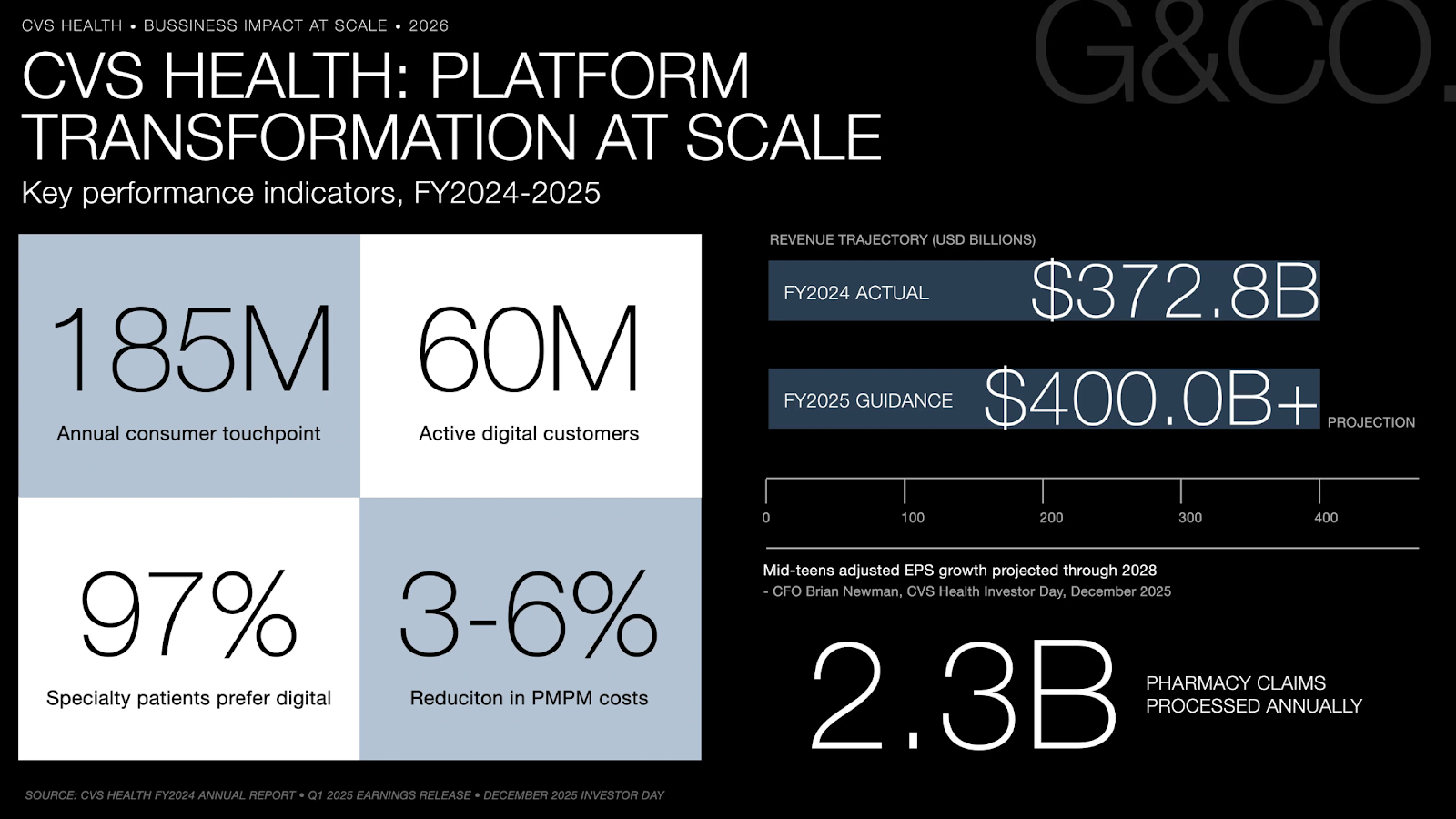
- Connected members cost less to care for: Aetna and Caremark members who use the linked services showed a 3 to 6% drop in monthly medical costs over three years.
- CVS reaches 185 million consumers a year and processes 2.3 billion pharmacy claims, on $372.8 billion in FY2024 revenue, a data foundation no rival or startup can easily copy.


%20(1).png)

Let’s kickstart the conversation and design stuff people will love.

The Retail & Consumer Index


Why This Case Study Matters
The conditions that forced CVS’s hand: acquisition-driven scale, data fragmentation, margin pressure, and consumer expectations set by technology platforms outside healthcare, describe nearly every large enterprise that grew through M&A in the 2010s and now faces the compounding cost of deferred integration. CVS is simply the largest, most regulated, and most visible test of whether platform consolidation pays off.
For CEOs, CIOs, chief digital officers, and transformation leaders, the value is in the template. CVS’s 2023–2025 architecture decisions are likely to define how regulated industries approach platform consolidation for the next decade, including the uncomfortable truth that the threshold between a digitized enterprise and a platform enterprise is a discrete architectural decision, not a gradual continuum.
Strategic Context
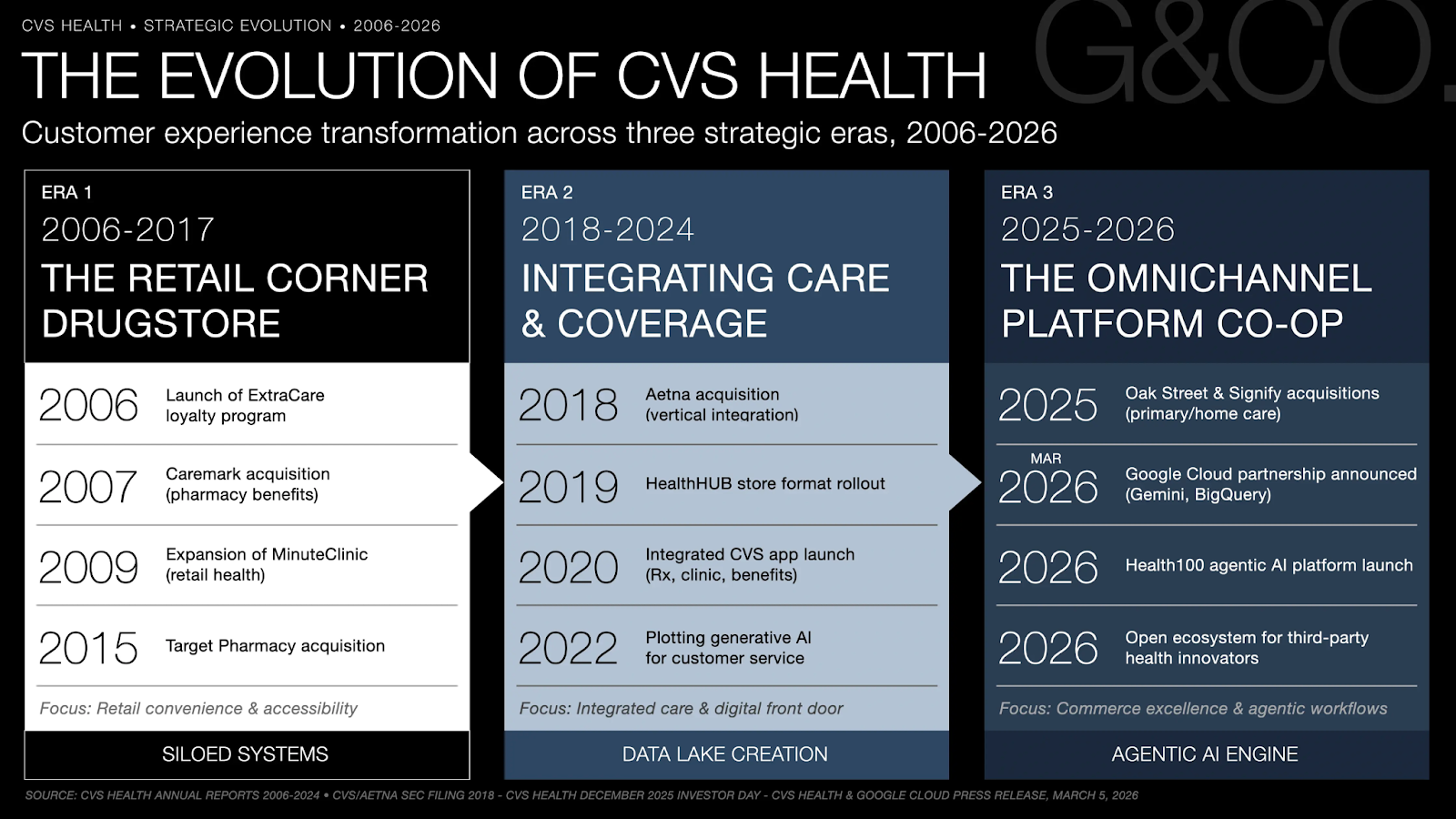
CVS enters 2026 as the largest U.S. healthcare company by revenue: $372.8B in FY2024, with Q1 2025 revenue of $94.6B already tracking toward $400B full-year guidance. Yet scale has historically been as much a liability as an advantage. The 2018 Aetna acquisition bolted a $69B payer onto a pharmacy and PBM enterprise, creating the theoretical conditions for integrated care alongside three distinct cultures, three technology architectures, and three regulatory environments under one roof.
The “Moment of Inertia” driving the strategy is not technological lag, it is identity fragmentation. A CVS Pharmacy customer, a Caremark PBM member, and an Aetna plan participant can be the same person navigating three interfaces, receiving three uncoordinated communications, and generating three disconnected data trails. That fragmentation is a structural inefficiency that prevents CVS from deploying its most valuable asset: the longitudinal behavioral and clinical data that only exists when the three units are unified. Digital transformation here is less about digitizing existing processes than about building the connective infrastructure that makes integration commercially viable for the first time.
Company Response
Between 2023 and 2025, leadership made a decisive architectural choice: prioritize platform consolidation over point-solution optimization. Improving each unit’s interface independently would have produced faster wins but permanently foreclosed the integrated data layer underpinning the long-term strategy. At the December 2025 Investor Day, CEO David Joyner framed CVS’s competitive position around making a fragmented, hard-to-navigate system simpler and more connected, with technology at the center.
The trade-off was real. Resources that could have accelerated Aetna’s margin-pressured Medicare Advantage recovery were instead directed toward infrastructure producing no immediate revenue, and high-margin Caremark operations were subordinated to an integration roadmap prioritizing consumer-experience coherence over unit autonomy. Leadership absorbed short-term earnings pressure to preserve a conviction that “Engagement as a Service” is a category-defining revenue stream unavailable to any competitor without equivalent scale.
The work runs across four connected layers:
- The unified CVS Health app (January 2025) replaced the old pharmacy app with an all-in-one platform covering CVS Pharmacy, Caremark mail-order, and CVS Specialty, bringing vaccine scheduling, AI medication search, spending visibility, and personalized reminders into one login. For the first time, a Caremark member and a CVS Pharmacy patient share a single digital front door, the foundation of true omnichannel healthcare.
- AI infrastructure through Google Cloud uses Gemini AI for proactive outreach, one of the most comprehensive deployments of agentic AI in healthcare, with cloud healthcare tools connecting clinical and transactional data across the businesses. Without this layer, personalization is only cosmetic.
- AI models of typical patients, built from consented data across hundreds of thousands of people, let teams test new workflows against realistic behavior and shorten research from weeks to hours.
- AI tools for clinicians close the loop: CVS Specialty patients message AI-supported care teams securely, while AI-written case-note summaries shift clinician time from paperwork toward judgment, extending the relationship into care itself and generating useful data at every step.
Results and Evidence
The evidence concentrates in adoption scale and cost efficiency rather than immediate margin expansion, consistent with a platform investment cycle. CVS now engages 185 million consumers annually, with 60 million active digital customers as of January 2025, and processes 2.3 billion pharmacy claims a year, a transactional foundation no digital-health startup can replicate. Among CVS Specialty patients, 97% prefer digital two-way CareTeam messaging over phone, validating the engagement thesis at the population level that matters commercially.
The financial trajectory supports the thesis: FY2024 revenue of $372.8B is projected to reach $400B+ in FY2025, paired with CFO Brian Newman’s commitment to mid-teens adjusted EPS growth through 2028. The most structurally significant signal, however, is the 3–6% decrease in per-member-per-month medical costs across integrated Aetna and Caremark members over three years. That metric is the proof-of-concept for the entire integration thesis, evidence that consolidating data across the payer-PBM boundary produces measurable clinical and economic outcomes, not just UX gains.
The gaps are organizational, not technological. Three formerly autonomous P&Ls are being asked to subordinate unit optimization to a platform logic that distributes benefits unevenly over a multi-year horizon, the exact governance failure mode that sinks large transformations. Compounding it, every deployment operates where regulation treats data aggregation as a compliance risk rather than a strategic asset: HIPAA information barriers between Aetna’s claims data and CVS Pharmacy’s dispensing data demand governance architecture as sophisticated as the technology itself. The October 2024 transition from Karen Lynch to David Joyner, mid-transformation, added continuity risk, since platform efforts of this complexity are acutely sensitive to shifts in internal prioritization.
Always-On Customer Intelligence
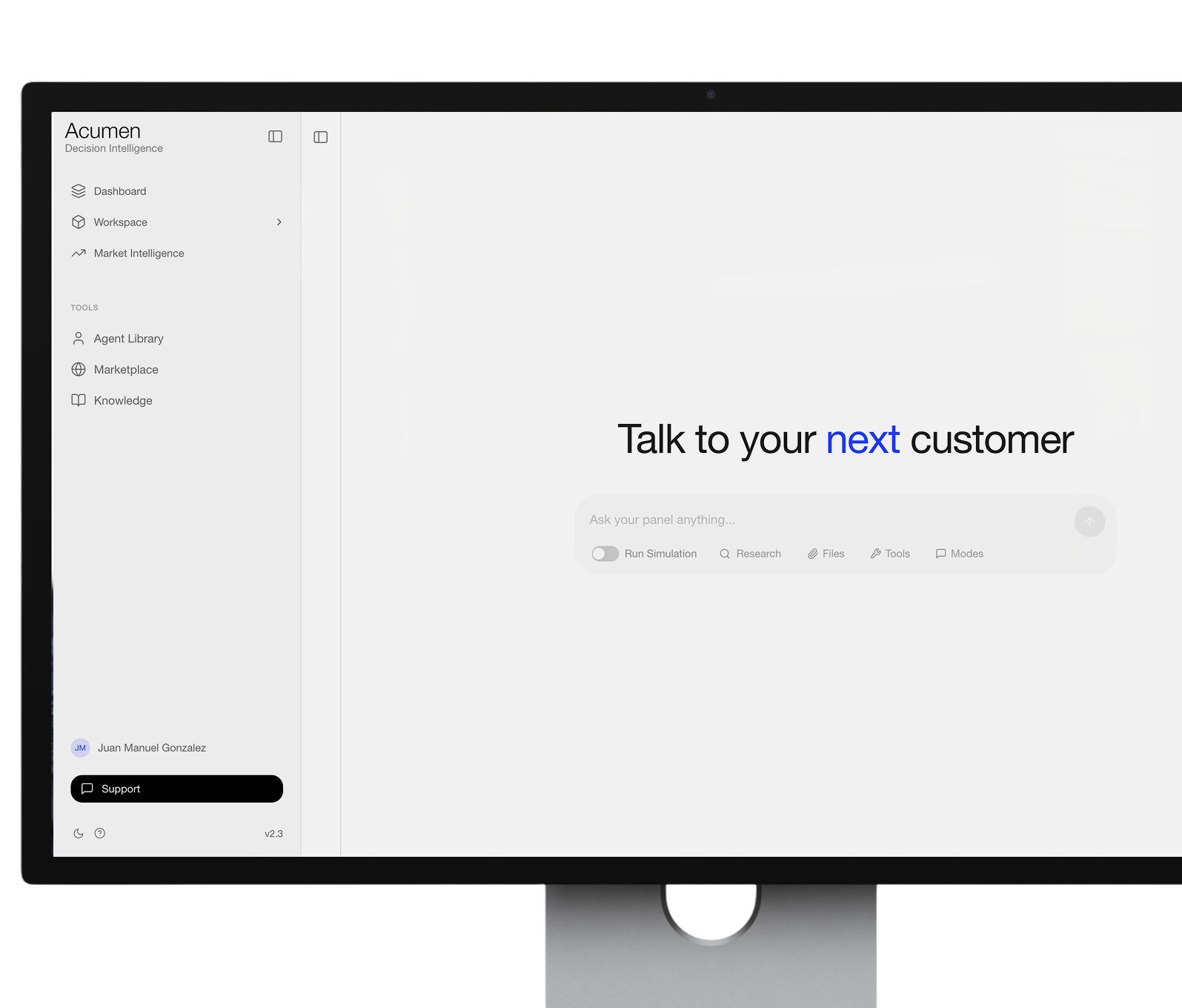
Turn your own customer data into foresight — validate, simulate, and sense every major decision before you commit.


Strategic Implications
The industry consensus frames this as healthcare digitization: an incumbent adapting to digital-native expectations. That underestimates the logic. A digitized healthcare company competes on care quality and cost; a behavioral data platform competes on data exclusivity, ecosystem lock-in, and the marginal cost of adding the next consumer or employer client to already-amortized infrastructure. CVS is building the latter.
This connects to the broader currents reshaping enterprise strategy: AI, customer experience, digital transformation, data strategy, and platform economics. The “Engagement as a Service” ambition mirrors Amazon Web Services: commercialize internal infrastructure only after proving it at internal scale, here across 185 million consumers. The organizations most threatened are not other pharmacies or insurers but the health-tech intermediaries, point solutions, digital therapeutics, engagement vendors, whose value depends on CVS’s data staying siloed. Every integration milestone eliminates a category of dependency, which is what makes the internal organizational challenge so strategically loaded: the faster CVS dissolves its silos, the more defensible its platform position becomes. The same connected-data transformation appears in Pfizer's enterprise AI, Sanofi's commercial data platform, and Domino's digital reinvention.
What Enterprise Leaders Can Learn
- Acquisitions create growing data debt.
CVS's timeline reflects the true cost of untangling seven years of post-merger fragmentation, not the cost of building new technology. - Privacy and compliance must move at the speed of the technology.
In regulated industries, build compliance in alongside the architecture, rather than treating it as a hurdle that stalls the work. - Fix your own house before selling the platform.
Selling outside access before your internal systems are truly connected exposes the gaps to your most demanding customers. - Protect momentum through leadership change.
Mid-transformation handovers can shift priorities exactly when steady commitment matters most. - Design customer touchpoints with data in mind.
An app built without a clear data plan becomes something you cannot fully use or sell later.
Conclusion
CVS Health captures a defining tension of this moment: the companies best placed to build a platform advantage are often the ones whose acquisition history left them the most fragmented to begin with. The Aetna deal that created CVS's integration complexity is the same asset that makes a connected platform credible, because no startup can replicate a 185-million-consumer health-data foundation that spans insurance, pharmacy benefits, and pharmacy at once. The lasting lesson is structural. CVS is not running a conventional digital transformation, a technology upgrade layered on an existing model. It is changing what kind of company it is, turning a group of separate businesses into a single platform whose advantage is the data created by joining them. The companies that should study this most closely are not healthcare companies; they are any business sitting on scattered data from past acquisitions and weighing whether integration is worth the cost. CVS's answer, playing out at $372.8 billion in annual revenue, is clear.
Through the Acumen platform, G&CO.Health gives enterprise healthcare and pharmaceutical brands the intelligence to plan a digital transformation with evidence instead of guesswork: where connecting data creates real value, how customers move across services, and which investments will most improve outcomes and results. G&CO.Health is a certified minority business enterprise through the National Minority Supplier Development Council (NMSDC). For enterprise organizations with diversity inclusion requirements in their procurement process, G&CO.Health meets the criteria for MBE-qualified partner status.
G&CO.Health works with enterprise healthcare and pharmaceutical brands on the data, platform, and customer-experience strategy that turns fragmented, post-acquisition systems into one connected advantage. If this CVS Health case study raises questions about your own digital transformation or data integration, submit an inquiry to G&CO.Health on our contact page or click the blue "Click to Contact Us" button in the bottom right corner of your screen. We look forward to hearing from you.
Frequently Asked Questions
How did CVS Health execute its digital transformation strategy?
CVS combined Aetna (insurance), Caremark (pharmacy benefits), and CVS Pharmacy into a single AI-powered platform across four connected layers: one consumer app, Google Cloud AI infrastructure, AI models of typical patients for testing workflows, and AI tools for clinicians that extend the relationship into care. The aim was to see and act on each customer's full health picture through connected, omnichannel healthcare, rather than run three disconnected businesses.
Why did CVS build one platform instead of improving each business separately?
Improving each business on its own would have produced faster short-term wins but permanently closed off the connected data layer at the heart of CVS's long-term strategy. Leadership accepted short-term earnings pressure to protect that connected platform, a trade-off that only makes sense at CVS's scale of 185 million yearly consumer touchpoints, where the value of connected data is large enough to justify the wait.
How is CVS using AI in healthcare?
CVS applies AI in several ways: helping consumers navigate their care through the app, modeling typical patients to test and improve workflows, and supporting clinicians with secure messaging and AI-written case-note summaries that free up time for judgment. Together these make up the core of the CVS Health AI strategy, one of the most complete AI rollouts among U.S. health insurers and providers, and each use also generates data that improves the connected platform.
What were the measurable results?
CVS reaches 185 million consumers a year, with 60 million active digital customers, and connected Aetna and Caremark members showed a 3 to 6% drop in monthly medical costs over three years, the clearest proof that connecting data produces real results. Among CVS Specialty patients, 97% prefer digital messaging with their care team. FY2024 revenue was $372.8 billion, with FY2025 tracking toward more than $400 billion. Several of these figures come from CVS strategy communications and should be confirmed before publishing.
What can enterprise leaders learn from this CVS case study?
The core lesson is order: a connected customer experience needs connected data behind it first, not as an afterthought. Launching a single app before the back-end data is joined produces a connected front end with a disconnected back end that cannot scale. The wider lessons apply to any company with scattered data from past acquisitions: the real cost is untangling old fragmentation, compliance has to move at the speed of the technology, and you should connect your own systems before trying to sell a platform to others.