Oura Ring’s Strategy: How De-Commoditization Turned a Smart Ring Into a Health Intelligence Platform
This Oura case study examines how Oura turned a simple smart ring into a health intelligence platform, competing on the quality of its insight rather than on features. Instead of piling on data, Oura distills it into one clear daily Readiness score, backed by medical-grade sensors and a quiet, premium design. That approach, the heart of the Oura Ring strategy, helped it reach a projected $2 billion in 2026 revenue (up from $500 million in 2024) and roughly a 74% share of the smart ring market, even as Apple and Samsung moved in.
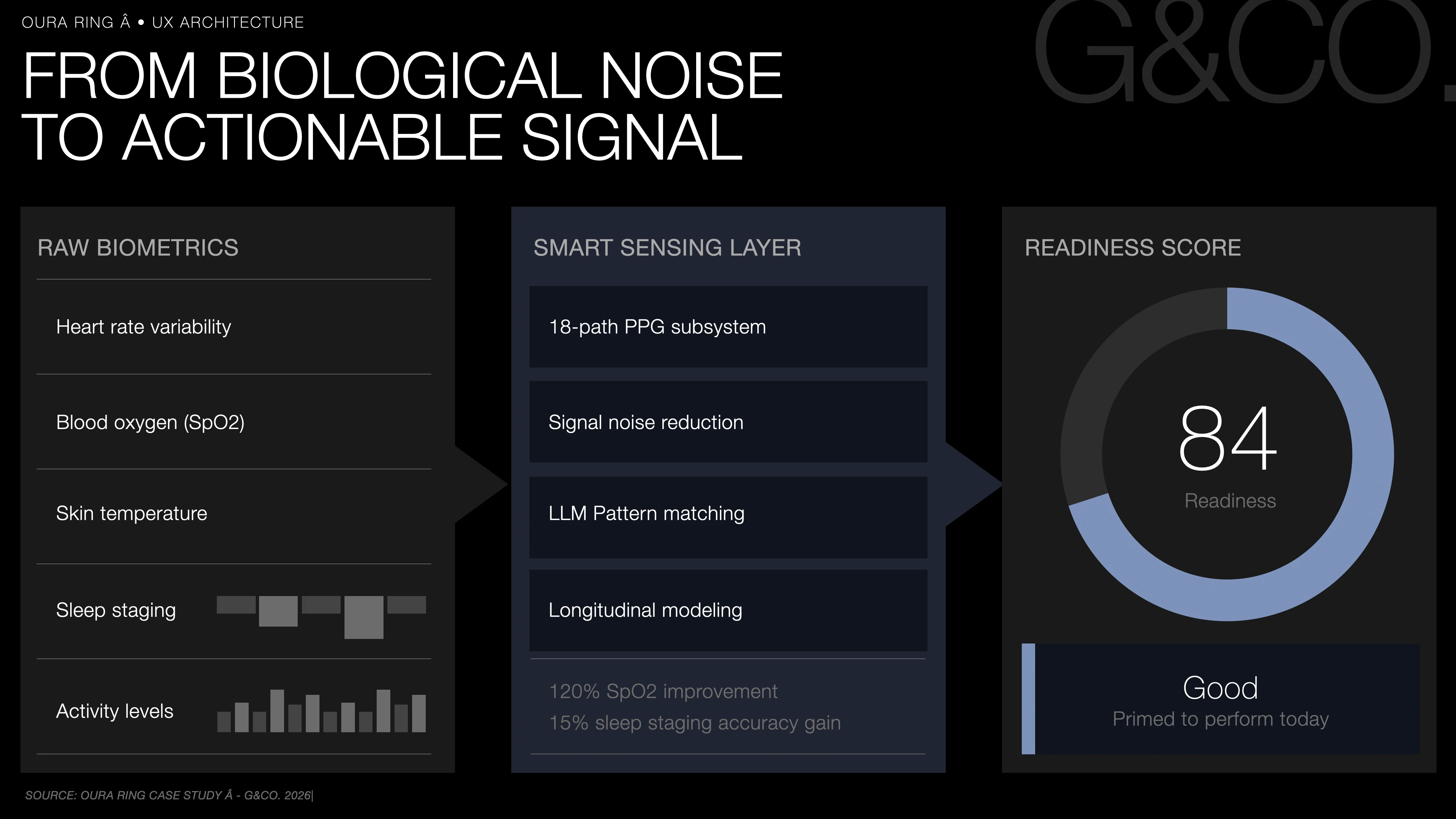
Oura built its smart ring around a single daily number it calls the Readiness score, instead of showing wearers a dashboard of raw data.
Oura Ring did something most hardware companies cannot: it refused to compete on features and won. Facing pressure from Apple, Samsung, and a wave of cheap trackers, Oura chose not to cram in more functions. Instead, it paired medical-grade accuracy with a quiet, premium design, then turned all that complex data into a single, simple daily score it calls Readiness. That move turned a niche sleep tracker into a health intelligence platform people rely on every day, and it blunted the threat from big rivals offering rings with no subscription.
This strategy, built on accurate sensing and AI coaching, is on track for a projected $2 billion in 2026 revenue, up from $500 million in 2024, with roughly a 74% share of its category. For enterprise leaders, the lesson carries far beyond rings: when hardware becomes a commodity, value shifts to how well you interpret the data and the brand relationship you build on top of it.
Key Points
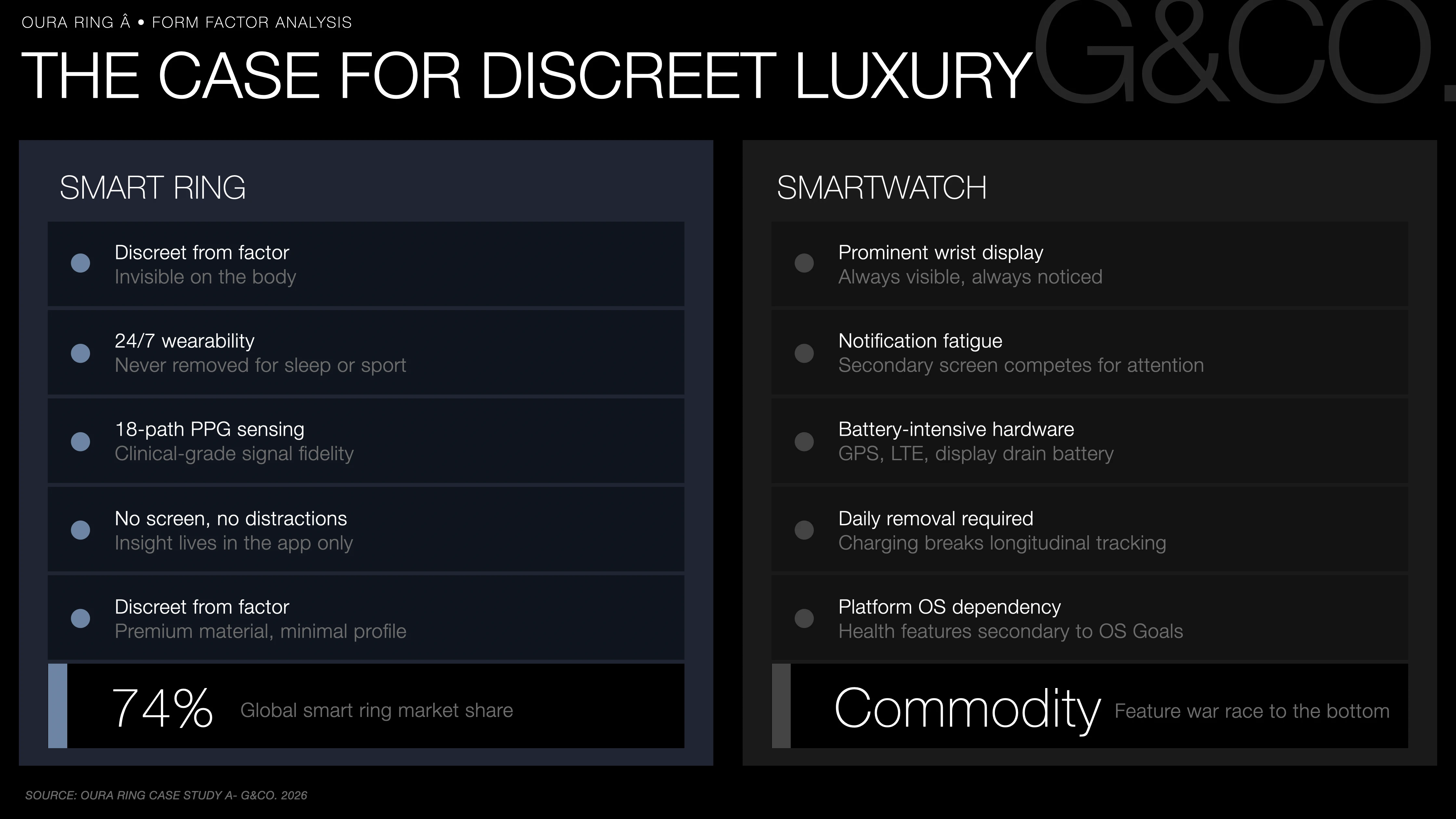
- Oura competes on insight, not features, deliberately leaving out the notifications, GPS, and screens of a smartwatch to keep the ring comfortable to wear around the clock and its data clean.
- The product is really the daily Readiness score: Oura turns dozens of overnight measurements into a single number that tells you how ready your body is, which is what keeps people opening the app every morning.
- Its sensors are medical-grade (170+ peer-reviewed studies), its design is jewelry-like, and its AI assistant, Oura Advisor, turns the data into plain guidance.
- Revenue doubled from $500 million in 2024 to $1 billion in 2025, retention runs above 80% at 12 months, and Oura holds roughly a 74% share of the smart ring market, even as Apple and Samsung moved in.


%20(1).png)

Let’s kickstart the conversation and design stuff people will love.

The Retail & Consumer Index


Why This Case Study Matters
The wearable sector hit an inflection point in late 2024, splitting into low-margin fitness trackers and integrated health-intelligence platforms. As Apple and Samsung folded health features into their broader operating systems, the smart ring became the primary battleground for premium lifestyle health. Oura is the clearest proof that an independent hardware company can defend a premium position against platform incumbents, rather than being absorbed or undercut.
For CEOs, CMOs, chief digital officers, and heads of innovation, the relevance extends well past wearables. Oura demonstrates a repeatable answer to commoditization: when the device itself stops being a differentiator, the durable advantage is the quality of interpretation and the intimacy of the brand relationship layered on top. That is a product, data, and customer-experience question every category eventually faces.
Strategic Context
The market reached a “Moment of Inertia” as generalist smartwatches ran into notification fatigue and the aesthetic limits of a wrist-bound screen. The structural force driving change was consumer demand for invisible technology that delivers clinical-grade insight without the intrusion of a secondary display. Scaling from a $500 million revenue base in 2024, Oura recognized that hardware alone offered no long-term defensibility, so it leaned into medical validation over generic activity tracking and positioned itself as a sophisticated health companion rather than a consumer-electronics gadget.
That framing demanded a clear trade-off. Leadership chose to deprioritize “Swiss Army Knife” functionality, on-device notifications, GPS, and cellular, to preserve the integrity of the ring form factor. Under this “Discreet Luxury” approach, the device is a passive data harvester while the app does the cognitive heavy lifting. Omitting high-drain components optimized for continuous 24/7 wear, the foundational requirement for longitudinal health modeling, and let Oura dominate the premium segment while holding an $11 billion valuation even as Samsung entered with aggressive, no-subscription pricing. The bet was explicit: compete not on price or feature count, but on signal quality and brand resonance.
Company Response
Strategy became execution with the Oura Ring 4 and a fully redesigned app. This was not just a new piece of hardware; it changed how the data is sensed, processed, and presented.
More accurate sensing.
Oura's "Smart Sensing" more than doubled the ring's sensor pathways, from 8 to 18. That produced a 120% improvement in blood-oxygen sensing and a 15% gain in sleep-stage accuracy, supplying the clean, reliable data that medical-grade insight depends on.
Simpler health app UX design.
The redesigned app is a case study in good app design: it distills everything into three simple tabs (Today, Vitals, and My Health) and shows information in layers. The single Readiness score sits at the top, while people who want more can dig into detailed heart-rate and temperature trends. Depth is available, but never forced on you.
AI coaching.
Oura Advisor, an AI assistant, turns static data into a conversation, combining more than 50 measurements into plain guidance, with "Memories" that remember personal context like recovering from surgery or training for an event. In testing, 60% of members used Advisor weekly and 56% said they took a real health action based on its suggestions.
Two tensions come with this. First, the subscription: Oura's premium positioning sits alongside a required monthly fee that price-sensitive buyers see as friction, since they expect hardware to be a one-time purchase, so the app has to keep adding value to justify it. Second, outside partnerships are a mixed blessing. A $75 million partnership with Dexcom opens up valuable metabolic data, but it also means Oura has to manage an experience built partly on data it does not fully control, which its engineers must keep maintaining to keep things seamless.
Results and Evidence
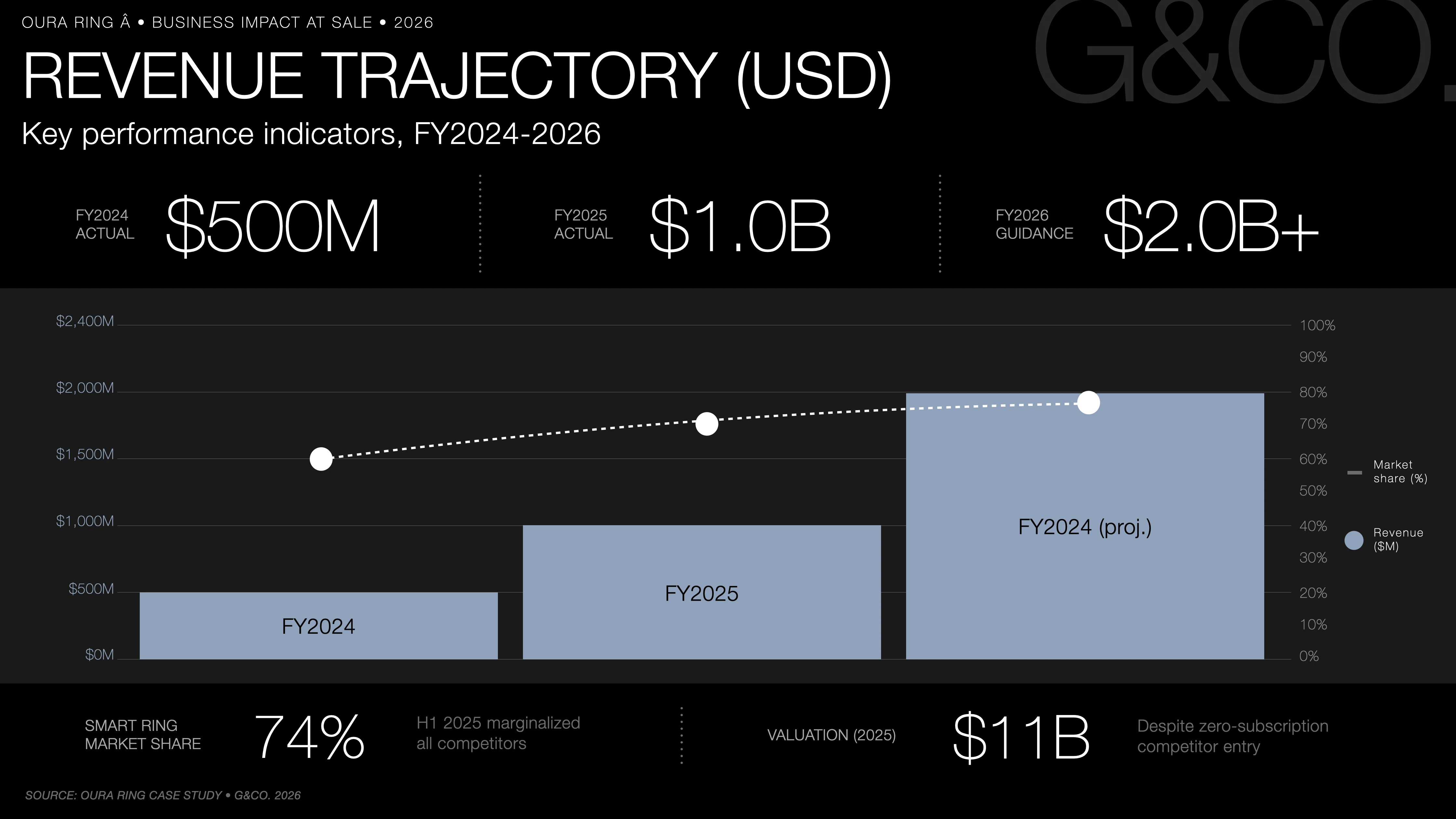
The quantitative signals are unusual for an independent wearable, and every core metric points the same direction. Revenue doubled from $500 million in 2024 to $1 billion in 2025, with a stated trajectory toward $2 billion in 2026. The subscription base holds an 80%-plus 12-month retention rate, outperforming many traditional SaaS benchmarks in consumer health. As of H1 2025, Oura commands a 74% share of the global smart ring market, supported by more than 170 peer-reviewed studies that anchor its clinical credibility and help justify a $299 to $549 price point.
Read together, these numbers validate the central thesis: de-commoditization is producing structural market resilience rather than a temporary lead. Retention at this level indicates that the interpretive layer, not the hardware, is what keeps members paying, and the market-share figure shows the strategy is marginalizing better-funded incumbents on the dimensions Oura chose to compete on.
Always-On Customer Intelligence
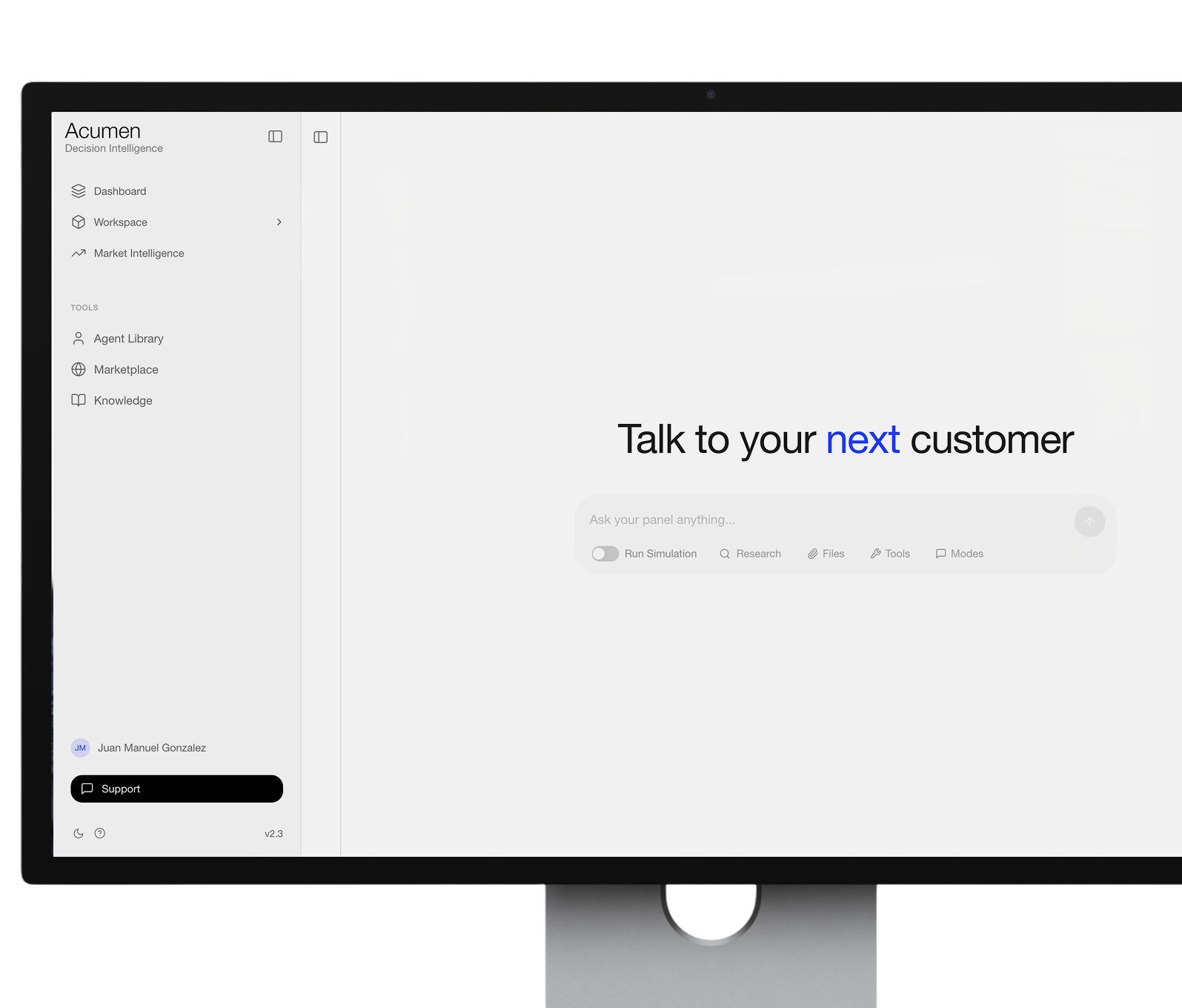
Turn your own customer data into foresight — validate, simulate, and sense every major decision before you commit.


Strategic Implications
Oura crystallizes an “identity wearable” pattern with implications across AI, customer experience, digital transformation, personalization, and product strategy: when a technology commoditizes, value migrates to the interpretive layer and the aesthetic identity. For most organizations, digital transformation is therefore less about data collection and more about the UX-led translation of that data into a user’s daily rhythm. The next decade of consumer technology will reward “Quiet UX,” interfaces that deliver maximum insight with minimum interaction, a principle directly relevant to insurance, corporate wellness, and remote patient monitoring, where the goal is durable behavior change through passive, high-fidelity tracking.
The deeper reframe is the death of the utility app. The industry treats health apps as tools that solve a discrete task, such as tracking steps. Oura’s logic replaces the tool with an Identity Interface: the app is not a utility but a reflection of the self, a digital twin that evolves with the user’s biology. By reframing the wearable as a biometric identity, Oura moved beyond the reach of platform providers who treat wearables as a secondary data stream for advertising or hardware lock-in. The ultimate moat, on this reading, is not a better sensor but a more intimate, trusted relationship with the user’s personal health narrative. The same insight-over-features logic runs through Samsung's Bespoke AI, Sephora's beauty personalization, and Apple's experience-led brand.
What Enterprise Leaders Can Learn
- Pick a side.
Companies have to choose between high-volume, low-margin utility and high-margin, identity-driven insight. Trying to do both usually costs you both margin and distinctiveness. - Fund data quality first.
The AI coaching is only as trustworthy as the data beneath it, so invest in sensing quality before adding coaching features. - Simplify to build habit.
People stick with a product because of a simple anchor like Readiness, not because of more raw data. Design for insight per glance. - Use partnerships to expand.
Alliances like Dexcom turn a single-purpose tracker into a broader platform without carrying the full cost of building a new hardware category. - Keep earning the subscription.
Recurring revenue in hardware has to be justified by new value, not just access to old data.
Conclusion
Oura's journey shows the shift from a simple wearable to a trusted health companion. By declining the smartwatch feature war and committing instead to accurate data and disciplined design, Oura stood out in a crowded market and built a position that commodity hardware cannot copy. The lasting lesson is that in an era of cheap sensors everywhere, the winner is the company that best turns the noise of biology into clear, useful, and personal guidance. Those that fail to bridge that gap will watch their hardware slide into the bargain bin. For enterprise leaders, the takeaway is not about rings or even wearables. It is that pricing power, loyalty, and defensibility increasingly live in how you interpret data and the relationship you build, and the companies that build those layers deliberately are the ones that escape the race to the bottom.
Through the Acumen platform, G&CO.Health gives enterprise healthcare and wellness brands the intelligence to compete on insight and experience rather than features: what customers actually value, where better design and interpretation build loyalty, and how to turn data into a trusted relationship. G&CO.Health is a certified minority business enterprise through the National Minority Supplier Development Council (NMSDC). For enterprise organizations with diversity inclusion requirements in their procurement process, G&CO.Health meets the criteria for MBE-qualified partner status.
G&CO.Health works with enterprise healthcare and wellness brands on the product, design, and data strategy that turns raw information into a simple, trusted, habit-forming experience. If this Oura case study raises questions about your own product strategy, health app UX design, or how you interpret data for customers, submit an inquiry to G&CO.Health on our contact page or click the blue "Click to Contact Us" button in the bottom right corner of your screen. We look forward to hearing from you.
Frequently Asked Questions
What is the Oura Ring strategy?
The Oura Ring strategy is to compete on the quality of its insight and design rather than on features. Instead of adding notifications, GPS, and cellular like a smartwatch, Oura keeps the ring simple and comfortable, invests in medical-grade sensing, and turns all that data into a single daily Readiness score. That focus turned a niche sleep tracker into a health platform and helped Oura hold roughly a 74% share of the smart ring market and an $11 billion valuation, even against much larger rivals.
How did Oura come to lead the smart ring market?
Oura led its market by choosing a clear position and sticking to it: a quiet, premium design, accurate sensing backed by more than 170 peer-reviewed studies, and a simple, habit-forming app. Rather than matching the feature lists of Apple or Samsung, it competed on insight and trust. Doubling revenue to $1 billion in 2025 with retention above 80% shows that the interpretation, not the hardware, is what keeps members paying, which is what makes its lead durable.
What makes Oura a health intelligence platform rather than a tracker?
A tracker shows you data; a health platform interprets it for you. Oura combines more than 50 measurements into a single daily Readiness score and uses its AI assistant, Oura Advisor, to turn that into plain, personal guidance, remembering context like a recent surgery or a fitness goal. This shift from showing numbers to giving advice is what turns the app from a simple utility into a companion people rely on daily.
Why is health app UX design central to Oura's success?
Good health app UX design is what makes Oura's complex data usable. The app shows information in layers: a single Readiness score sits at the top for a quick read, while detailed trends are available for those who want them, so depth is there but never forced. That simplicity is what builds a daily habit. The lesson is that people stick with a product because of a clear, effortless anchor, not because it shows them more raw data.
What can enterprises learn from Oura's strategy?
The main lesson is that when hardware or any technology becomes common, the durable advantage is how well you interpret the data and the relationship you build, not the feature list. Oura's approach is repeatable: pick a clear position rather than trying to do everything, invest in data quality before coaching features, simplify complexity into a habit-forming anchor, and keep earning any subscription with new value. It is a blueprint for insurance, corporate wellness, remote patient care, and any category facing commoditization.