Omnichannel Strategy for Life Sciences & Biotech: Trends 2026
Introduction
The life sciences industry has been talking about omnichannel strategy for years. What makes 2026 distinct is that three enablers have matured simultaneously: purpose-built CRM adoption among field and medical affairs teams has reached a tipping point; AI-powered engagement tools have moved from pilot to production infrastructure; and HCP digital behavior has permanently shifted, physicians now engage with three times more digital content than they did three years ago. The result is that omnichannel strategy in life sciences is no longer a forward-looking aspiration. It is an operational execution challenge, and the companies pulling ahead are those that have moved from multi-channel presence to genuine omnichannel orchestration, connecting every touchpoint into a coherent, data-driven engagement journey for HCPs, patients, and payers simultaneously.
This analysis is written for commercial leads, heads of marketing, medical affairs directors, and digital transformation leaders at pharma, biotech, and life sciences organizations evaluating how to build or mature their omnichannel strategy. The trends covered reflect the current state of execution at leading organizations and the structural shifts that will define competitive advantage in HCP and patient engagement over the next twelve to eighteen months.
Market Context: Disruption & Opportunity
Life sciences omnichannel strategy is navigating a paradox: HCPs have never been more digitally accessible, yet approximately 80% still report receiving generic, impersonal communications from pharma companies. The gap between channel availability and engagement quality is the defining challenge of the current moment. Industry surveys confirm that investment in omnichannel capabilities is set to experience the greatest budget increase of any commercial activity through 2026, yet most organizations are still operating at Stage 2 of the omnichannel maturity curve, running multiple channels in parallel without the data integration, journey orchestration, or behavioral intelligence required to deliver truly personalized, contextually relevant experiences.
The competitive stakes have risen significantly. Biopharma companies that synchronize sales and marketing efforts across channels demonstrate promotional effectiveness improvements of up to 23%. HCPs report a clear preference gap between how they want to engage and how pharma companies actually engage them, with alignment lowest in markets where digital investment has been fastest but least orchestrated. For biotech companies specifically, the commercial challenge is acute: launching with limited sales force infrastructure in a market where established pharma competitors have deeply embedded HCP relationships requires extraordinary precision in channel selection, content relevance, and engagement timing. Omnichannel strategy executed at this level of sophistication is not a nice-to-have, it is a commercial launch requirement.
Top 7 Omnichannel Trends for Life Sciences & Biotech in 2026
- From omnichannel presence to omnichannel orchestration
- AI-driven next-best-action becomes the HCP engagement standard
- Digital opinion leaders reshape the influence landscape
- Patient-centric channel design moves into commercial strategy
- Medical affairs and commercial alignment unlocks omnichannel value
- Real-world evidence integration strengthens HCP content relevance
- Privacy-first data architecture becomes a competitive requirement
Trend Breakdown: Context & Competitive Insight

From Omnichannel Presence to Omnichannel Orchestration
The primary strategic focus in life sciences commercial excellence is shifting from omnichannel presence — having a website, email program, rep visit cadence, and congress activity, to omnichannel orchestration: the ability to connect these channels into a unified, data-driven engagement journey where every interaction informs the next. The distinction matters enormously in practice. Multichannel presence allows a company to reach HCPs across multiple touchpoints; omnichannel orchestration ensures those touchpoints form a coherent narrative, so that when a rep visits an HCP who downloaded a clinical data white paper the previous week, the conversation begins exactly where the digital engagement left off. Achieving this requires a single source of truth for HCP engagement data, integrated across CRM, marketing automation, medical affairs platforms, and field tools. G&CO.'s omnichannel strategy capability is built specifically to help life sciences organizations make this transition, from channel activation to full journey orchestration.
AI-Driven Next-Best-Action Becomes the HCP Engagement Standard
The sales rep-led model is not disappearing, but it is no longer the primary or sufficient channel for reaching HCPs. Personalized omnichannel tactics using AI-powered next-best-action (NBA) models are rapidly becoming the operational standard for leading life sciences commercial teams. NBA algorithms analyze an HCP's behavioral signals, content downloads, webinar attendance, email engagement, Doximity activity, rep interaction history, to recommend the optimal channel, content, and timing for the next engagement. The result is a shift from push-based marketing cadences to pull-informed engagement: reaching HCPs when, where, and how they want, rather than when the campaign calendar dictates. Companies implementing AI-driven omnichannel orchestration can deploy these strategies up to 50% faster using pre-built accelerator frameworks, and the engagement quality improvement is measurable: HCPs exposed to coordinated digital and in-person engagement consistently show higher prescription intent than those receiving in-person engagement alone.
Digital Opinion Leaders Reshape the Influence Landscape
The definition of who influences HCP clinical decision-making has expanded significantly. Traditional key opinion leaders, academic physicians with strong publication records and congress presence, remain central, but digital opinion leaders (DOLs) have emerged as equally important in many therapeutic areas. DOLs are HCPs who disseminate influence primarily through social and digital channels, including Twitter/X, LinkedIn, Doximity, and specialty forums, rather than through journals or congress podiums. Industry research confirms that DOLs are now key conduits for HCP audiences, providing accessible content on treatment guidelines, clinical trial outcomes, and novel therapeutics. Any omnichannel strategy that addresses only traditional KOLs is working with an incomplete influence map. For life sciences and biotech companies launching in competitive therapeutic areas, identifying and engaging both KOLs and DOLs as part of an integrated scientific communications strategy is now a commercial prerequisite, not an optional enhancement.
Patient-Centric Channel Design Moves into Commercial Strategy
Patient engagement has historically been treated as a medical affairs or patient support function, separated from the commercial omnichannel strategy aimed at HCPs. That separation is dissolving in 2026. The recognition that HCP prescribing decisions are heavily influenced by patient-reported outcomes, advocacy community perspectives, and real-world access and adherence experiences is driving leading life sciences companies to integrate patient channel design into their commercial strategy architecture. This means mapping the patient journey alongside the HCP journey, identifying the points where patient education, disease awareness, and support program engagement intersect with HCP engagement to create mutually reinforcing commercial momentum. For rare disease and specialty biotech companies with small, identifiable patient populations, the patient community is often the most important commercial channel in the pre-launch period, shaping HCP awareness and prescribing intent before approval.
Medical Affairs and Commercial Alignment Unlocks Omnichannel Value
One of the most consistent structural barriers to omnichannel maturity in life sciences is the organizational separation between medical affairs and commercial functions, each managing distinct HCP engagement channels with separate data, metrics, and governance. Medical affairs owns scientific exchange, MSL interactions, publication strategy, and advisory board relationships. Commercial owns promotional campaigns, rep activity, digital advertising, and congress sponsorship. In practice, HCPs do not experience these as separate, they experience a pharma company as a single entity, and inconsistency or redundancy across medical and commercial touchpoints actively damages credibility and relationship quality. The organizations achieving the highest omnichannel engagement quality in 2026 are those that have established shared HCP engagement data infrastructure, aligned metrics that span medical and commercial activities, and governance models that enable coordinated engagement without compromising the independence of medical communications.
Real-World Evidence Integration Strengthens HCP Content Relevance
HCPs are increasingly skeptical of promotional content that does not reflect the real-world clinical experience of their patients. The integration of real-world evidence (RWE), outcomes data from electronic health records, patient registries, and observational studies, into omnichannel content strategy is one of the most effective ways to address this credibility gap. RWE-grounded content demonstrates that a therapy performs in diverse real-world populations in the way clinical trial data suggests, addressing the specific patient profiles and comorbidities that HCPs actually encounter in practice. For pharmaceutical companies managing established brands in competitive markets, RWE integration into HCP engagement content is rapidly becoming a differentiating standard rather than a supplementary communication strategy. It also supports payer value narratives, a dual commercial benefit that makes RWE investment among the highest-ROI content strategies available to life sciences commercial teams.
Privacy-First Data Architecture Becomes a Competitive Requirement
The regulatory environment governing HCP and patient data in life sciences is tightening across every major market simultaneously. GDPR in Europe, state-level privacy laws in the US, and evolving pharmaceutical industry codes governing the use of HCP behavioral data for promotional purposes are collectively raising the compliance bar for omnichannel execution. Companies that treat privacy as a compliance cost, retrofitting consent architecture and data governance onto existing omnichannel systems, consistently face operational constraints that limit their ability to deploy behavioral personalization at scale. The organizations building competitive advantage are those designing privacy-first data architecture from the foundation up: implementing consent management platforms that enable permissioned personalization, building first-party data strategies that reduce dependence on third-party HCP behavioral data sources, and deploying federated learning models that allow cross-institutional data insights without exposing proprietary information. In 2026, privacy-first architecture is not a constraint on omnichannel strategy, it is a prerequisite for deploying it sustainably.



.png)
%20(1).png)

Let’s kickstart the conversation and design stuff people will love.

The Retail & Consumer Index


What Leading Life Sciences Companies Are Doing

The most commercially advanced life sciences organizations in 2026 have moved beyond channel activation to build what industry leaders describe as a comprehensive work graph, a unified operational view connecting products, markets, HCP segments, engagement activities, and responsible parties across all systems. This level of orchestration visibility enables real-time campaign adjustment, field team productivity optimization, and the kind of closed-loop marketing that continuously improves engagement quality based on actual HCP behavioral response rather than assumed preferences.
Practically, leading organizations are deploying AI-powered KOL profiling tools that continuously update influence scores based on publication records, clinical trial participation, congress activity, and digital presence, eliminating the annual KOL mapping exercise that was always outdated before it was finished. They are integrating congress and event engagement data into their CRM systems as the starting point of personalized digital follow-up journeys rather than treating events as isolated touchpoints. And they are restructuring medical affairs and commercial collaboration around shared HCP engagement platforms that give both functions visibility into the full engagement picture, enabling coordinated, non-redundant outreach that respects HCPs' time and reinforces a coherent scientific narrative.
At G&CO.Health, we've worked alongside life sciences and biotech clients to build exactly this kind of orchestration capability, from brand strategy and commercial launch planning through omnichannel journey design and digital experience implementation. Our expertise enables organizations to translate omnichannel strategy into market advantage.
Risks, Blind Spots & What to Avoid
Risk 1: Confusing channel proliferation with omnichannel maturity. Adding more channels, a new HCP portal, a connected TV campaign, a WhatsApp engagement program, without connecting them through a unified data architecture and engagement orchestration layer does not advance omnichannel maturity. It compounds the fragmentation problem. The number of channels a company operates is not a measure of omnichannel sophistication; the degree to which those channels share data and inform each other is.
Blind spot: The tendency to measure omnichannel performance through channel-level metrics, email open rates, rep call frequency, webinar attendance, rather than journey-level outcomes. The measure that matters is whether HCPs are progressing through the engagement journey toward the behaviors, prescribing, guideline inclusion, favorable formulary positioning, that drive commercial value. Channel metrics are inputs; journey outcomes are the measure of success.
Risk 2: Treating medical affairs and commercial as structurally separate omnichannel programs. When medical and commercial teams operate parallel, disconnected engagement programs aimed at the same HCP audience, the result is a fragmented experience that erodes credibility and wastes investment. The most effective omnichannel strategies in life sciences are genuinely cross-functional, with shared HCP data, aligned engagement calendars, and governance structures that ensure medical and commercial touchpoints reinforce rather than contradict each other.
Blind spot: The assumption that regulatory constraints on promotional content prevent genuine omnichannel integration across medical and commercial functions. In practice, the regulatory boundaries between promotional and non-promotional content are well-understood and manageable within an integrated omnichannel architecture, the constraint is organizational will and governance design, not regulatory impossibility.
Risk 3: Delaying omnichannel investment until post-approval. For biotech and emerging pharma companies, the commercial window for building HCP awareness, KOL relationships, and disease education infrastructure closes faster than most organizations expect. The HCPs who will be the first and highest-volume prescribers of a new therapy are forming their clinical impressions and awareness of the therapeutic area years before approval. Companies that begin omnichannel engagement at or after approval consistently underperform the clinical opportunity because the market was not prepared to receive them.
Blind spot: The belief that pre-approval omnichannel investment competes with clinical development resources. The most commercially successful biotech launches are those that fund pre-commercial omnichannel strategy as a parallel investment to late-stage clinical development, recognizing that the ROI on pre-approval engagement compounds in ways that post-approval promotional spend cannot replicate.
The Role of Omnichannel Strategy Partners in Life Sciences

Life sciences omnichannel strategy partners help commercial organizations navigate the intersection of scientific credibility, regulatory compliance, and digital experience design that makes this sector fundamentally different from consumer omnichannel strategy. The value of selecting the right partner is highest at three inflection points: at the strategy stage, where decisions about HCP segmentation, channel mix, content architecture, and medical-commercial alignment determine whether the omnichannel investment will compound or fragment; at the technology selection and integration stage, where choosing and connecting CRM, marketing automation, and engagement platforms requires both life sciences operational expertise and digital architecture capability; and at the launch stage, where the precision and speed of omnichannel execution directly affect peak sales trajectory and market access outcomes. G&CO.'s life sciences and biotech practice brings commercial strategy, experience design, and digital implementation together, ensuring that omnichannel investment is designed in the context of the specific launch objectives, regulatory environment, and competitive dynamics it needs to serve. G&Co. is a minority business enterprise (MBE), as certified by the NMSDC. If diversity inclusion is part of your supplier process, contact us.
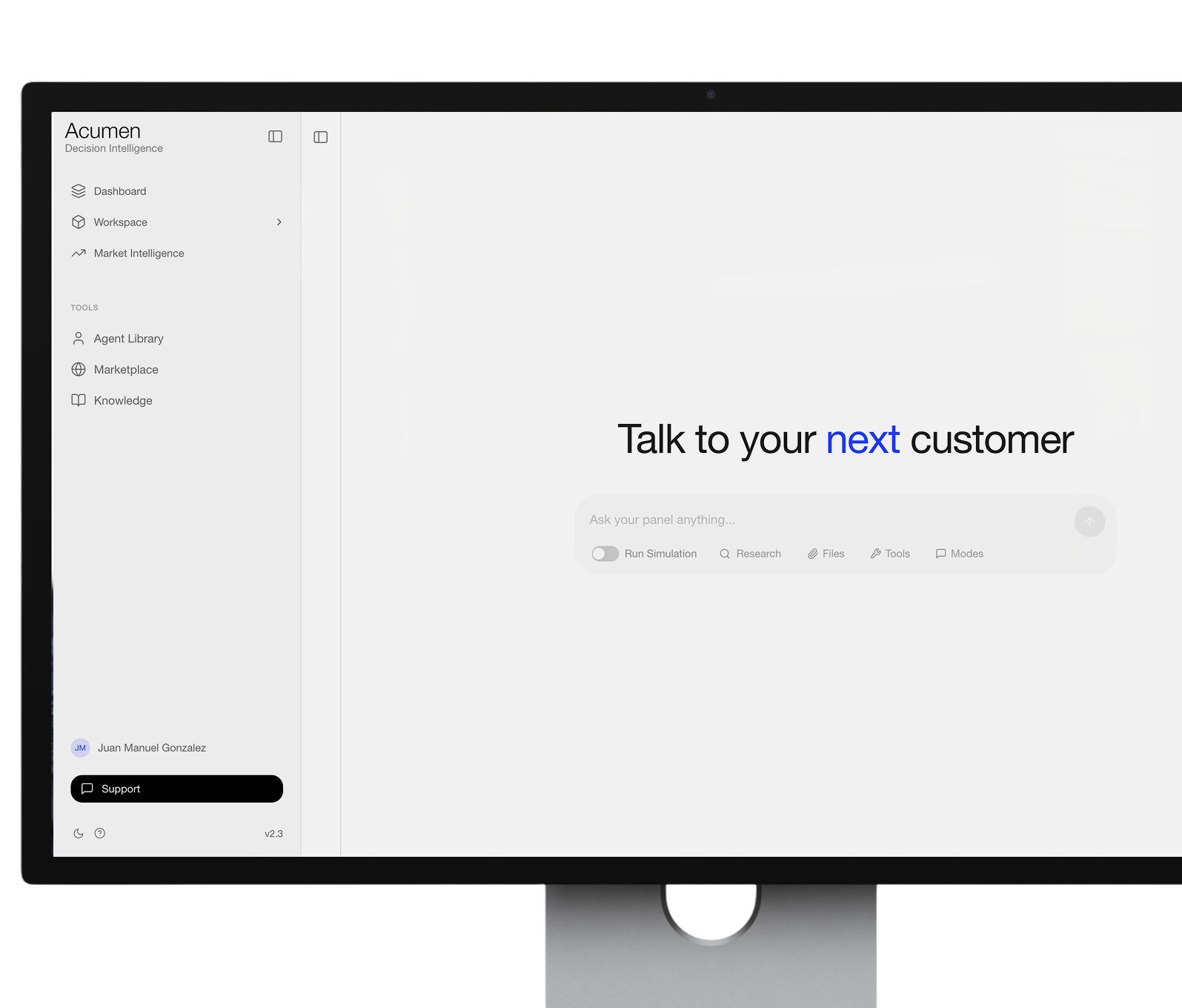
Always-On Customer Intelligence
Turn your own customer data into foresight — validate, simulate, and sense every major decision before you commit.


Conclusion & Strategic Outlook
These seven trends collectively describe a life sciences commercial environment that rewards precision, integration, and early investment over scale, reach, and post-approval promotional intensity. The window for building genuine omnichannel capability ahead of launch, and ahead of competitors — is not permanently open. Organizations that are already operating at orchestration maturity are compounding HCP relationship depth, behavioral data richness, and engagement quality advantages that will be increasingly difficult for later entrants to overcome. For pharma, biotech, and medtech companies at any stage of commercial development, the most important strategic question in 2026 is not which channels to activate, it is whether the organization has the data architecture, cross-functional governance, and AI infrastructure to connect those channels into a coherent engagement system that serves HCPs, patients, and payers simultaneously. At G&CO.Health, we bring the strategic and executional expertise to help life sciences and biotech organizations build that capability, from commercial strategy through digital experience design. Let's explore what's next, together.