Enterprise Personalization & Clienteling FAQs | AI-Powered CX Strategy Explained
Introduction
Enterprise brands are facing a fundamental shift in customer expectations: generic, mass-market interactions no longer drive the loyalty, retention, or revenue growth that defined earlier digital commerce models. In 2026, personalization has evolved from a marketing nice-to-have into a core business capability, one that 87% of brands plan to increase investment in, and that fast-growing companies use to generate 40% more revenue than slower-growing competitors. Yet the gap between personalization ambition and execution remains wide. This article demystifies enterprise personalization and clienteling, explaining what these capabilities are, how they work in practice, what technology enables them, and what distinguishes organizations that are generating real returns from those still building toward it.
This FAQ is written for CMOs, CDOs, VPs of Customer Experience, and digital commerce leaders at enterprise brands who are evaluating how to build or scale personalization and clienteling capabilities. By the end, the reader will have a clear framework for understanding the distinctions between these strategies, the technology required to support them, and the organizational decisions that determine success.
Market Context: Disruption & Opportunity
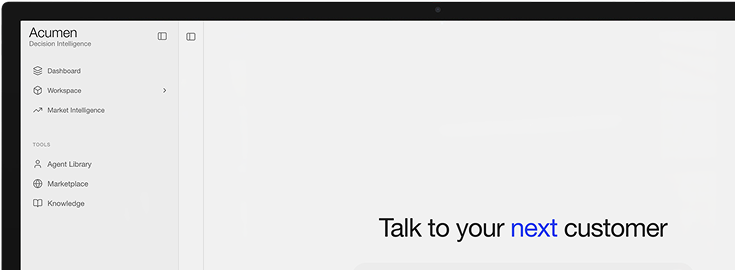
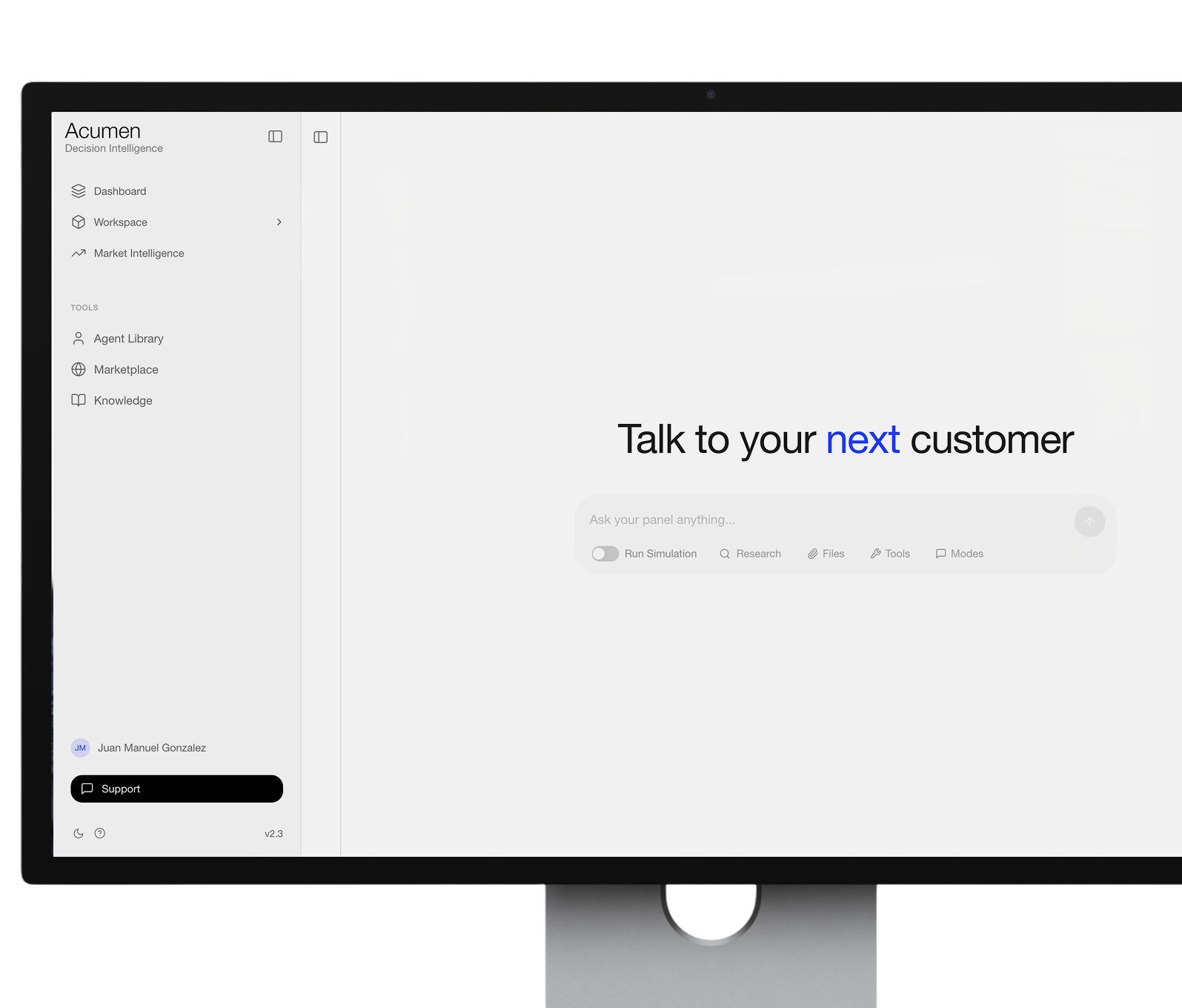
The personalization software market is projected to reach $11.6 billion in 2026, reflecting sustained enterprise investment in capabilities that were once considered advanced but are now becoming baseline competitive requirements. The market shift is driven by a widening expectation gap: 71% of consumers expect personalized experiences, and 76% express frustration when they do not receive them. Yet only 60% of customers agree that the brands they interact with actually deliver on that expectation, despite 85% of companies believing they do. Platforms like Acumen, G & Co.'s simulation-driven consumer intelligence platform, make that gap measurable, tracking how brand perception shifts across trust, relevance, and experience in real time so enterprise leaders can see exactly where the distance between what they believe they are delivering and what consumers actually experience is widening. That perception gap represents both the central challenge and the primary opportunity for enterprise brands willing to close it.
The emergence of AI as the primary engine of personalization at scale has accelerated the market significantly. With 92% of companies now using AI-driven personalization and marketers allocating approximately 40% of their budgets to personalization efforts, nearly double the 22% allocated in 2023, the competitive divide between brands that have built mature personalization capabilities and those that have not is widening rapidly. Clienteling, the high-touch practice of building individual long-term client relationships through data-driven, associate-led outreach, has similarly expanded beyond its luxury retail roots to become a recognized growth strategy for any enterprise brand managing high-value customer relationships across physical and digital channels.


%20(1).png)

Let’s kickstart the conversation and design stuff people will love.

The Retail & Consumer Index


FAQs Snapshot

The following questions represent the most common and strategically important queries enterprise leaders raise when evaluating personalization and clienteling strategy and implementation.
What is enterprise personalization?
Enterprise personalization is the systematic use of customer data, behavioral signals, and AI-driven decisioning to deliver individualized experiences, content, offers, and interactions at scale across every touchpoint of the customer journey. At the enterprise level, personalization extends beyond product recommendations or personalized email subject lines to encompass real-time content adaptation across web, mobile, email, in-store, and service channels, all governed by a unified view of the individual customer. The distinguishing characteristic of enterprise personalization is scale and orchestration: the ability to deliver relevant, contextually appropriate experiences to millions of customers simultaneously while maintaining the consistency and quality of a one-to-one interaction.
What is clienteling and how is it different from personalization?
Clienteling is the practice of building sustained, individual relationships between brand representatives, typically store associates or client advisors, and high-value customers, using detailed knowledge of each client's preferences, purchase history, milestones, and communication preferences to deliver proactive, highly personalized service. While enterprise personalization operates largely through automated, technology-driven systems at scale, clienteling is relationship-driven at its core: technology enables it, but the human connection is the differentiating element. Clienteling originated in luxury retail, where a single client can represent six figures in annual spend, but it has expanded across premium retail, financial services, and any enterprise context where high-value customer relationships justify the investment in individualized, associate-led engagement.
Why is personalization a strategic priority for enterprise brands in 2026?
The business case for personalization at the enterprise level is now empirically strong and consistently replicated. Personalization drives between 5% and 25% of a company's total revenue depending on industry and implementation maturity. Companies implementing AI-driven personalization report positive ROI with an average payback period of nine months. Sixty-two percent of business leaders report that personalization has improved customer retention, and 80% report higher consumer spending when experiences are tailored. The competitive stakes have also risen: 63% of organizations now treat personalization as a top strategic priority or part of their organizational DNA, meaning that brands not investing in mature personalization capability are increasingly at a structural disadvantage rather than simply behind a trend.
What is AI-powered personalization and how does it work?
AI-powered personalization uses machine learning models to analyze individual customer behavior, intent signals, and contextual data in real time, then automatically determine and deliver the most relevant experience for each person at each touchpoint. The process involves three core components: data unification, aggregating behavioral, transactional, and identity data from across channels into a single customer profile; predictive modeling, using AI to forecast individual intent, preferences, churn likelihood, and next-best actions; and experience delivery, rendering personalized content, offers, and interactions in real time across web, mobile, email, and other channels. The shift to AI has fundamentally changed the scale at which personalization operates: what once required manual segmentation and campaign management is now orchestrated automatically at the individual level, continuously updated as behavior changes.
What is the difference between personalization and hyper-personalization?
Personalization typically refers to using known customer attributes, name, past purchases, location, segment, to tailor experiences in ways that are relevant but relatively static. Hyper-personalization uses real-time behavioral data, AI-driven predictive modeling, and contextual signals to deliver experiences that are dynamically adapted to an individual's current intent, moment, and channel, not just their historical profile. The hyper-personalization market is projected to reach $80.2 billion by 2032 at an 18.1% CAGR, reflecting the enterprise shift from segment-based to individual-level CX orchestration. For enterprise brands, the practical distinction matters: personalization at segment level is achievable with existing CRM and marketing automation tools, while hyper-personalization requires a customer data platform (CDP), AI decisioning infrastructure, and real-time experience delivery capabilities.
What technology is required for enterprise personalization and clienteling?
Enterprise personalization and clienteling operate on a layered technology stack. A customer data platform (CDP) serves as the foundation, unifying customer data from CRM, commerce, service, and behavioral analytics into a single, persistent customer profile. An AI personalization engine sits on top of the CDP, running predictive models to determine relevant content, offers, and actions for each individual. Digital experience platforms, including headless CMS, personalization SDKs, and email and push platforms, execute personalized interactions across channels. For clienteling specifically, purpose-built clienteling platforms such as Tulip and BSPK equip store associates and client advisors with mobile access to unified client profiles, purchase history, outreach tools, and AI-recommended next actions. Integration across these layers, ensuring that data flows in real time between systems, is the primary technical challenge in enterprise implementations.
How does clienteling technology work in practice?
Clienteling technology gives associates and client advisors a mobile-first interface that surfaces a complete, real-time view of each client: purchase history across all channels, product preferences, communication history, upcoming milestones, and AI-generated recommendations for outreach and product suggestions. When a client enters a store, the associate receives a notification with context about that client's recent digital activity and relevant talking points. When a VIC makes a significant online purchase, their regular advisor is alerted before the client's next store visit. Outreach tools allow advisors to send personalized messages via WhatsApp, SMS, email, or WeChat at AI-recommended optimal timing. The outcomes are measurable: clienteling drives 53% higher customer value within six months, with clienteling conversion rates averaging 11%, more than double traditional mass marketing, and top performers reaching 37%.
What is a VIC strategy and how does it relate to clienteling?
A VIC, Very Important Client, strategy is a structured approach to identifying, engaging, and retaining the highest-value customers in a brand's base through elevated, individualized service. VIC programs are the most intensive expression of clienteling: they typically involve dedicated client advisors, invitation-only events, early access to new collections, bespoke product customization, and concierge-level service across channels. The business case is compelling: just over 0.1% of the total luxury customer base accounts for 23% of all purchases, meaning that the ROI on VIC investment is disproportionately high relative to the customer volume involved. Enterprise brands building or scaling VIC strategies require clienteling platforms that can manage tiered client profiles, event management, multi-channel outreach, and associate performance tracking alongside the broader personalization infrastructure.
What are the biggest challenges in implementing enterprise personalization at scale?
Data fragmentation is the most consistent barrier: 62% of organizations report not having aligned on a unified audience strategy, and the majority still manage customer data across disconnected systems that prevent a real-time, single view of the customer. The second major challenge is the gap between personalization intent and execution, 85% of companies believe they deliver personalized experiences while only 60% of customers agree. This gap typically reflects personalization that operates at segment level rather than individual level, or that is limited to a single channel rather than orchestrated across the full journey. Data privacy and consent management have added a third layer of complexity: 50% of companies report that recent privacy regulations have made personalization more difficult, requiring more sophisticated consent architectures and first-party data strategies. Organizational alignment, ensuring that marketing, IT, commerce, and customer service teams share data, goals, and governance standards, is the fourth challenge that most enterprises underestimate.
How long does it take to implement an enterprise personalization program?
Implementation timelines depend on data maturity and technology readiness. A focused initial deployment, establishing a CDP, activating basic behavioral personalization on a web or email channel, and launching a clienteling program for a priority store or customer segment, can be achieved in three to six months. A full omnichannel personalization program connecting digital and physical touchpoints, running real-time AI decisioning, and operating a mature clienteling capability across a large associate network typically requires twelve to twenty-four months of phased implementation. Organizations that attempt to deploy comprehensive personalization in a single initiative consistently encounter data quality issues, integration delays, and adoption challenges that extend timelines and reduce impact. The most successful enterprise personalization programs phase their rollout: prove value in one channel or segment first, then expand systematically.
What metrics should enterprise brands use to measure personalization and clienteling ROI?
The metrics that matter most are those that connect personalization activity directly to business outcomes rather than engagement proxies. For enterprise personalization programs, the primary indicators are revenue attribution from personalized experiences (versus control groups receiving non-personalized experiences), conversion rate lift by channel and segment, customer lifetime value improvement over cohorts exposed to personalization versus those not, and repeat purchase rate. For clienteling programs specifically, the relevant metrics are clienteling conversion rate (typically benchmarked against 11% industry average), average order value for clienteled versus non-clienteled customers, client retention rate by tier, and associate productivity measured by clienteled revenue per advisor. Ninety-five percent of senior marketers report their personalization strategies as successful when measured against these outcome-connected metrics.
Can enterprise personalization and clienteling programs scale internationally?
International scaling introduces complexity across three dimensions: channel availability varies by market (WeChat and LINE are table stakes for brands with significant Asian clientele, while WhatsApp dominates in Europe and Latin America); data privacy requirements differ materially across jurisdictions (GDPR in Europe, PIPL in China, and emerging regulations globally require market-specific consent architectures); and cultural personalization norms vary in ways that affect which tactics generate engagement versus friction. Enterprise brands that scale successfully approach international personalization with a centralized data and technology foundation, unified CDP, consistent AI modeling infrastructure, but allow regional teams to adapt outreach channels, content, and cadence to local expectations. Clienteling platform selection for international retailers should prioritize multi-channel messaging (WhatsApp, WeChat, LINE, SMS), multilingual associate interfaces, and flexible data residency options.
Benefits of Enterprise Personalization & Clienteling
Enterprise personalization and clienteling programs deliver compounding value across the dimensions that matter most to senior leaders: revenue growth, customer retention, and operational efficiency. Brands that invest in mature personalization capabilities generate 40% more revenue than slower-growing peers. The retention impact is equally significant: 62% of business leaders report improved customer retention as a direct outcome of their personalization programs, and personalized experiences make 60% of shoppers more likely to become repeat buyers. Clienteling specifically delivers outcomes that are difficult to achieve through automated personalization alone, the conversion rates, lifetime value gains, and emotional loyalty that come from genuine, associate-led one-to-one relationships. The combined effect of AI-powered personalization at scale and high-touch clienteling for priority client segments creates a customer experience architecture that is both efficient and deeply differentiated, one that builds the kind of loyalty that withstands competitive pressure and price sensitivity.
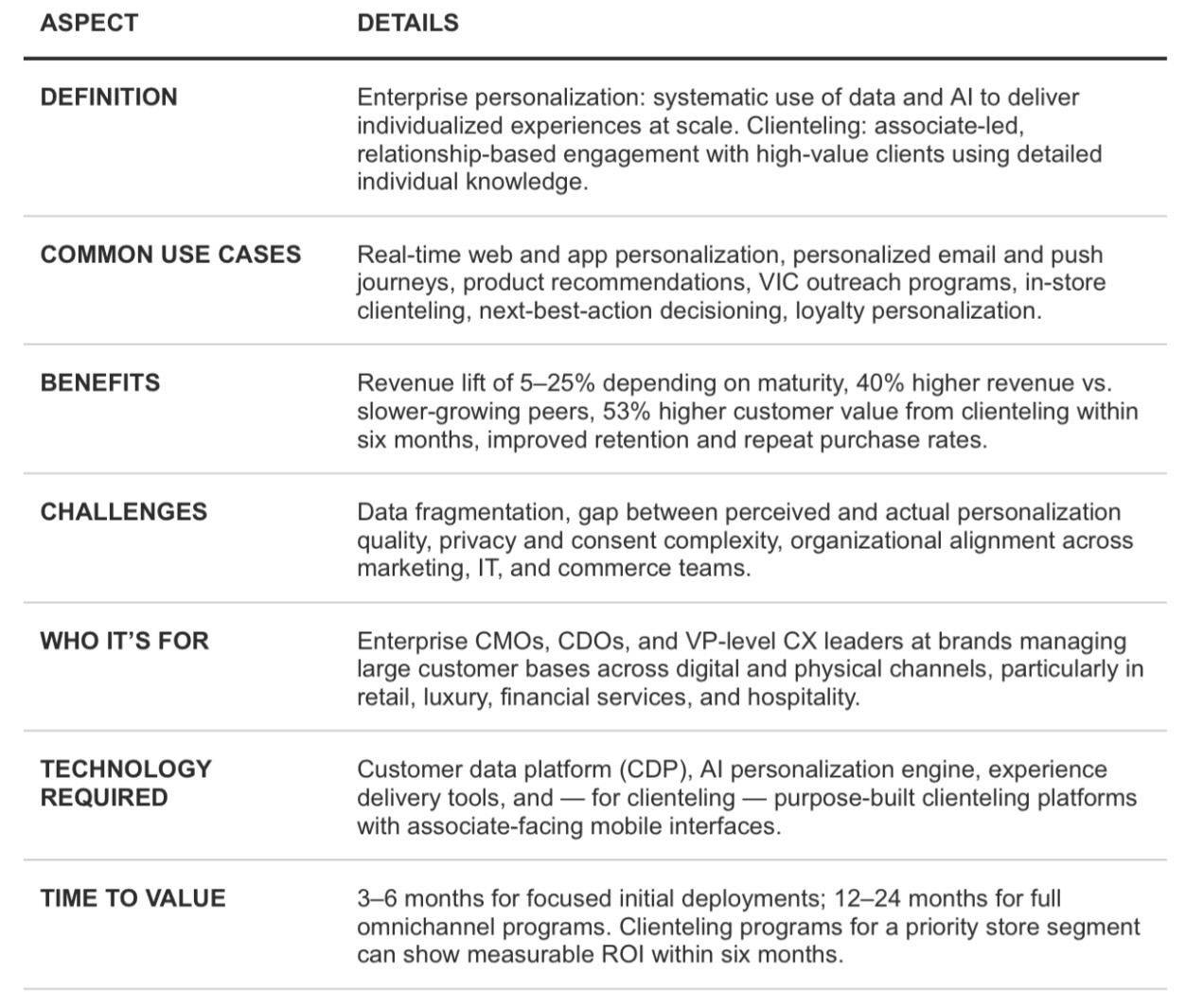
Quick Summary Table
Always-On Customer Intelligence
Turn your own customer data into foresight — validate, simulate, and sense every major decision before you commit.


Deep-Dive Sections

What Enterprise Personalization Is and Why It Matters
Enterprise personalization is not a feature or a campaign tactic, it is a capability architecture that sits at the intersection of data infrastructure, AI modeling, and experience delivery. Its strategic importance in 2026 stems from a fundamental shift in what customers consider a baseline expectation: 73% expect companies to understand their unique needs and expectations, and 69% are frustrated by experiences that feel generic. For enterprise brands managing millions of customer relationships, meeting that expectation consistently requires systems that operate at individual scale, not at segment scale, and that update in real time as customer behavior and context change. The brands that have made this investment are seeing outsized returns: fast-growing companies generate 40% more revenue from personalization than their slower-growing competitors, a differential that is widening as AI capabilities advance and as the data advantage compounds over time.
How Enterprise Personalization and Clienteling Work Together
Personalization and clienteling operate at different points on the automation-human spectrum, but they are most powerful when designed as a unified system. AI-driven personalization handles the scale problem: it delivers relevant, individualized experiences to the full customer base across digital channels automatically, continuously, and cost-effectively. Clienteling handles the depth problem: it enables associates and advisors to build genuine, high-trust relationships with the customers for whom a brand interaction has the highest lifetime value. The unifying layer is data, specifically, a customer data platform that gives both the AI personalization engine and the clienteling associate interface access to the same unified, real-time customer profile. Without this shared data foundation, personalization and clienteling operate in silos: the associate does not know what the customer experienced digitally, and the digital system does not reflect the relationship the advisor has built in store. Together, with shared data, they create the seamless, channel-agnostic experience that enterprise brands increasingly need to deliver.
When to Invest in Clienteling vs. Broader Personalization
The decision to invest in a dedicated clienteling program, rather than relying on automated personalization systems alone, is fundamentally a question of customer value concentration. Clienteling is the right investment when a meaningful portion of revenue is concentrated in a relatively small number of high-value clients who expect, and respond to, human-led relationship management. In luxury retail, this is clear: a small fraction of clients generates the majority of revenue, and the relationship between client and advisor is itself a competitive differentiator. In financial services, wealth management, and premium hospitality, the same dynamic applies. Broader AI-driven personalization is the right investment for brands managing high-volume, lower-average-value customer bases where the economics of one-to-one human engagement cannot be justified at scale. Many enterprise brands benefit from both: personalization for the broad base, clienteling for the priority tier.
Tools and Platforms for Enterprise Personalization and Clienteling
The enterprise personalization and clienteling technology market is well-developed and increasingly converging. At the CDP layer, platforms such as Salesforce Data Cloud, Adobe Real-Time CDP, and Segment provide the data unification foundation. For personalization engines, SAP Emarsys, recognized as a leading Magic Quadrant Leader for the seventh consecutive year in 2026 under the SAP Engagement Cloud brand, along with Insider One and Dynamic Yield represent leading enterprise options with strong omnichannel orchestration capabilities. For clienteling specifically, Tulip and BSPK are the purpose-built luxury-focused platforms, with Tulip recently merging with Salesfloor to form the largest global provider of AI-powered clienteling solutions; Proximity Insight operates natively on Salesforce for brands already within that ecosystem. Platform selection should be driven by existing enterprise architecture, channel requirements, particularly for international brands requiring WeChat or LINE integration, and the degree to which a brand wants a unified platform versus best-of-breed components.
Common Misconceptions About Personalization and Clienteling
The most widespread misconception is that personalization is primarily a marketing function. In practice, the most impactful enterprise personalization programs are governed as cross-functional capabilities, connecting marketing, commerce, customer service, and technology under a unified data and governance framework. Brands that house personalization solely within marketing consistently deliver channel-specific personalization that breaks down at cross-channel transitions. The second misconception is that clienteling requires a large technology investment before it can deliver value. As one luxury retail expert noted, clienteling is fundamentally a brand behavior and cultural discipline, technology amplifies it, but the foundation is training associates to capture details, act on insights, and maintain continuity across client interactions. The third misconception is that personalization and data privacy are in fundamental conflict. Research consistently shows that 82% of consumers are willing to share personal data in exchange for more personalized experiences, and 69% appreciate personalization when it is based on data they have explicitly shared, indicating that transparent, consent-based personalization builds trust rather than eroding it.
How G&CO. Can Help
G&CO. works with enterprise brands to design and implement personalization and clienteling strategies that connect data architecture, technology selection, and experience design into a coherent, measurable capability. Through our Personalization & Clienteling practice, we help organizations close the gap between personalization ambition and execution, whether that means building the data foundations that AI personalization engines require, selecting and implementing the right CDP and personalization technology for a brand's specific use case and market footprint, or designing clienteling programs that equip associates with the insights and tools to build genuinely differentiated client relationships. Our approach integrates personalization and clienteling strategy within the broader context of omnichannel commerce, CRM, and brand experience, ensuring that the investment in individual-level customer intelligence compounds across every touchpoint rather than remaining confined to a single channel or team.
G&CO. is a minority business enterprise (MBE), as certified by the National Minority Supplier Development Council (NMSDC). If diversity inclusion is part of your supplier process, contact us, we may be a great fit for your enterprise.
Talk to us to clarify your personalization and clienteling strategy and move forward with confidence.
Conclusion & Next Steps
Enterprise personalization and clienteling represent two of the clearest paths available to large organizations seeking durable competitive differentiation in 2026. The data is unambiguous: brands that build mature personalization capabilities generate meaningfully more revenue, retain customers more effectively, and earn higher lifetime value from their best clients. The challenge is not understanding why to invest, it is understanding how to build these capabilities in a way that creates compounding returns rather than a series of disconnected point solutions.
The most important next step for most enterprise brands is an honest assessment of their current data foundation: whether a unified, real-time customer profile exists, whether it is accessible to both the AI systems and the human associates who need it, and whether the organization has the cross-functional governance to manage it effectively. That foundation determines everything else, the technology that can be deployed on top of it, the personalization sophistication that is achievable, and the clienteling program design that is feasible. At G&CO., we've worked alongside enterprise clients to build exactly this foundation, from data architecture through experience design and associate enablement. Still have questions? Reach out and let's solve them together.