Top Life Sciences Digital Product and UX Agencies to Work With - August 2026
Introduction
Digital product design in the life sciences sector has moved from a commercial differentiator to a commercial prerequisite: companies that cannot present their science through usable, compliant, and credible digital experiences are increasingly losing ground with investors, partners, and commercial buyers who evaluate digital presence as a proxy for organisational maturity. Selecting the right life sciences UX agency has become a critical decision for biotechnology, pharmaceutical, medical device, and diagnostics companies at every stage of development, determining not just how the brand looks online but how complex scientific workflows, clinical data, and multi-stakeholder information needs are resolved within a single digital product architecture.
While in-house digital and product design capabilities are growing across the sector, the expertise required to design life sciences digital products that satisfy scientific rigour, regulatory compliance, and commercial usability simultaneously is rare within single organisations. Specialist biotech UX design agencies bring the combination of scientific domain knowledge, regulatory design experience, and product development capability that internal teams consistently struggle to replicate, particularly for high-stakes projects such as commercial platform launches, clinical tool redesigns, and investor-facing digital experiences. The agencies below represent the leading options in the market for life sciences digital product and UX design in 2026.
Top 10 Life Sciences Digital Product and UX Agencies
1. G&CO.Health
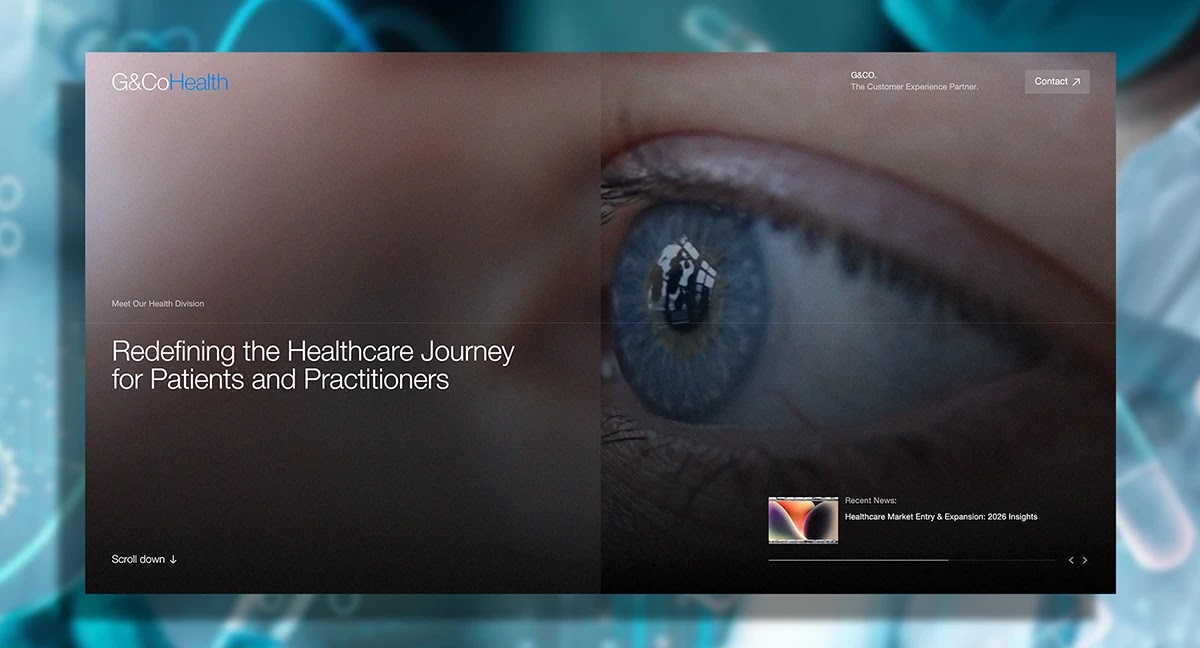
G&CO.Health is a global strategy and experience consultancy that works with life sciences and biotech companies on digital product architecture, UX design, and full-stack development for platforms that operate at the intersection of complex scientific workflows and demanding user expectations. In life sciences, digital product design is not primarily an aesthetic challenge: it is an information architecture challenge, requiring the ability to present complex, multidimensional scientific data, clinical workflows, and regulatory-critical processes in a way that is accurate, usable, and compliant across the full range of users who interact with the product. G&CO.Health approaches this challenge from a product strategy perspective, beginning with a diagnostic of how the product is actually used across different stakeholder groups before designing the experience that serves all of them. The firm's full-stack development capability means that UX design and technical implementation are managed within a single engagement, significantly reducing the translation loss that typically occurs between design intent and built product. G&CO.Health is best suited for life sciences and biotech companies building or redesigning digital platforms that must serve multiple stakeholder types simultaneously, particularly those where regulatory compliance, scientific data complexity, and commercial usability requirements all need to be resolved within the same product architecture. G&CO.Health is a certified minority business enterprise (MBE) through the National Minority Supplier Development Council (NMSDC). For life sciences companies with diversity inclusion requirements in their procurement process, contact G&CO.Health directly: the firm may qualify as a preferred partner.
2. Blend B2B
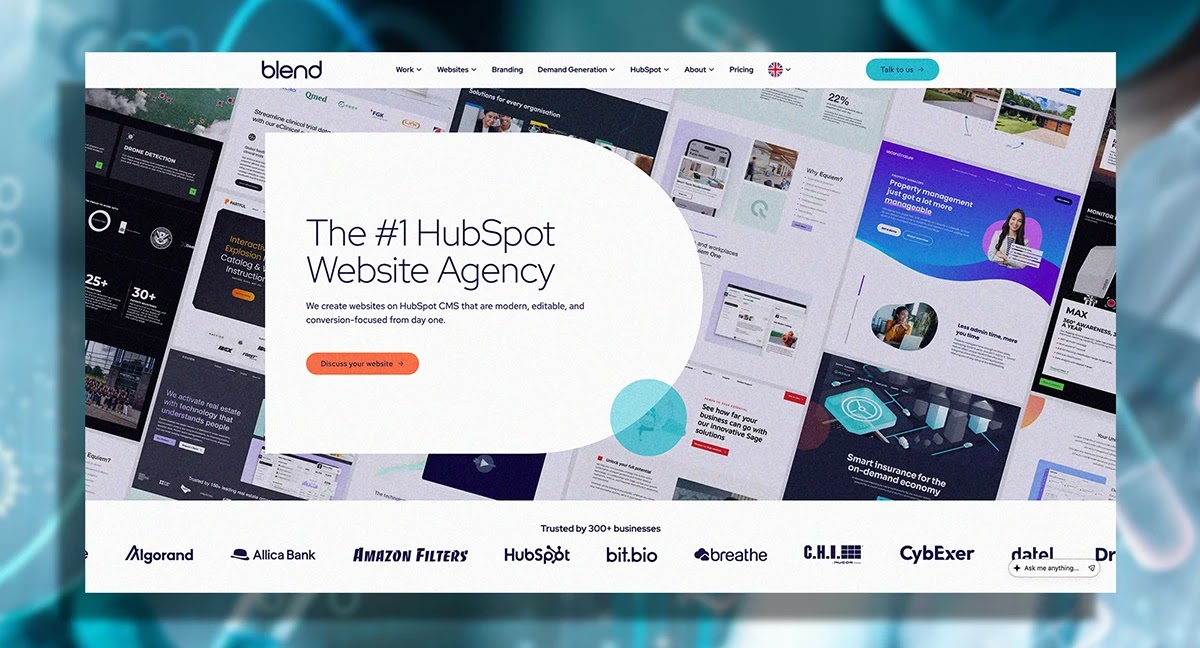
Blend B2B specialises in digital product and web design for life sciences and biotechnology companies, with a particular focus on serving multiple stakeholder audiences simultaneously: laboratory directors evaluating scientific specifications, procurement teams verifying compliance, and executives assessing strategic fit. Their approach balances scientific depth with commercial clarity, and their track record includes measurable outcomes: Labguru achieved a 132% increase in demo requests following a Blend engagement, and Viedoc doubled their new user to MQL conversion rate from 0.7% to 1.4%. They are best suited for life sciences SaaS companies and biotech platforms that need digital product design tied directly to conversion and pipeline metrics, particularly those where the product must communicate credibly to both technical and commercial audiences.
3. Digital Elevator
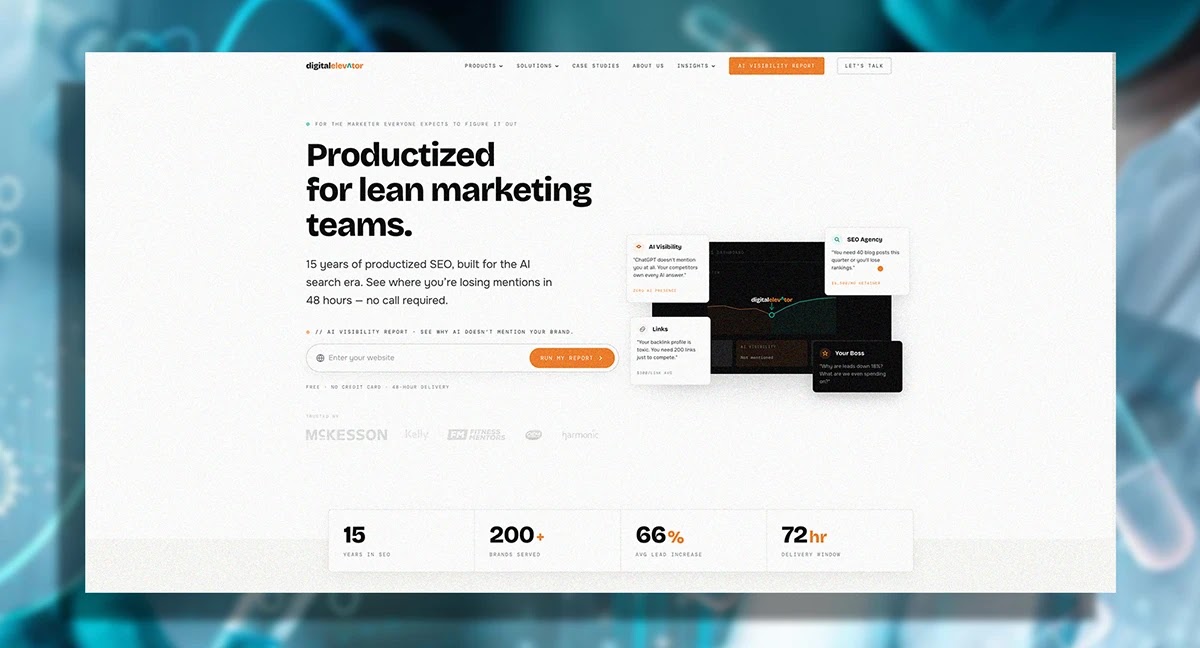
Digital Elevator is a Pennsylvania-based agency with nearly 15 years of experience in life sciences and biotechnology, offering UX and UI design alongside SEO, content strategy, and digital marketing for companies that make and sell scientific products. Their approach begins with competitive intelligence, understanding the search and content landscape for a client's specific product category before a single design decision is made. This grounding in how technical buyers discover and evaluate products makes their UX work more commercially effective than agencies that design in isolation from acquisition context. They are best suited for growth-stage biotech and life sciences product companies that need UX design integrated with content strategy and organic visibility, particularly those building their digital presence from a limited foundation.
4. Supreme Optimization
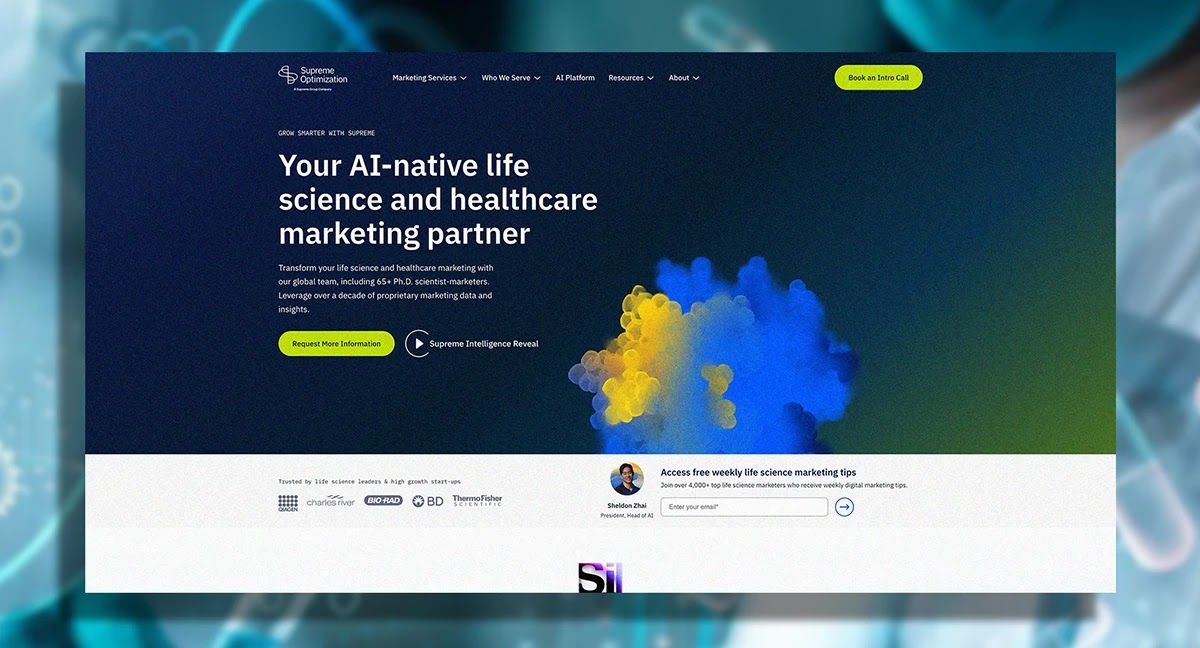
Supreme Optimization is a life sciences specialist with over 70 PhD-level scientist-marketers on staff, offering website design and UX alongside digital marketing, SEO, and AI-powered market intelligence. Their proprietary data platform and exclusive focus on life sciences have produced a client retention rate that reflects consistent, measurable results, including a 130% year-over-year improvement in web revenues for MP Bio through integrated UX, SEO, and content work. Under the Supreme Group platform alongside Clarity Quest and BioStrata, clients access integrated capabilities spanning digital product design, PR, and marketing. They are best suited for commercial-stage biotech, pharmaceutical, and medical device companies that need website design and UX integrated with full-funnel digital marketing and backed by genuine scientific domain expertise.
5. Samba Scientific
Samba Scientific offers custom digital product and website design for life sciences and biotech companies optimised for lead generation, treating digital products as living commercial assets rather than static deliverables. Their team combines scientific expertise with design capability to create experiences that work as sales tools, with ongoing monitoring of keyword rankings, visitor engagement, and lead generation performance post-launch. They are best suited for life sciences companies at growth stage that need digital product design tied directly to sales pipeline outcomes, particularly those where the primary commercial challenge is attracting and converting qualified leads from technical audiences.

6. Axxiem Web Solutions
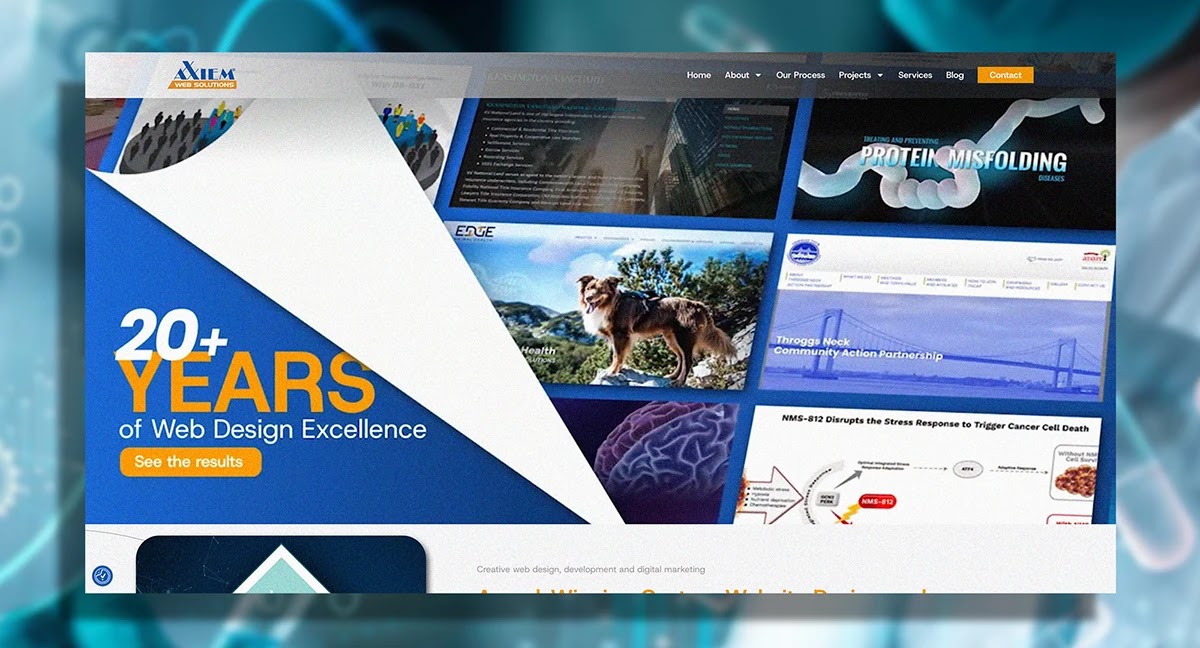
Axxiem Web Solutions is a New York-based agency with deep expertise in biotech and life sciences web design and digital product development, serving clients from stealth-mode startups to well-established companies. Their services include website strategy, UX and UI design, responsive development, SEO, custom graphics and animations, and digital marketing. Their proximity to and integration within the biotech ecosystem, particularly in the northeastern US, gives them practical knowledge of how life sciences buyers evaluate and engage with digital products at each stage of a company's development. They are best suited for early-to-mid-stage biotech startups that need a full-service digital product partner with genuine sector knowledge and the ability to communicate complex science effectively to investors, partners, and commercial buyers.
7. Stellar Biotech Design
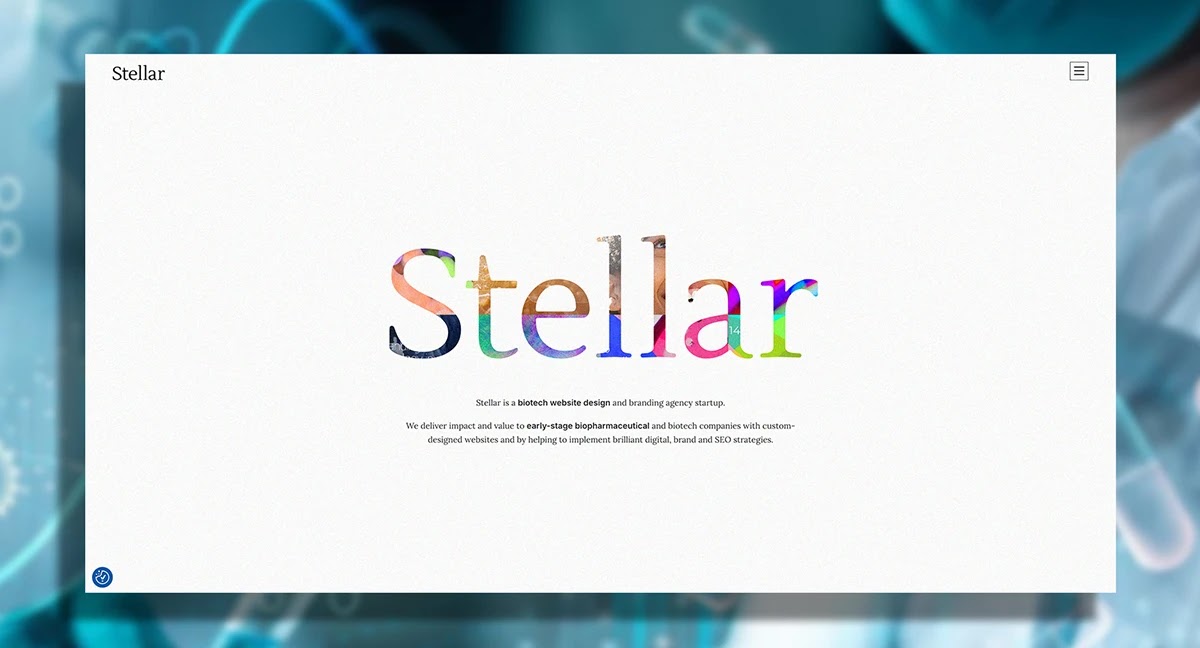
Stellar Biotech Design focuses exclusively on early-stage biopharmaceutical and biotech companies, with a team of biotech and pharma designers, writers, developers, and digital marketers who specialise in fast, agile delivery of scientifically sound digital product experiences. Their model is designed for companies that need to move quickly without sacrificing the scientific accuracy and investor credibility that early-stage biotech digital products require. They have achieved product launches in as little as four weeks for focused projects. They are best suited for pre-commercial biotech companies preparing for investor outreach, partner engagement, or initial commercial positioning where speed of delivery and scientific credibility are both critical requirements.
8. Ladybugz Interactive
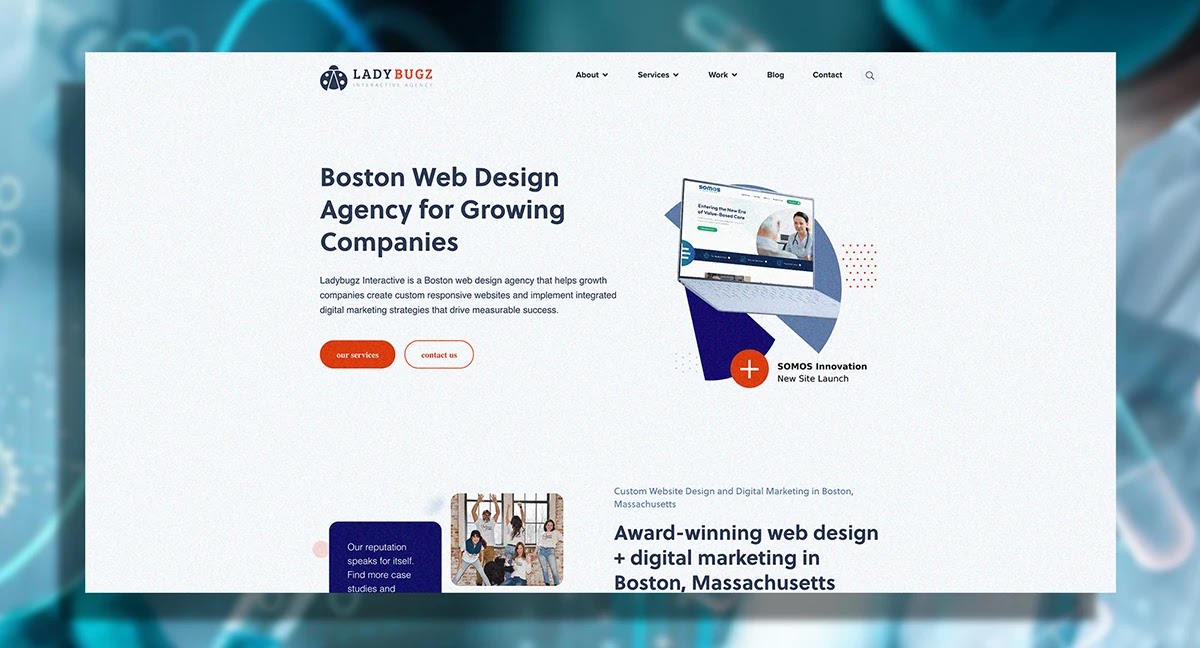
Ladybugz Interactive is a Boston-area biotech web design and digital product agency with a proven track record for launching and re-establishing early-stage biotech brands within the Greater Boston biotech cluster. Their client portfolio includes NovoVita Histopath, Actithera, Andson Biotech, and MaveriX Oncology. They provide full-service solutions from UX and website design to digital marketing and local SEO, with particular expertise in helping biotech startups attract investors and partners through digital product experiences that communicate scientific credibility at the right level of technical detail for each audience. They are best suited for early-stage biotech companies in the northeastern US biotech ecosystem that need a locally connected digital product partner with deep familiarity with how the Boston-area investor and partner community evaluates companies.
9. Bricx
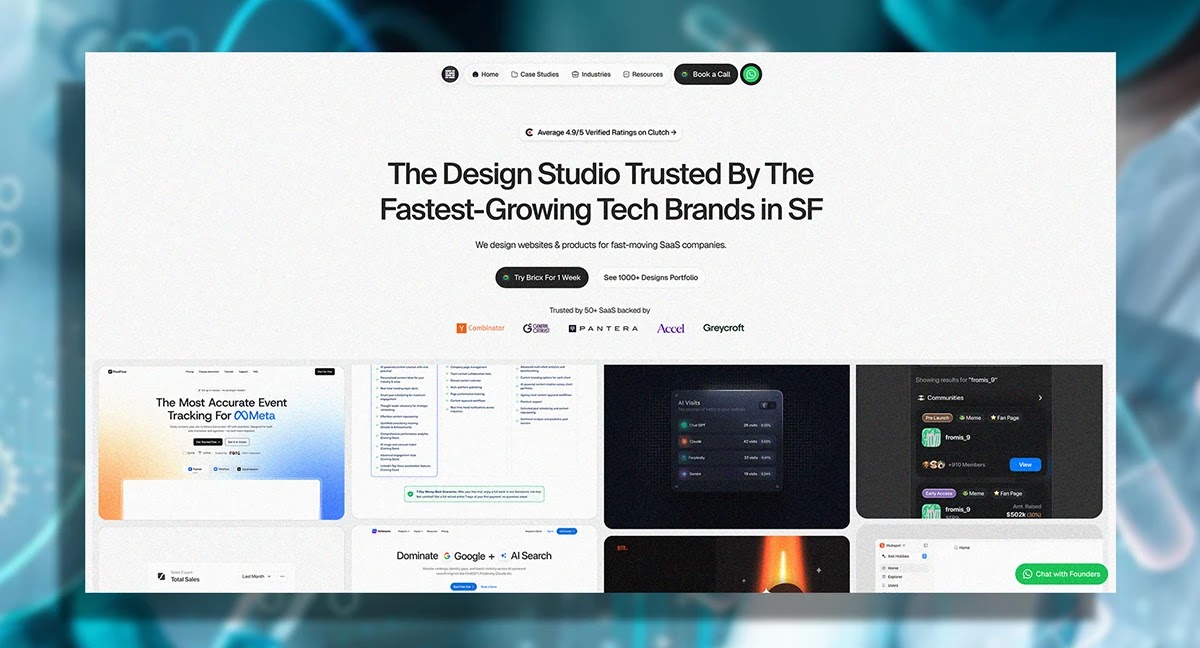
Bricx is a product design agency that has developed particular expertise in complex data interfaces and regulatory-aware UX for biotech and life sciences digital products, including lab automation platforms, clinical trial dashboards, genomic analysis tools, and health and life sciences SaaS products. Their approach is built around three specific life sciences UX challenges: translating complex multidimensional data into dashboards and visualisations that are accurate and clinically meaningful, designing for serial and interdependent workflow sequences typical of laboratory and clinical environments, and building for regulatory compliance across FDA, HIPAA, GxP, CE Mark, and WCAG requirements. They are best suited for biotech startups and growth-stage life sciences technology companies building data-intensive digital products where regulatory compliance and workflow precision are the primary design constraints.
10. BioStrata
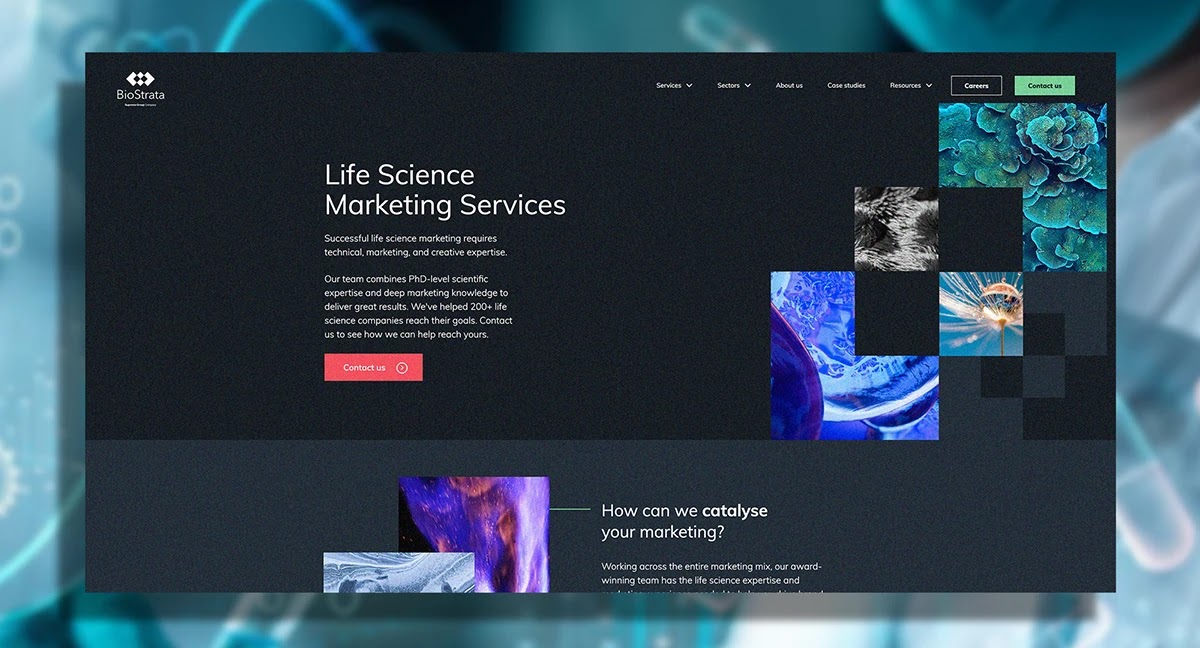
BioStrata is a specialist life sciences agency with PhD-trained account teams that bring scientific fluency to digital product and web design work alongside its broader marketing offering. Now part of Supreme Group, BioStrata's digital product work is informed by its deep understanding of how life sciences buyers research, evaluate, and engage with digital content across the full buying journey. Their experience spans biotech, CROs, CDMOs, diagnostics, and informatics, with a strong focus on producing digital experiences that generate qualified leads and support commercial pipelines. They are best suited for biotech and life sciences companies that need digital product design integrated with content strategy and lead generation, particularly those in research tools and diagnostics where the digital product is the primary commercial touchpoint.


%20(1).png)

Let’s kickstart the conversation and design stuff people will love.

The Retail & Consumer Index


What Is Life Sciences Digital Product and UX Design?
Life sciences digital product and UX design is the discipline of creating digital experiences for companies operating in biotechnology, pharmaceuticals, medical devices, diagnostics, and research tools that are simultaneously scientifically accurate, regulatory-compliant, and usable across the full range of stakeholders who interact with them. Unlike consumer or general B2B digital product design, life sciences digital product agency work must account for the technical sophistication of scientific and clinical users, the regulatory constraints that govern information display and user interaction in medical contexts, the complexity of the data structures that life sciences products handle, and the multi-stakeholder communication challenge of serving investors, researchers, clinicians, commercial buyers, and patients from the same digital product architecture.
How Does Life Sciences UX Design Work?
Life sciences UX design begins with research that maps the actual workflows, information needs, and interaction contexts of every user type the product must serve. Unlike consumer UX research, which focuses primarily on preference and ease of use, life sciences UX research must also account for regulatory requirements, clinical accuracy standards, and the consequences of user error in scientific or clinical contexts. This research phase produces a set of design requirements that shapes the information architecture, the data visualisation approach, and the interaction model. Wireframing and prototyping are then developed and tested with actual users across all stakeholder groups before visual design is applied. In regulated product contexts, design decisions must also pass through regulatory review to ensure that information is displayed in compliance with applicable standards before the product is built and deployed.
What Is a Life Sciences UX Agency?
A life sciences user experience agency is a specialist firm that designs digital product experiences for companies in the life sciences sector with the scientific fluency, regulatory awareness, and multi-stakeholder design capability that the sector requires. The defining characteristic of a specialist agency is its understanding of why life sciences digital product design is categorically different from generalist UX work: the data is more complex, the regulatory constraints are more demanding, the user populations are more technically sophisticated, and the consequences of design errors are more significant. The best specialist agencies combine experienced UX designers and product strategists with team members who have scientific or clinical backgrounds, giving them the rare ability to evaluate both the usability and the scientific integrity of every design decision.
What Services Do Life Sciences Digital Product and UX Agencies Provide?
A specialist digital product agency for biotech provides a range of services that span the full product development lifecycle, from initial research and strategy through design, build, and post-launch optimisation. The breadth and depth of these services is what distinguishes specialist life sciences agencies from generalist digital product firms that lack the scientific and regulatory context to execute them effectively.
UX Research and Workflow Analysis
Specialist agencies conduct research with actual users across all stakeholder groups, including scientists, clinicians, and enterprise buyers, to understand how the product is used before designing how it should be used. In life sciences, this research must account for the regulatory and workflow context that shapes every interaction, and must surface the specific points where complexity, error risk, or compliance requirements create design constraints that generalist research methodologies would miss.
Information Architecture and Data Visualisation
Life sciences products routinely involve complex, multidimensional scientific data that must be presented accurately and accessibly across different user expertise levels. Specialist life sciences product design firms design information architectures and data visualisation systems that serve technical and commercial audiences without compromising scientific integrity, ensuring that dashboards, plots, and tables are accurate, readable, and clinically meaningful.
Regulatory-Compliant UX Design
Products that interact with clinical data, patient information, or diagnostic workflows must meet specific regulatory requirements governing interface design, data display, and user interaction. Specialist agencies design within these constraints from the start, building compliance into the product architecture rather than treating it as a review-stage obstacle. This embedded approach consistently produces compliant products faster and with fewer revision cycles than post-design regulatory retrofitting.
Product Strategy and Roadmap Development
Beyond individual features, specialist agencies help life sciences companies develop product strategies that align digital investment with commercial objectives, whether those are clinical adoption rates, enterprise sales conversion, investor credibility, or patient engagement. A product strategy built on genuine understanding of how life sciences buyers evaluate and adopt digital tools is significantly more effective than one built on generic product development frameworks.
Full-Stack Development
The best life sciences digital product agencies offer end-to-end capability from UX design through technical implementation, ensuring that the precision of the design intent is preserved through the build process and that the final product performs correctly in the scientific and regulatory context it was designed for. Single-agency design and development engagements consistently produce higher quality outcomes than multi-agency handoffs where design intent is reinterpreted at the development stage.
Accessibility and WCAG Compliance
Patient-facing and HCP-facing digital products must meet accessibility requirements that go beyond general web standards. Specialist agencies design and build for WCAG compliance from the outset, ensuring that the product serves users with varying abilities across the full range of clinical and patient contexts and that accessibility is not a post-build remediation exercise.
How Long Does a Life Sciences Digital Product Engagement Take?
The timeline for a life sciences digital product engagement depends on the complexity of the product being designed, the regulatory context it operates in, and the number of stakeholder types it must serve. Understanding the key factors that shape engagement duration enables companies to plan realistically and set internal expectations before a product development process begins.
Product Scope and Feature Complexity
A focused engagement to redesign a single platform section or build a new investor-facing digital experience can be completed in six to twelve weeks. A full platform design and build covering multiple user types, complex data visualisation requirements, and regulatory compliance across several jurisdictions may take six to eighteen months. The most reliable way to establish a realistic timeline is to define the scope of the product in detail before the engagement begins, including which user types are in scope and what regulatory requirements apply.
Regulatory Review and Compliance Requirements
Digital products that interact with clinical data, patient information, or diagnostic outputs must meet specific regulatory requirements that add time to the design and build process. The duration of regulatory review depends on the product category, the markets it operates in, and the client's internal review process. Products subject to FDA oversight, HIPAA compliance, GxP requirements, or CE Mark certification require dedicated regulatory design work and review cycles that must be planned into the project timeline from the start.
UX Research and Stakeholder Access
Effective life sciences UX design requires research with actual users across all stakeholder groups. Scheduling and conducting research sessions with laboratory scientists, clinicians, regulatory reviewers, and commercial buyers adds time to the front end of the engagement but significantly reduces revision cycles later. Companies that facilitate rapid access to representative user groups consistently see shorter overall engagement timelines despite the upfront time investment.
Data Architecture and Integration Complexity
Life sciences products that require integration with existing laboratory information management systems, clinical data platforms, EHR systems, or enterprise data infrastructure carry significantly longer development timelines than standalone products. The complexity of data architecture decisions, API development, and integration testing scales with the number and maturity of the systems being connected. Agencies that have prior experience with the specific platforms being integrated consistently deliver integrations faster than those approaching the technical context for the first time.
Stakeholder Review and Approval Cycles
Internal review and approval processes are one of the most common sources of timeline extension in life sciences digital product engagements. Companies with clearly defined review processes, designated approvers, and consolidated feedback mechanisms consistently complete engagements faster than those where feedback is gathered informally across multiple stakeholders. Agencies that establish review protocols at the start of the engagement and manage the approval process actively throughout are a significant determinant of whether the project finishes on time.
How Life Sciences Digital Product and UX Agencies Price Their Work
Pricing for life sciences digital product and UX engagements reflects the specialist expertise, regulatory complexity, and technical depth that distinguish this sector from generalist digital product work. Understanding the key pricing factors helps companies evaluate proposals accurately and build realistic budget frameworks before beginning an agency selection process.
Product Scope and Deliverable Definition
The most significant driver of engagement cost is the scope of the product being designed and built: how many screens, how many user types, how many data integrations, and how many regulatory requirements are in scope. Agencies that provide detailed scope definitions with itemised deliverables enable more accurate budget planning than those that provide lump-sum estimates without underlying scope detail. Scope changes mid-engagement are the most common cause of budget overruns, and clarity on scope before the engagement begins is the most effective way to manage cost predictability.
Scientific and Regulatory Expertise Premium
Life sciences digital product agencies with PhD-level scientific staff, regulatory design experience, and deep therapeutic area or platform knowledge command premium rates that reflect the genuine scarcity of this combination. The premium is most easily justified for products where scientific accuracy and regulatory compliance are non-negotiable requirements: the cost of design errors that fail regulatory review or produce scientifically inaccurate outputs significantly exceeds the premium for specialist expertise.
Research and Discovery Investment
High-quality UX research with scientific and clinical users is time-intensive and requires specialised recruitment and facilitation skills. Agencies that invest in thorough discovery and research phases typically charge more upfront but deliver products with significantly fewer post-launch revisions. Companies that try to compress the research phase to reduce costs consistently encounter higher revision costs later in the engagement, making the research investment one of the highest-ROI components of a well-structured project budget.
Development Integration Model
Agencies that offer end-to-end design and development within a single engagement typically charge more than design-only agencies but deliver better value when the total cost of design, development, and handoff coordination is considered. The translation loss between a design-only agency and a separate development team consistently produces revision cycles that increase total project cost beyond the savings from disaggregating the engagement. For complex life sciences products, single-agency design and development is typically the more cost-effective model.
Post-Launch Support and Optimisation
Life sciences digital products require ongoing optimisation as user behaviour data accumulates, regulatory requirements evolve, and the scientific content the product presents is updated. Agencies that offer post-launch support retainers provide ongoing access to the team that built the product, reducing the onboarding cost of each subsequent optimisation cycle. Companies that plan for post-launch support from the start of the engagement consistently achieve better product performance over time than those that treat the initial build as a terminal deliverable.
Why Hire a Life Sciences Digital Product and UX Agency

The case for engaging a specialist life sciences digital product agency rather than a generalist firm or building the capability internally is grounded in the specific expertise, regulatory knowledge, and scientific domain understanding that effective digital product design in this sector requires. The following are the most important reasons life sciences companies choose to work with specialist agencies.
Scientific Domain Knowledge That Changes the Design
Generalist digital product agencies consistently underestimate the impact of scientific domain knowledge on design quality in life sciences. A laboratory workflow that appears straightforward from a UX perspective may involve regulatory-critical decision points, precision requirements, or error-consequence profiles that fundamentally change the appropriate design approach. Biotech digital experience agencies with scientific staff on their teams identify these constraints before they become post-launch issues, producing products that are not just usable but scientifically defensible.
Regulatory Compliance as a Design Input
In generalist digital product design, regulatory compliance is typically a late-stage check. In life sciences, it is a design input that shapes information architecture, data display, user interaction models, and content structure from the first wireframe. Agencies that embed regulatory thinking into the design process from the start consistently produce compliant products on the first submission, avoiding the costly redesign cycles that result from treating compliance as a post-design review.
Multi-Stakeholder UX Architecture
The most complex UX challenge in life sciences digital product design is building a single product that serves laboratory scientists, clinical researchers, enterprise procurement teams, regulatory reviewers, and in some cases patients, each with fundamentally different information needs, technical expertise levels, and workflow contexts. Specialist agencies have developed methodologies for resolving this multi-stakeholder complexity within a coherent product architecture, a capability that generalist agencies and internal teams with narrow stakeholder experience consistently struggle to replicate.
Speed Through Familiarity
The onboarding cost of briefing a generalist agency on the scientific, regulatory, and stakeholder context of a life sciences digital product engagement is significant and consistently underestimated. Specialist agencies with prior experience in adjacent therapeutic areas, platform technologies, or product categories can reach effective briefing quickly, reducing the upfront time investment and enabling the design process to begin with a higher baseline of relevant context. For time-critical engagements, this speed advantage compounds significantly.
Commercial Outcomes From Scientific Credibility
Life sciences digital products that are perceived as scientifically credible by technical audiences generate measurably better commercial outcomes than those that are not: higher investor engagement, more qualified partner inquiries, faster enterprise sales cycles, and stronger clinical adoption rates. Specialist agencies understand that scientific credibility in digital product design is not a quality standard separate from commercial performance: it is a commercial driver, and designing for it produces results that generalist agencies optimising for aesthetic quality alone consistently fail to match.
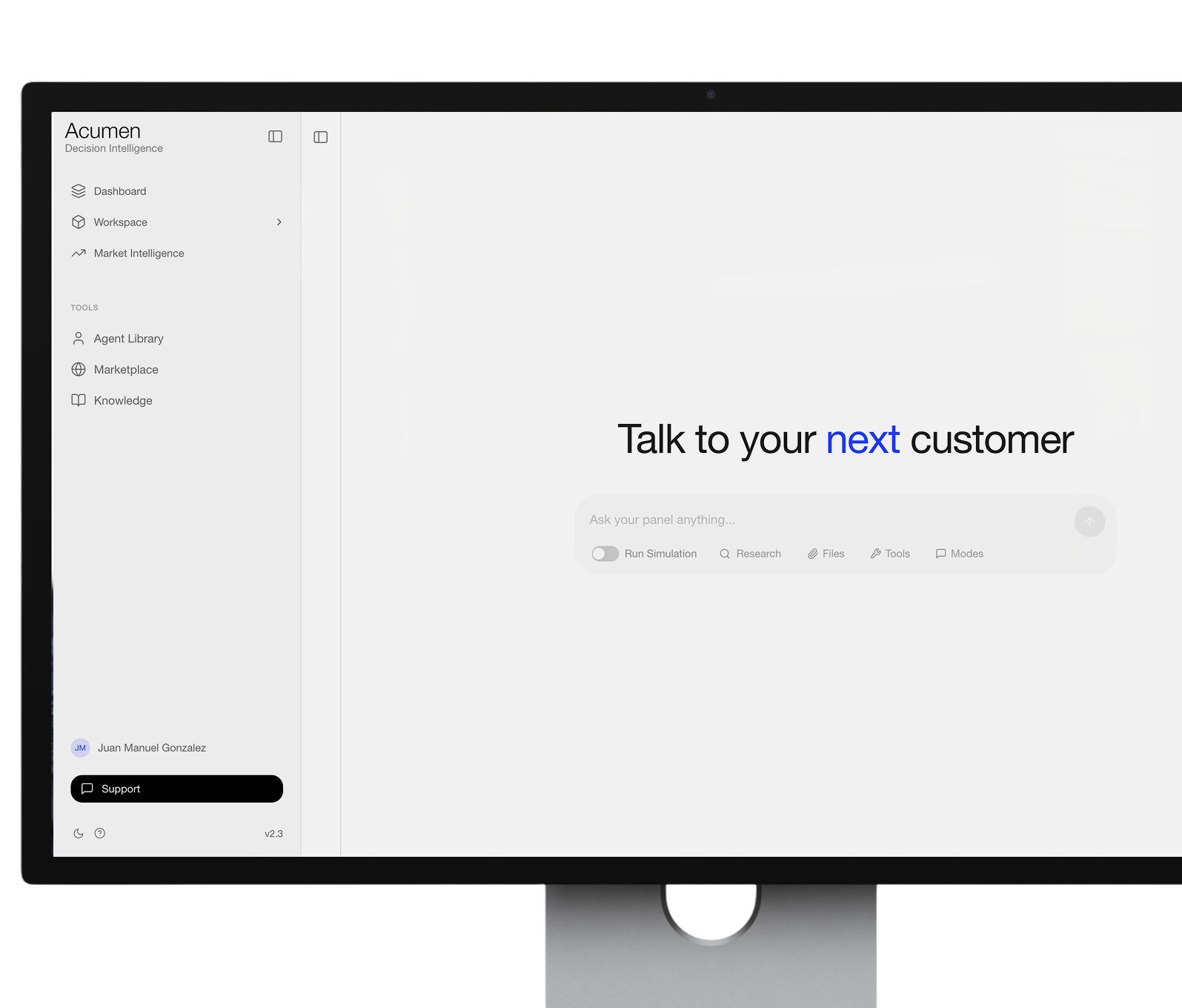
Always-On Customer Intelligence
Turn your own customer data into foresight — validate, simulate, and sense every major decision before you commit.


How to Choose the Right Life Sciences Digital Product Agency
Selecting a digital product and UX partner in life sciences requires evaluating criteria that go beyond design portfolio quality and development capability. The following factors are the most important to assess before making a final decision.
– Scientific domain knowledge: does the agency understand the workflows, data structures, and regulatory context of the specific product category? Agencies without genuine life sciences expertise consistently underestimate complexity and over-budget on revisions.
– Regulatory design experience: has the agency built products that have successfully navigated FDA, HIPAA, GxP, or CE Mark review? This is non-negotiable for clinical or diagnostic products.
– Multi-stakeholder UX capability: can the agency design for laboratory scientists, clinical researchers, enterprise buyers, and patients within the same product? Agencies that design for one audience type at the expense of others create products that fail at critical commercial junctures.
– Data visualisation expertise: does the agency have specific experience presenting complex scientific data accurately and usably? Generic data visualisation skills are insufficient for life sciences data complexity.
– Development integration: can the agency manage design and technical implementation within a single engagement? Multi-agency handoffs consistently introduce quality loss between design intent and built product.
– Stage-appropriate experience: the right agency for a pre-commercial biotech building its first investor-facing digital product is different from the right partner for an enterprise pharmaceutical company redesigning a clinical data platform.
15 Questions to Ask a Life Sciences Digital Product Agency Before You Hire
Before committing to a life sciences digital product partner, the following questions help assess whether the agency's expertise, process, and approach are genuinely suited to the specific challenge at hand. For each question, the reasoning behind asking it is as important as the answer received.
1. What experience do you have designing digital products for our specific life sciences category: biotech, pharmaceutical, medical devices, diagnostics, or clinical research?
Life sciences is a broad sector encompassing fundamentally different digital product challenges. A clinical trial platform requires different design expertise than a laboratory information management system, which requires different expertise again from a patient-facing mobile application. The answer reveals whether the agency's experience is genuinely relevant to the specific product type rather than tangentially related to the sector.
2. How does your team's scientific background inform your UX research and design process?
This question surfaces whether the agency has genuine scientific expertise on its team or relies entirely on client subject matter experts to validate scientific content and workflow accuracy. Agencies with scientists on staff can identify design-relevant scientific constraints independently, reducing the client bandwidth required to brief the team and the revision cycles required to correct scientifically imprecise design decisions.
3. Can you show us digital product work you have completed for companies at our stage and product type?
Stage-appropriate experience shapes every aspect of the design process, from the investor audience weighting of a pre-commercial platform to the clinical workflow precision requirements of a commercial diagnostic tool. A portfolio dominated by one stage or product type may signal limited applicability to another, regardless of overall sector experience.
4. How do you approach UX design for products that must serve multiple stakeholder types simultaneously?
Most life sciences digital products must serve multiple stakeholder types from a single product architecture. Agencies that have developed methodologies for multi-stakeholder design will answer this question with specificity about how they resolve competing user needs within a coherent information architecture. Agencies without this experience will describe audience segmentation approaches that do not address the structural challenge of serving fundamentally different users simultaneously.
5. What is your experience designing within regulatory constraints, including FDA, HIPAA, GxP, and CE Mark requirements?
Regulatory compliance in life sciences digital product design is not a review-stage checkpoint: it is a design constraint that shapes information architecture, data display, and user interaction models from the first wireframe. The answer reveals whether the agency embeds regulatory thinking into its design process or treats compliance as a final review step, which is the most reliable predictor of whether the product will pass regulatory review on the first submission.
6. How do you approach information architecture and data visualisation for complex scientific datasets?
Life sciences products routinely involve multidimensional data that must be presented with scientific accuracy while remaining usable across different levels of technical expertise. This is a specialist capability, and the answer reveals whether the agency has genuine experience designing for scientific data complexity or is applying general data visualisation approaches that have not been tested against life sciences precision requirements.
7. Do you offer full-stack development alongside UX design, or is there a handoff to a separate development partner?
The handoff between a design agency and a separate development partner is one of the most reliable sources of quality loss in complex digital product engagements. Design intent is reinterpreted, constraints are missed, and revision cycles multiply. For life sciences products where scientific accuracy and regulatory compliance must be preserved through every stage of implementation, single-agency design and development engagements consistently produce better outcomes.
8. What does your UX research process look like, and how do you conduct research with scientific and clinical user groups?
UX research with scientific and clinical users requires specialised recruitment, facilitation, and analysis skills that generalist user research methodologies do not address. The answer reveals whether the agency has genuine experience conducting research in regulated or clinical contexts, how they recruit representative users from specialist populations, and how they translate scientific workflow observations into design requirements.
9. How do you manage the balance between regulatory compliance requirements and usability?
Regulatory compliance and usability are not always in tension in life sciences digital product design, but when they are, the resolution requires both regulatory knowledge and UX expertise. Agencies that have navigated this balance in previous engagements will describe specific design strategies for maintaining compliance without sacrificing usability. Agencies without this experience will present compliance and usability as sequential rather than simultaneous design requirements.
10. What accessibility standards do you design to, and how do you validate compliance?
Patient-facing and HCP-facing life sciences digital products must meet accessibility requirements that go beyond general web standards. The answer reveals whether the agency designs for WCAG compliance from the start of the engagement or treats accessibility as a post-build audit, and whether it has experience with the specific accessibility requirements that apply to medical and clinical digital products in the target markets.
11. How do you approach product strategy and roadmap development alongside UX design?
A digital product designed without a clear product strategy is a product that solves the wrong problem more beautifully. In life sciences, where digital product investment decisions carry significant commercial consequences, the ability of an agency to contribute to product strategy alongside UX design is a significant differentiator. The answer reveals whether the agency is positioned as a strategic partner or a design execution service.
12. What is your typical timeline from discovery to delivered product, and what factors most commonly affect that timeline?
This question establishes whether the agency has a realistic and experience-based understanding of the factors that shape life sciences digital product timelines, including regulatory review cycles, stakeholder alignment complexity, and data integration challenges. Agencies that provide generic timelines without acknowledging these sector-specific factors are likely to encounter the same timeline surprises in the engagement that they are failing to anticipate in the proposal.
13. How do you handle stakeholder review and approval processes for regulated product content?
Internal review processes are one of the most common sources of timeline extension in life sciences digital product engagements. Agencies that have structured processes for managing multi-stakeholder feedback, coordinating across scientific, legal, regulatory, and commercial reviewers, and maintaining design consistency through multiple revision cycles will describe a specific approach. Agencies without this experience will manage review processes reactively.
14. What metrics do you use to evaluate the success of a digital product design engagement?
The answer reveals whether the agency ties its work to commercially meaningful outcomes: user adoption rates, task completion rates, error rates in clinical workflows, investor engagement metrics, or commercial pipeline metrics. Agencies that evaluate success primarily through aesthetic quality or delivery compliance are less likely to produce products that achieve the commercial objectives the engagement was commissioned to address.
15. What makes your agency the right choice for our specific digital product challenge, not for life sciences companies in general?
This is the most direct test of whether an agency has genuinely understood the brief or is presenting a generic life sciences capability pitch. The best answers will reference specific elements of the product type, the regulatory context, the stakeholder environment, or the commercial stage. Generic answers about scientific credibility and regulatory experience, without specificity to the brief, signal an agency that is pitching a standard offering rather than a tailored solution.
Conclusion
The most important distinction in life sciences digital product agency selection is not between agencies with good design portfolios and agencies with average ones: it is between agencies that understand the specific scientific, regulatory, and stakeholder complexity of the product being built and those that do not. The cost of that misunderstanding compounds through every stage of the product development process, from research that misses critical workflow constraints, through design that fails regulatory review, through post-launch revisions that could have been avoided with earlier stakeholder alignment. The agencies that deliver durable value in this sector are those that bring scientific fluency, regulatory design experience, and multi-stakeholder product architecture capability to every engagement.
G&CO.Health works with life sciences and biotech companies building digital products that must satisfy scientific rigour, regulatory compliance, and commercial usability simultaneously. Whether the challenge is designing a first investor-facing digital presence, rebuilding a clinical data platform, or developing a patient-facing application, G&CO.Health brings the product strategy, UX expertise, and full-stack development capability that life sciences digital product and UX design at the highest level requires. G&CO.Health is a certified minority business enterprise (MBE) through the National Minority Supplier Development Council (NMSDC). Submit an inquiry to G&CO.Health on our contact page or click on the blue "Click to Contact Us" button on the bottom right corner of your screen. We look forward to hearing from you.