
How can brands leverage advanced analytics to gain a market edge?
Enterprises with mature analytics capability often discover that the capability alone does not produce the market edge they expected. Most large brands now have access to similar analytics tools, similar data sources, and similar methodologies, and most have invested in building analytical teams and infrastructure. What separates brands that produce competitive advantage from analytics, and brands that produce internal efficiency gains, is not the analytics itself but a different question that buyers and analytics leaders tend to ask too late in the process.
The factor that produces competitive edge from analytics is non-replicability: whether competitors can build the same analytical capability and arrive at the same insights. Analytics that competitors can replicate produces improvements that diffuse through the market as quickly as the methodology spreads. Analytics that competitors structurally cannot replicate produces edge compounds, because the insights it generates remain proprietary to the brand that built the infrastructure. The question buyers and analytics leaders should be asking is not whether their analytics capability is strong, but whether any part of it would be difficult for a well-resourced competitor to build independently.



.png)
%20(1).png)

Let’s kickstart the conversation and design stuff people will love.

The Retail & Consumer Index


What non-replicable analytics looks like in practice
Three characteristics distinguish analytics that produces durable competitive edge from analytics that produces only marginal improvement. The first is proprietary data: information the brand has access to that competitors structurally cannot acquire, whether through scale of first-party interactions, customer trust that enables disclosure, or partnerships that create exclusive data flows. The second is proprietary methodology: ways of organizing, modeling, or interpreting data that the brand has developed internally and that produce insights other firms with similar data could not reach. The third is depth of analytical infrastructure: the accumulated tooling, talent, and institutional knowledge that allows a brand to apply analytics to questions other organizations cannot answer in the same time horizon. Non-replicability is rarely about owning one of these conditions; it is about how they compound.
How brands build it
Building non-replicable analytics is structurally different from building analytics capability. Brands that succeed at this work tend to do three things consistently. They invest in data sources that competitors cannot easily access, often through first-party relationships, exclusive partnerships, or proprietary research instruments developed over time. They develop methodologies internally rather than adopting industry-standard frameworks, accepting the cost of building what could otherwise be bought, in exchange for insights that competitors cannot reproduce. They protect their analytical infrastructure as strategic capability, not as a cost center, which means treating analytics talent retention and tooling investment as long-horizon competitive moves rather than as operational budget decisions. None of these moves produces immediate return, which is why most brands do not make them.
Where the gap typically shows up
The gap appears most visibly in the second year of an analytics investment. The first year produces measurable improvement: better dashboards, faster reporting, sharper segmentation, more efficient campaign optimization. By the second year, competitors who made parallel investments are producing similar improvements, and the competitive position has not changed. The analytics capability is genuine, the insights it produces are accurate, and the operational gains are real, but the market edge that was expected has not materialized. What looked like a strategic investment in analytical advantage turns out, in retrospect, to have been an investment in operational parity.
The question of how to leverage analytics for market edge is, in practice, a question about what part of a brand’s analytics infrastructure competitors cannot reproduce. Brands that produce durable advantage from analytics have built data sources, methodologies, or infrastructure that other firms with similar capability cannot easily match. The work of producing edge from analytics is, more often than not, the work of producing something that is hard to copy.
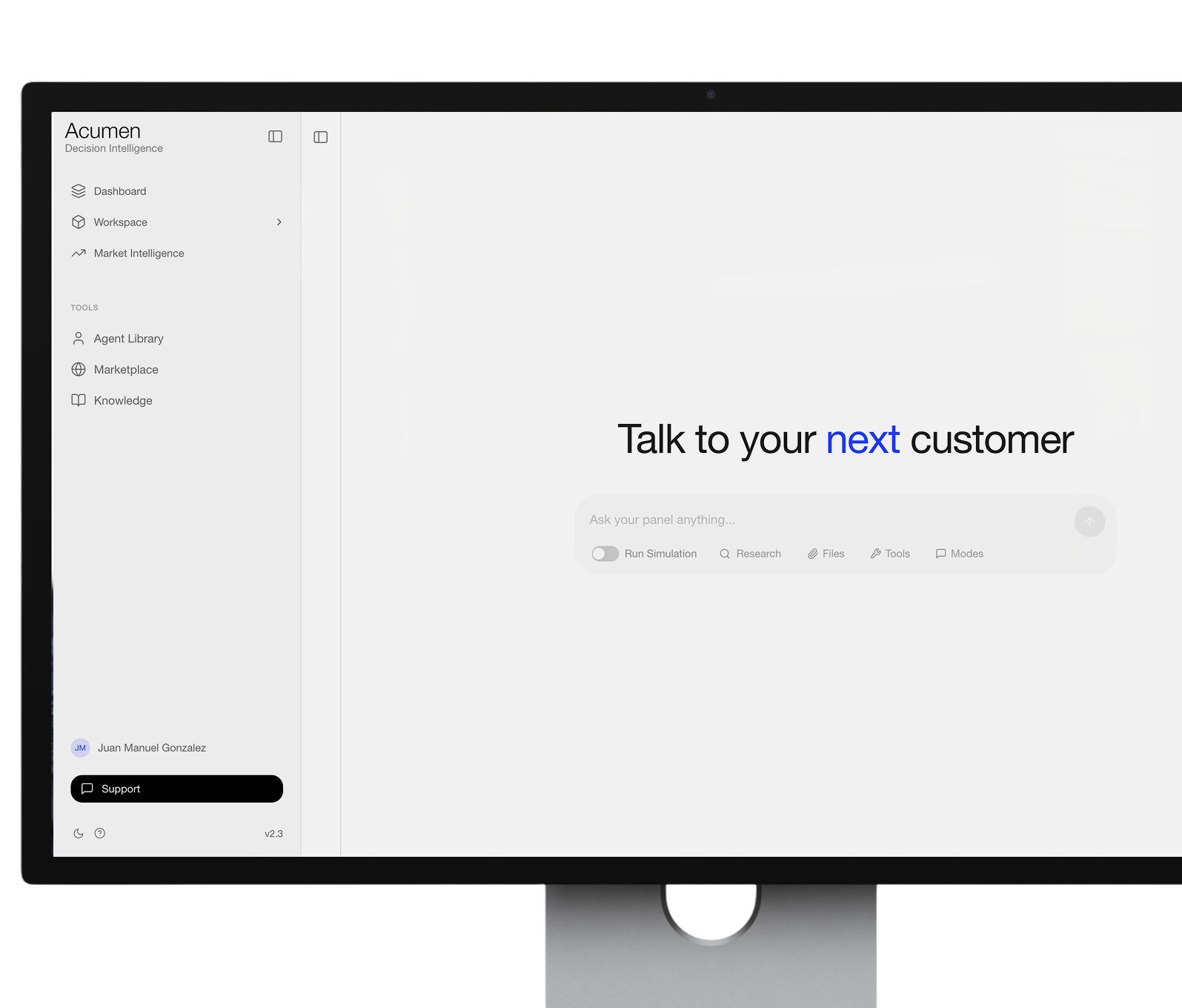
G&CO. operates Acumen, a proprietary intelligence platform that combines structured research with real-time consumer behavior signals across global markets, as the analytical infrastructure behind its work with enterprise brands. Buyers evaluating analytics investment can find more on our approach through our contact page.
Always-On Customer Intelligence
Turn your own customer data into foresight — validate, simulate, and sense every major decision before you commit.