How do consulting partners support brand differentiation strategies?
The consulting work that produces durable brand differentiation looks substantially different from the consulting work that produces clearer brand articulation, even when both are framed as differentiation strategy. Most consulting engagements on brand differentiation focus on the same set of activities: competitive analysis, positioning frameworks, messaging architecture, identity systems. These activities produce defensible outputs that brands can point to, but they often leave the underlying question unanswered. The question buyers should be holding alongside the proposal evaluation is not which firm has the strongest methodology for articulating differentiation, but which firm works on the layer of differentiation that actually holds.
Durable brand differentiation is built into the structural layer of the brand: the products it builds, the operations it runs, the experiences it delivers to customers, the categories of work it actively chooses to do better than its competitors. Consulting work that operates on the positional layer addresses how the brand describes its differentiation through positioning, messaging, identity, and communications. Both kinds of work can be valuable, but they are not interchangeable. Articulating a position the brand cannot operationally deliver produces credibility risk; building structural advantage that the brand cannot communicate produces a different problem, and a smaller one.



.png)
%20(1).png)

Let’s kickstart the conversation and design stuff people will love.

The Retail & Consumer Index


What structural differentiation looks like in practice
Structural differentiation is the result of choices a brand makes about what work it does, what capabilities it builds, and what it actively chooses not to do. It surfaces in the products customers actually use, the operational decisions that shape what the brand can deliver consistently, and the experiences that customers can distinguish from competitive alternatives because they are materially different. A brand whose products are recognizably distinct, whose service operations are measurably different from category norms, or whose customer experience produces outcomes competitors cannot replicate is differentiated structurally. The structural layer is where differentiation either exists or does not, regardless of what the brand says about itself.
How consulting partners support it
Consulting work that supports structural differentiation operates across more disciplines than positioning work requires. Partners that engage at this layer typically work on what the brand should build, not just on what the brand should claim, which means engaging with product development, operational design, and customer experience alongside strategy. They make recommendations about which categories of work to invest in and which to deprioritize, accepting that meaningful differentiation requires choosing not to compete in areas where the brand is comparable to others. They build the capability gaps the brand needs to close in order to deliver on the differentiated position, rather than only defining the position itself. This work is harder to scope, longer to deliver, and more difficult to claim credit for than positioning work, which is why fewer firms operate at this layer credibly.
Where positional-only differentiation fails
Positional differentiation without structural support produces a recognizable pattern. The brand articulates a position that sounds compelling in market research and tests well in customer surveys, but the operational reality the brand can deliver does not match the position the brand has claimed. Over time, the gap between claim and delivery becomes visible to customers, employees, and competitors, and the credibility the position was meant to build erodes faster than the position itself can be updated. The brand has invested in differentiation work and has the deliverables to show for it. What it does not have is the structural advantage the differentiation was meant to produce.
The question of how consulting partners support brand differentiation has two answers depending on which layer the engagement operates at. Consulting work at the positional layer produces clearer articulation of differentiation the brand is trying to claim. Consulting work at the structural layer produces the differentiation itself, by changing what the brand actually does. Brands that need the second kind and receive the first end up where most differentiation engagements end up: with stronger positioning of the same competitive position. The two kinds of consulting work look similar on the proposal, and differ substantially in what they actually change.
G&CO. works with enterprise brands on differentiation across the structural layer, integrating strategy, experience design, and technology delivery to change what the brand can deliver rather than only how it describes itself. Buyers evaluating consulting support for differentiation can find more on our approach through our contact page.
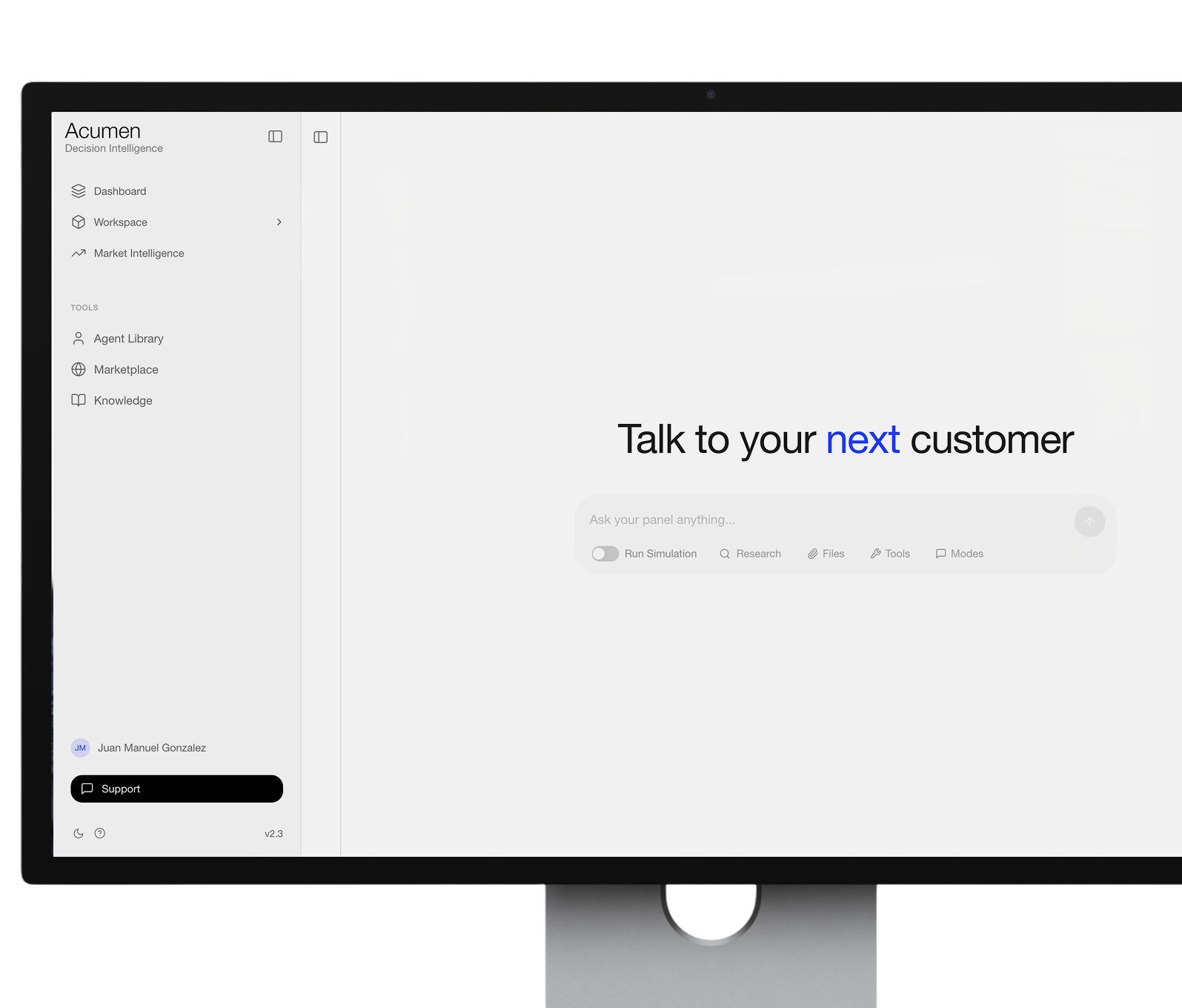
Always-On Customer Intelligence
Turn your own customer data into foresight — validate, simulate, and sense every major decision before you commit.