Customer Experience in Healthcare: 2026 Trends & Insights
Introduction
The five customer experience trends reshaping healthcare in 2026 are hyper-personalized patient journeys, omnichannel experience, agentic and proactive AI, real-time feedback loops, and CX integration with EHR and clinical systems. Patient expectations have caught up with other industries: nearly 60% of consumers now use AI to ask about their health, and 67% would rather get instant AI help than wait on hold, according to Salesforce’s 2026 Connected Health Consumer Report. This article breaks down each trend and what leading organizations are doing to respond.
Top 5 Trends to Watch in Healthcare CX
• Hyper-Personalized Patient Journeys
• Omnichannel Healthcare Experience
• Agentic and Proactive AI in CX
• Real-Time Feedback Loops
• CX Integration with EHR and Clinical Systems
Trend Breakdown: Context & Competitive Insight
Hyper-Personalized Patient Journeys
Personalization in healthcare now means anticipating needs, not just tailoring messages. Leading organizations combine behavioral signals, medical history, and real-time engagement to shape individualized journeys and proactive interventions rather than reactive responses. The stakes are high, because friction still drives patients away: 46% delay care because the digital process is too confusing, per Salesforce’s 2026 report, while 65% of patients managing chronic conditions say an always-on digital helper would make managing their health significantly easier. Personalization done well improves both relevance and speed across the experience.
Omnichannel Healthcare Experience
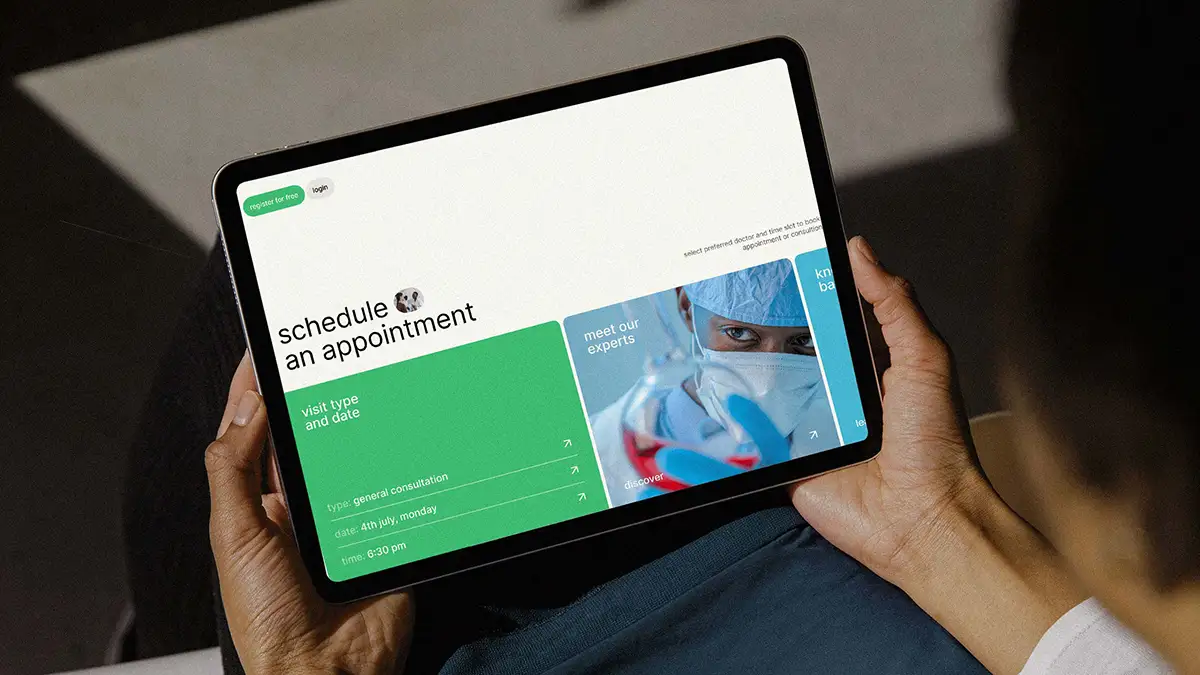
Patients expect to move across digital and physical healthcare services without repeating themselves, and a unified digital identity is now the baseline. Consistency across apps, websites, phone, and in-person care builds trust, while a cumbersome booking flow is treated as a quality defect rather than a minor inconvenience. The cost of friction is measurable: 58% of patients skip necessary care because scheduling is too difficult, and nearly half hang up after ten minutes on hold, according to Salesforce. In 2026, convenience has effectively become a clinical quality metric, and friction is the new wait time.
Agentic and Proactive AI in CX
Agentic AI has moved patient experience from answering questions to anticipating and acting on needs. Intelligent systems now handle scheduling, refills, and benefits inquiries around the clock and resolve rather than route, escalating complex cases to humans with full context, while proactive check-ins between visits help patients stay on track. Demand is clear, with 61% of patients comfortable using agentic AI in healthcare and 44% saying a 24/7 assistant would make them more likely to stay in network, per Salesforce. Trust is conditional, though: patients are three times more likely to trust an AI agent inside their provider’s portal than a public chatbot, and around 90% insist on human oversight and a clear escalation path.
Real-Time Feedback Loops
Real-time feedback has replaced the annual survey as the way leading providers catch problems as they happen. Signals collected across the journey feed the metrics that matter most, from CAHPS scores to Medicare Advantage Stars ratings and retention. Trust sits at the center of it all: Qualtrics’ 2026 Healthcare Experience Trends Report finds a 75-point gap in Net Promoter Score between patients who report high trust in their hospital and those who report low trust, one of the sharpest single predictors of patient experience in the data.
CX Integration with EHR and Clinical Systems
Customer experience depends on systems working together, and 2026 is accelerating that through a national push toward interoperability, including CMS initiatives that make patient information discoverable across care settings. When electronic health records (EHRs) and CX tools share data, providers make better decisions, and that connection must be governed by clear consent and auditable records of how patient data is used. This institutional accountability is also what earns patient trust in AI, since tools embedded in a provider’s clinical systems are trusted far more than standalone ones. The result is fewer errors, stronger trust, and better service.


%20(1).png)

Let’s kickstart the conversation and design stuff people will love.

The Retail & Consumer Index


What Leading Brands Are Doing
Top healthcare companies are already applying these trends. One U.S.-based provider deployed agentic AI assistants across its call centers, cutting wait times and improving first-call resolution while routing sensitive cases to human agents with full context. Another built proactive AI check-ins into its post-appointment follow-up and scheduling, helping patients stay on track between visits and lifting satisfaction scores. The common thread is provider-backed, governed AI, which patients trust far more than public tools.
At G&CO.Health, G&CO.’s healthcare division, we help enterprise brands deliver digital CX for healthcare by connecting systems, improving speed, and designing patient-first journeys. We support healthcare organizations in building long-term strategies that make CX clear and effective.
Risks, Blind Spots & What to Avoid
Risk 1: Treating CX as a Technology Project
Why it matters: Technology alone will not fix customer experience.
Blind spot: Ignoring people and process, and rolling out AI without the governance, consent, and human oversight that patient trust depends on, since roughly 90% of patients expect a human in the loop.
Risk 2: Siloed Systems and Data
Why it matters: Disconnected systems frustrate patients and limit insight.
Blind spot: Assuming new tools will work without integration, even as interoperability expectations rise across the industry.
Risk 3: Ignoring Staff Experience
Why it matters: Employees deliver the experience patients feel, and clinician burnout directly degrades care. Qualtrics found clinician burnout rising year over year, with burned-out clinicians scoring lower on communication and collaboration.
Blind spot: Excluding staff from CX improvements, and overlooking tools like ambient AI documentation that reduce administrative load. Physician comfort with AI has jumped to 72%, up from 42% a year earlier, so the workforce is ready if organizations meet them there.
Frequently Asked Questions
What are the top healthcare customer experience trends in 2026?
The top trends are hyper-personalized patient journeys, omnichannel experience, agentic and proactive AI, real-time feedback loops, and CX integration with EHR and clinical systems.
What do patients want from AI in healthcare?
Patients want fast, always-on help but with human oversight. In Salesforce’s 2026 report, 67% prefer 24/7 AI help over waiting on hold, yet around 90% say a clear option to escalate to a human is essential, and they trust AI inside their provider’s portal three times more than a public chatbot.
Why is patient trust important in healthcare customer experience?
Trust is the single strongest driver of patient experience. Qualtrics’ 2026 report found a 75-point Net Promoter Score gap between high-trust and low-trust patients, directly affecting loyalty, retention, and Stars performance.
What is agentic AI in patient experience?
Agentic AI refers to autonomous systems that act on a patient’s behalf, handling tasks like scheduling, refills, and benefits questions end to end and proactively checking in between visits, while escalating complex cases to humans.
How does scheduling affect patient experience?
Scheduling is a leading barrier to access. Salesforce found 58% of patients skip necessary care because scheduling is too difficult, and nearly half abandon a call after ten minutes on hold.
Conclusion & Strategic Outlook
These five trends show that customer experience in healthcare is shifting fast, driven by new patient needs and higher service expectations. Healthcare customer experience optimization is no longer optional. It is central to performance, and the organizations that pair convenience with trust and human oversight will build lasting loyalty. Enterprise brands that act now will build trust, improve outcomes, and grow faster.
At G&CO.Health, we help healthcare companies move from insight to action with clear strategies and practical execution. Let’s define what’s next, together.
Always-On Customer Intelligence
Turn your own customer data into foresight — validate, simulate, and sense every major decision before you commit.