JPMorgan Chase Case Study: Omnichannel in Banking and Connected Commerce
This JPMorgan Chase case study looks at how the largest U.S. bank turned its credit card and Chase Ultimate Rewards program into an owned commerce ecosystem. It now spans Chase Travel (the #3 U.S. leisure travel provider, with $13 billion in booked volume in 2025), Chase Media Solutions (a retail media network reaching about 74 million customers), the Chase Sapphire card and lounge network, and dining. It is a case study in omnichannel in banking, and in treating loyalty as commerce infrastructure rather than a simple points program, with lessons for enterprise brands in any category.
Chase turned 80 million banking customers into an advertising business called Chase Media Solutions, using what it knows about how people actually spend to connect brands to the right customers.
For most companies, a loyalty program is a cost that sits next to the real business. JPMorgan Chase set out to make loyalty the business. Instead of treating Chase Ultimate Rewards as a simple points system attached to its cards, Chase rebuilt it into the center of an owned commerce ecosystem. The card, the rewards, a full travel agency, a retail media network, dining, and airport lounges all feed one another. The card is no longer the product; it is the front door to a connected commerce platform the bank owns from end to end. This case study in omnichannel in banking explains how Chase built that system, what it has produced, and why the model works well beyond banking. The lesson for enterprise leaders is simple: the strongest loyalty is not a program that rewards spending, but an omnichannel commerce ecosystem that captures it.
Key Points
- Chase built an advertising business, Chase Media Solutions, on top of its banking relationships. It uses real spending data from roughly 80 million customers to place brand offers inside the Chase app.
- Banking data beats cookies because it's real purchase behavior, not the guesswork most digital advertising relies on, so the targeting is grounded in what people actually buy.
- The offers run inside the app customers already open daily, turning routine banking sessions into a two-sided marketplace connecting cardholders and merchants.
- It's a high-margin revenue stream a bank uniquely owns. No fee or interest-rate move can match advertising economics, and only a bank sits on this depth of verified spending data.
Why This Matters
For CMOs, chief digital officers, and heads of loyalty and customer experience, Chase matters because it flips a question most companies get wrong. The usual question is "how do we reward our best customers?" Chase asked a better one: "how do we capture more of what our customers already spend?" That shift, from rewarding loyalty to earning money from it through commerce, sits at the heart of modern financial services marketing. And it applies to any brand with a base of loyal, frequent customers.
The timing matters too. Retail media networks are one of the fastest-growing parts of advertising, and first-party data is now the most valuable asset in marketing as third-party cookies disappear. Chase saw that a bank knows more about what a customer actually buys than almost any retailer, and that this knowledge is a commercial asset, not just a tool for managing risk. Many companies still treat their loyalty and customer data as a report to file away. Chase turned it into a growth business. That is why omnichannel in banking is an early sign of where loyalty and commerce are heading everywhere.


%20(1).png)

Let’s kickstart the conversation and design stuff people will love.

The Retail & Consumer Index


Strategic Context
The old card-rewards model was defensive. Banks handed out points to win and keep cardholders, then paid partners, airlines, hotels, and travel agencies, to deliver the rewards. Money leaked at every step. The bank owned the customer relationship but rented out the shopping that gave the rewards their value, handing profit and data to middlemen.
Chase set out to plug those leaks by owning the commerce itself. Starting around 2021, it built and bought the pieces. cxLoyalty brought travel and rewards fulfillment. Frosch added luxury travel. The Infatuation brought a dining audience. Figg, a card-linked marketing platform, let Chase run offers and ads in-house instead of through an outside company. The goal, in the words of Consumer and Community Banking Co-CEO Marianne Lake, was "full ownership economics", running the customer experience itself and keeping the commissions, the data, and the relationship that partners used to take. The Chase Sapphire ecosystem is the high end of this strategy, and Connected Commerce is the platform that holds it together.
Company Response
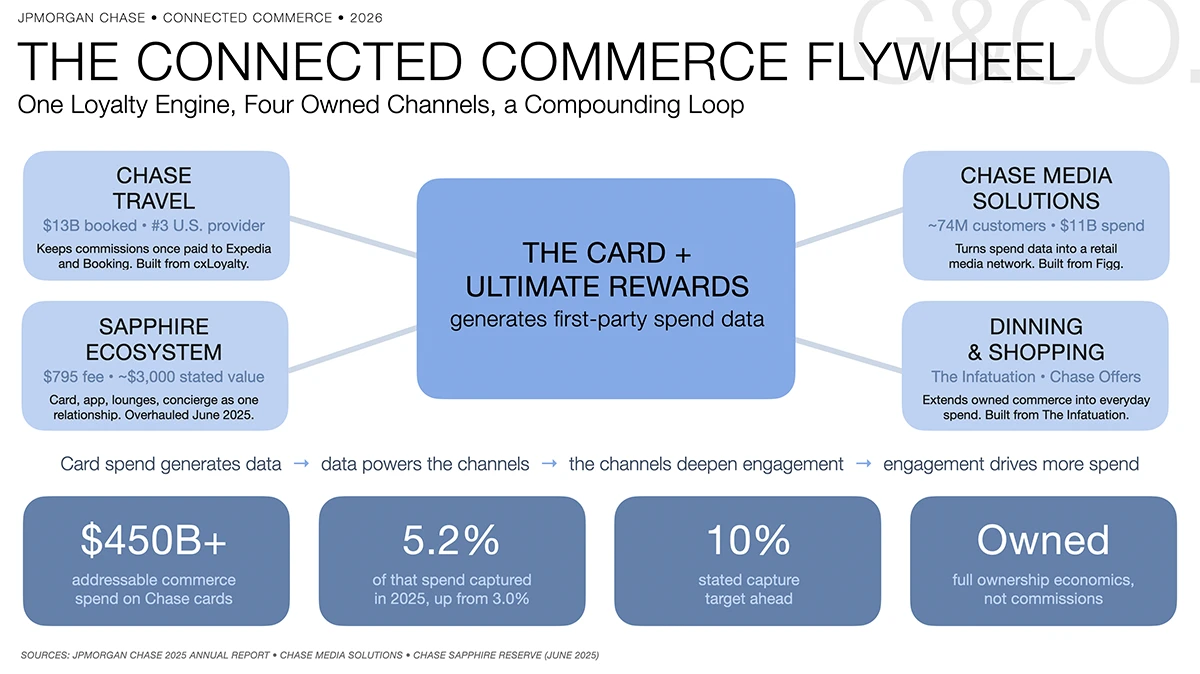
Chase's answer was one connected system, not a set of separate features. Four parts link together through Chase Ultimate Rewards and the Chase app.
Chase Travel: owning the most valuable spending.
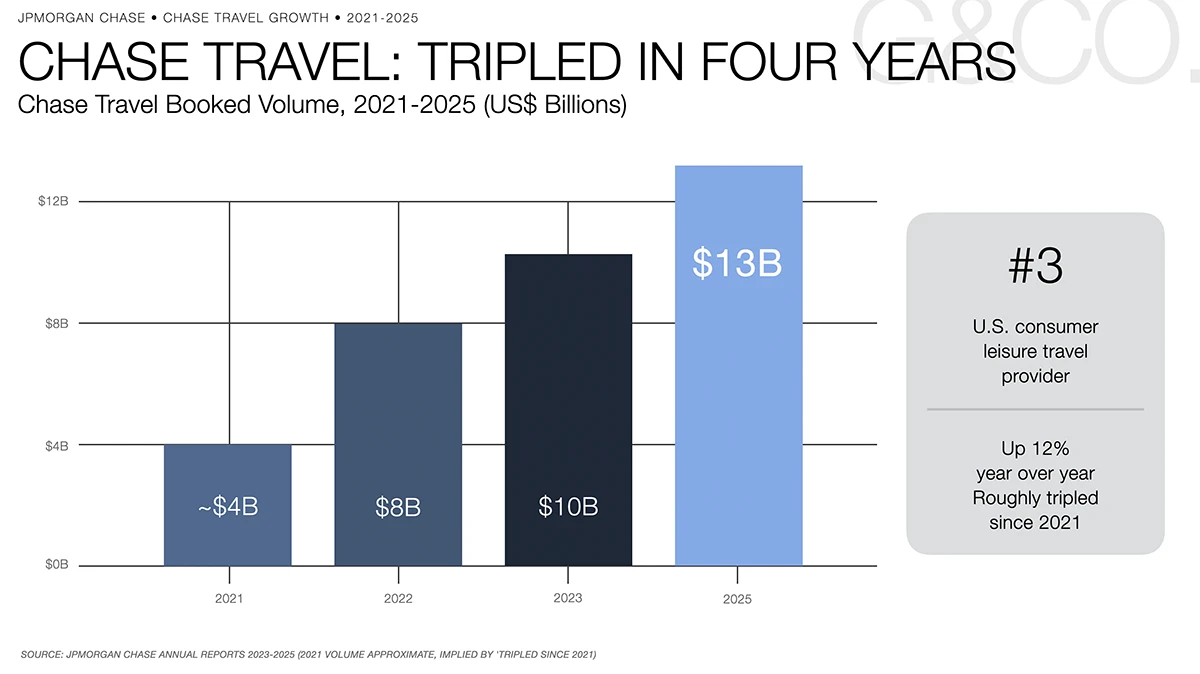
Chase built a full travel agency on ChaseTravel.com and became the #3 leisure travel seller in the U.S. Travel is where reward points are worth the most and where customers make their biggest optional purchases. By owning the booking, Chase keeps the money that used to flow to Expedia and Booking.com, and, in the bank's words, turns travelers into "lifelong Chase fans."
The Chase Sapphire ecosystem: one relationship across channels.
The June 2025 update to the Chase Sapphire Reserve raised the annual fee from $550 to $795 and added a stated $3,000 in yearly value. It also made the omnichannel design clear. The card now connects directly to Chase Travel through Points Boost (points worth up to 2x on select bookings), to a curated hotel collection called The Edit, to human Reserve Travel Designers for trip planning, and to the Chase Sapphire Lounge network at airports, with new locations at DFW and LAX opening in 2026. The card, the app, the booking site, the concierge, and the lounge all work as one relationship, across both digital and physical touchpoints. That is what omnichannel loyalty looks like in practice.
Chase Media Solutions: turning spending data into an ad business.
In 2024, Chase launched a retail media network, one of the first run by a bank. It lets brands reach Chase customers based on what they actually buy, and brands pay only when a customer makes a purchase. Chase does not share customer data with advertisers. Instead, it uses its own first-party data to show personalized cash-back offers inside the app. If a customer books a flight, Chase can show hotel or dining offers for that destination, earning money from the same relationship that drives loyalty.
Dining and shopping: widening the ecosystem.
Through The Infatuation, OpenTable dining credits, and Chase Offers, Chase extended the same owned-commerce idea from travel into everyday spending. The aim is to give customers reasons to buy inside the ecosystem instead of outside it.
Always-On Customer Intelligence
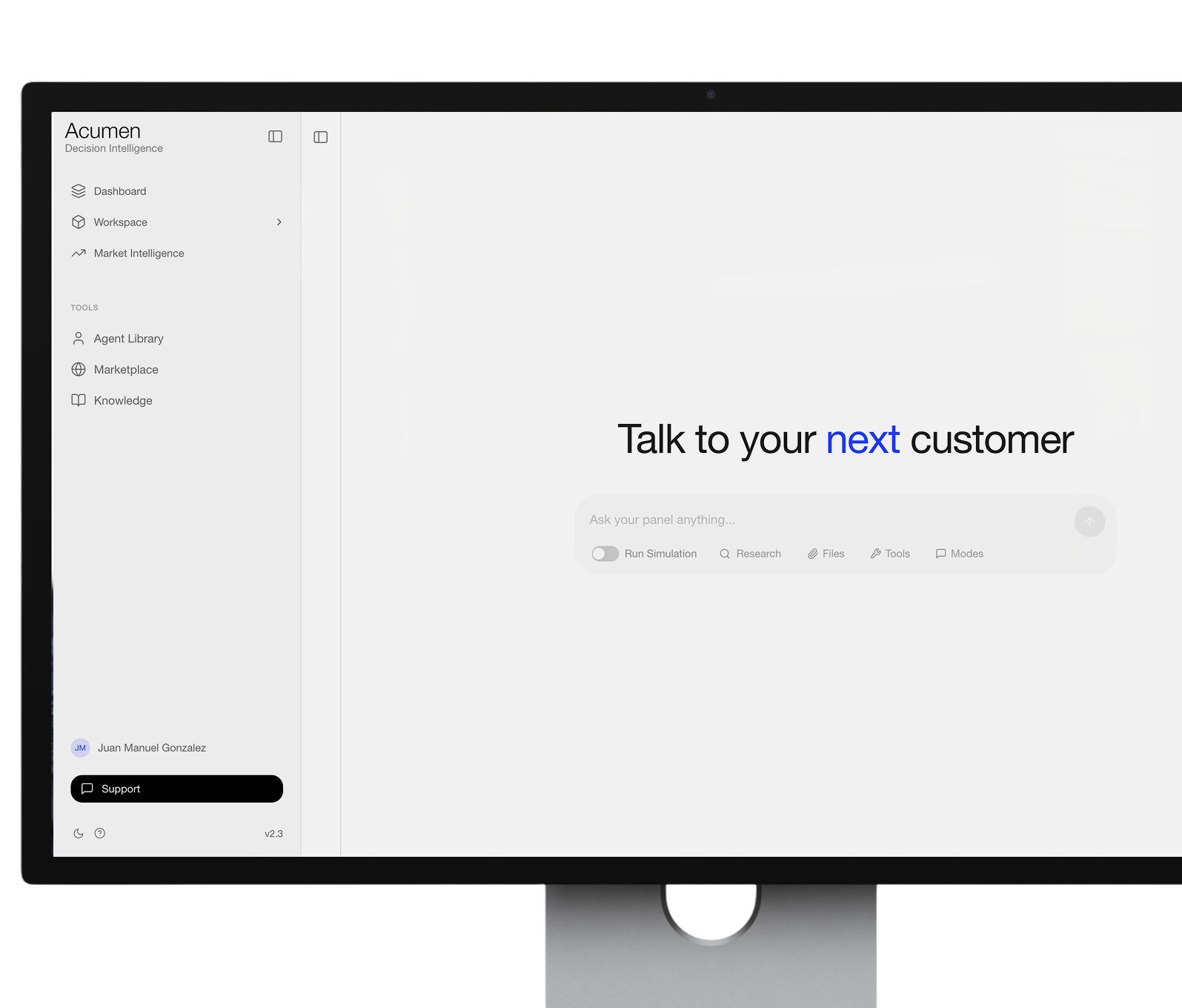
Turn your own customer data into foresight — validate, simulate, and sense every major decision before you commit.


Results and Evidence
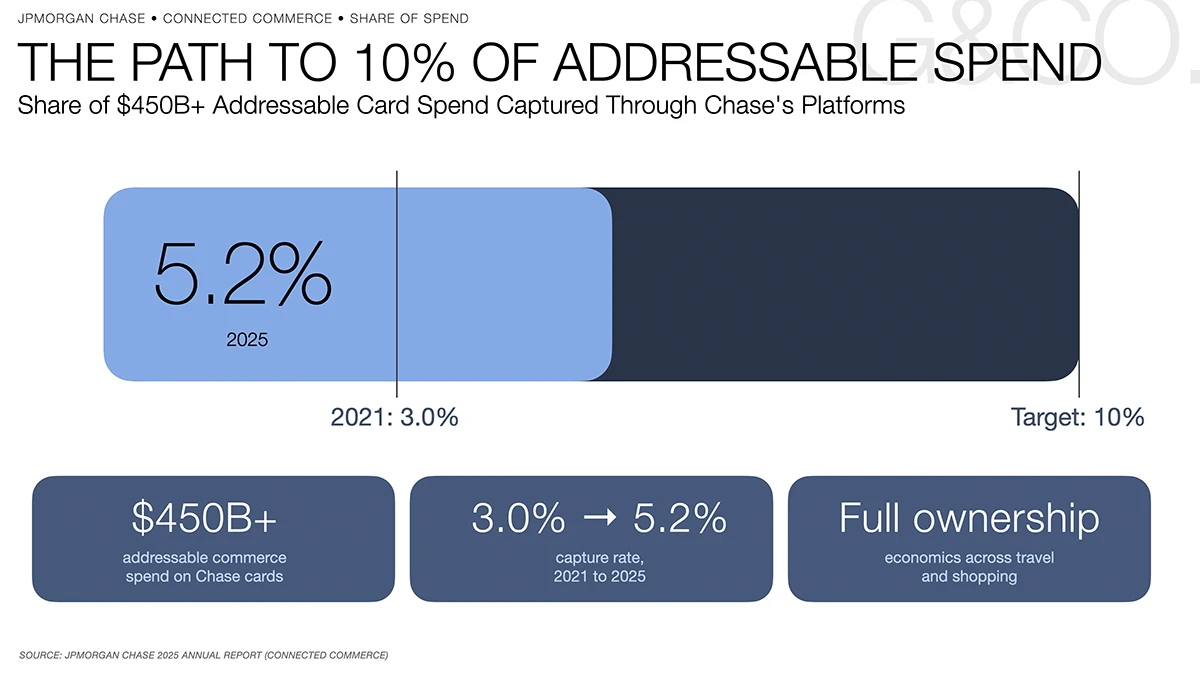
The results, drawn from JPMorgan Chase's 2025 disclosures, show a real business at scale, not a pilot. Chase customers hold more than $450 billion in yearly spending on Chase cards. In 2025, Chase captured 5.2% of that spending through its travel and shopping platforms, up from 3.0% in 2021, and it is aiming for 10%. Chase Travel reached $13 billion in booked volume in 2025, about triple its 2021 level and up 12% from the year before, making it the #3 leisure travel seller in the U.S. The share of Chase card spending running through the platform rose to 12%. Chase Media Solutions, the retail media network, reached nearly 74 million customers (up 14% year over year) and about $11 billion in consumer spending (double its 2021 level). Together, Connected Commerce is a multibillion-dollar business that Chase expects to keep growing toward its 10% goal. These figures come from Chase's public reporting and are worth confirming against the latest annual report before publishing.
Strategic Implications
Chase's model connects to bigger shifts in business: the rise of retail and commerce media, the race for first-party data, and the move from simple loyalty points to relationship-based commerce. The biggest implication is that loyalty, CRM, and commerce are becoming one job, not three. A loyalty program strategy that keeps points in one system, transactions in another, and media in a third cannot produce what Chase produced, because the value comes from connecting them around a single view of the customer. This is also where financial services marketing is heading: the winners will treat spending data as the foundation of an owned commerce business.
The lesson travels well. Any company with a loyal, frequent customer base, a retailer, an airline, a telecom, a health or beauty brand, has the same raw materials Chase used: a trusted relationship, repeat spending, and first-party data. What Chase shows is how to turn those materials into an owned omnichannel commerce ecosystem instead of a rewards cost. The companies that build this kind of connected system will gain advantages in data, profit, and engagement that rivals cannot match just by spending more on rewards. It is the same move behind Walmart's retail media network, United's turn of loyalty data into advertising, and Mastercard's services business.
What Enterprise Leaders Can Learn
- Move from rewarding spending to capturing it.
Stop asking only how to reward loyal customers. Start asking how to capture more of what they already spend. That shift turns a loyalty program strategy from a cost into a growth business. - Own the shopping, not just the customer.
Anywhere your customers redeem value through partners, you are giving away profit and data. Owning that channel, as Chase did with travel, turns a cost into revenue. - Treat customer data as a commercial asset, not a report.
Chase built a whole retail media network on data it already had. Most companies hold similar data and use it only for dashboards. - Make every channel feel like one relationship.
The Chase Sapphire ecosystem works because the card, app, booking site, concierge, and lounge are the same relationship, not separate products. That is what makes Chase Ultimate Rewards a benchmark worth studying. - Build the value before you raise the price.
Chase raised the Sapphire Reserve fee only after adding real value to the card. The order matters: build first, charge second.
Conclusion
JPMorgan Chase did not just modernize a rewards program. It rebuilt loyalty into an owned commerce ecosystem where the card, the rewards, a full travel agency, a retail media network, dining, and airport lounges all support one relationship. The bet is that the strongest advantage is not the best points offer, but the most complete shopping experience, one the company owns end to end and improves with every purchase. For enterprise leaders, the takeaway is not to copy the banking details but to copy the approach: stop treating loyalty as a program that rewards spending, and start building the commerce system that captures it. In a market where owned channels and first-party data are the scarcest assets, the brand that turns its loyalty relationship into a connected commerce ecosystem will hold an advantage that a bigger rewards budget cannot buy.
Through the Acumen platform, G&CO. gives enterprise brands the consumer and commerce intelligence that shows where loyalty and commerce investment will pay off most: where customers spend outside your ecosystem, which owned channels are worth building, and how to turn first-party data into a commercial asset. G&CO. is a certified minority business enterprise through the National Minority Supplier Development Council (NMSDC). For enterprise organizations with diversity inclusion requirements in their procurement process, G&CO. meets the criteria for MBE-qualified partner status.
G&CO. works with enterprise brands to design the CRM, loyalty, and connected commerce systems that decide whether customer relationships turn into lasting, profitable engagement. If this JPMorgan Chase case study raises questions about your own loyalty and commerce strategy, submit an inquiry to G&CO. on our contact page or click the blue "Click to Contact Us" button in the bottom right corner of your screen. We look forward to hearing from you.
Frequently Asked Questions
What is JPMorgan Chase's Connected Commerce strategy?
Connected Commerce is JPMorgan Chase's owned commerce platform that links its cardholders and banking customers to the brands they buy from, through travel, shopping, dining, and media. Instead of treating its Chase Ultimate Rewards program as a simple points system, Chase uses it as the core of an ecosystem that includes Chase Travel, Chase Media Solutions, the Sapphire cards, and dining. The goal is to capture more of the roughly $450 billion its customers spend on Chase cards each year. In 2025, it captured 5.2% of that spending on platforms the bank owns end to end.
How does Chase Sapphire fit into Chase's omnichannel in banking strategy?
The Chase Sapphire ecosystem connects a premium credit card to a set of owned commerce channels that work across both digital and physical touchpoints. After the June 2025 Sapphire Reserve update, the card ties directly into Chase Travel bookings and Points Boost redemptions, a curated hotel collection called The Edit, human Reserve Travel Designers for trip planning, and the physical Chase Sapphire Lounge network at major airports. The card, the Chase app, the booking site, and the lounge are designed to feel like one continuous relationship, not separate products. That is what makes it an omnichannel program rather than a multichannel one.
What is Chase Media Solutions?
Chase Media Solutions is a retail media network Chase launched in 2024, one of the first run by a bank. It lets brands reach Chase customers based on what they actually buy. Chase does not share customer data with advertisers. Instead, it uses its own first-party data to show personalized cash-back offers inside the Chase app, and it charges brands only when a customer makes a purchase. By 2025 it reached nearly 74 million customers and about $11 billion in consumer spending, turning the bank's transaction data into an advertising business.
What can enterprise brands learn from Chase's omnichannel loyalty?
Chase turned loyalty from a reward program into a commerce engine. Instead of paying partners to deliver points redemptions, it built or bought the commerce channels, travel, media, and dining, so the loyalty program captures spending rather than just rewarding it. That mix of an owned ecosystem, first-party data, and one relationship across every channel turns a normal loyalty program strategy into a growth business. It is a model enterprise leaders in any category can learn from.
How does this case study apply to non-banking brands and financial services marketing?
The approach works for any company with a loyal, frequent customer base and first-party spending data, including retailers, airlines, telecoms, and health or beauty brands. The transferable lessons are simple: own the commerce your loyalty program drives instead of renting it to partners, treat first-party data as a commercial asset rather than a report, and design loyalty, CRM, and commerce as one connected system instead of separate silos. In banking, this points to spending data as the base of an owned commerce business, but the wider idea of connected, omnichannel commerce applies almost anywhere.